
Livraison le jour même et le lendemain

Qualité garantie

Débloquez vos offres de bienvenue: Livraison GRATUITE | Jusqu'à -80 % | 30 jours d'essai gratuits à JoyPlus
Téléchargez l'application
A reusable lunch box may seem like a simple purchase, but small design details can make all the difference to how enjoyable it is to use every day. A lid that doesn’t quite seal properly, compartments that let food mix, or a material that’s difficult to clean can quickly lead to wasted money and food.
So don’t just look at the colour, shape or a claim such as “leakproof”. Pay particular attention to the construction, capacity, fastening and care instructions.
A lunch box may have a sealing ring and secure fastenings, but that doesn’t automatically mean it’s suitable for soup or for carrying upside down. Many models are recommended for carrying liquid foods upright.
So check:
A lunch box with compartments won’t always prevent sauces from getting between them, either. A fixed divider is generally more straightforward than loose inserts, but also check whether the compartments are sealed separately.
Stainless steel is sturdy and is generally less likely to absorb odours or stains than some plastic surfaces. However, every material has its limitations. For example, you can’t assume that a stainless steel lunch box is microwave-safe.
When choosing a stainless steel lunch box, check:
For plastic, check the permitted temperatures, how it handles odours and the condition of the lid after repeated use. A dishwasher-safe lunch box is convenient, but check whether this applies to all its parts.
A large container isn’t always more convenient. A capacity of 1,500 or 1,600 ml may suit a full meal or several portions, but it takes up more space in a school or work bag.
Choose a size that suits how you’ll use it:
304 stainless steel is widely used for food storage containers and lunch boxes. According to Maxcook’s product description, 316 stainless steel is a type of steel with greater corrosion resistance. That’s useful information if you’re looking for a durable container, but it doesn’t, on its own, tell you everything about the lifespan of the complete product. The fastening, sealing ring and cleaning method matter just as much.
Also consider where the information comes from. Claims about the material or performance come from the brand’s or seller’s product description; don’t treat them as a general guarantee for every use.
A bento lunch box or lunch box with compartments helps keep your main meal, fruit and snacks separate. Check whether the compartments are built in and how much space each one actually offers. Five small compartments may be less practical than two roomy ones if you’re taking a large meal with you.
For meal prep containers, stackability and a choice of sizes are important. A set with containers in different capacities may be more useful in the fridge and freezer than several identical large containers.
A secure fastening is only practical if you can clean the sealing ring properly, too. Food left under a silicone ring can cause odours. So choose a model with parts that are easy to reach and wash separately.
Always follow the product instructions. Some models are dishwasher-safe, while an insulated food jar may need to be washed by hand to protect the seal and insulating layer.
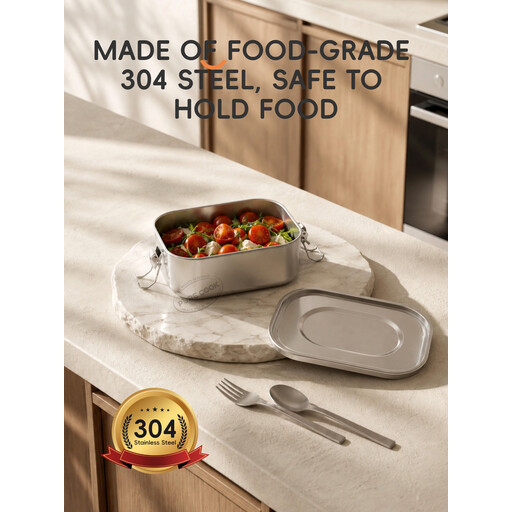
Why it suits this profile: The single compartment is easy to use for everyday meals at school, work or on a picnic. You’re not paying for compartments you may not need.
The product description clearly specifies a fastening with two metal clips and a silicone ring. For soup and very liquid foods, it recommends carrying the container upright.
304 stainless steel, a single compartment, a smooth uncoated surface and dishwasher-safe construction, according to the product description.
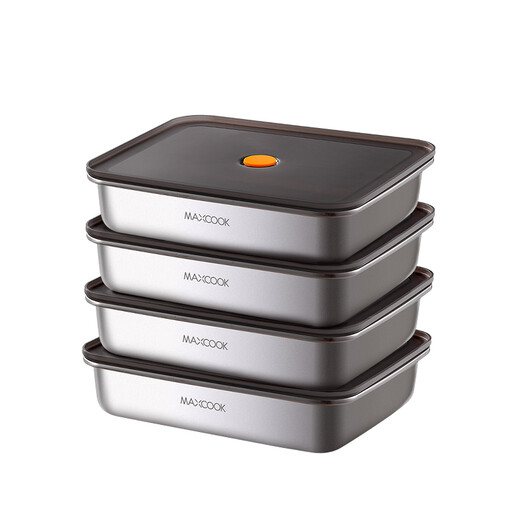
Why it suits this profile: Four identical 1,600 ml containers are ideal for households that cook ahead, store leftovers or want to portion out several meals.
The capacity and number of containers are clearly specified. According to the product information, they’re suitable for the dishwasher and freezer; they must not be used in the microwave.
316L stainless steel, four 1,600 ml containers, suitable for the fridge and freezer, and supplied with lids.

Why it suits this profile: This insulated food jar is designed for hot or cold meals on the go, for example during your commute, when working outdoors or on a day trip.
The wide opening makes filling and cleaning easier than with a narrow, bottle-shaped container. The product information recommends hand-washing and carrying it upright.
1.5-litre capacity, 316 stainless steel, vacuum insulation, a wide opening and a thermal performance of 4 to 6 hours, as stated by the manufacturer.
We’ve put together a complete, up-to-date list of products that meet these strict selection criteria and the applicable European safety requirements.
Remove the lid, silicone ring and any clips if the product instructions allow it. Rinse away food residue straight away and let all the parts dry completely before closing the lunch box. If it’s dishwasher-safe, check whether that applies to the ring and lid as well.
Its lifespan depends on the material, fastening, use and care. Stainless steel containers can last a long time, but a silicone ring may become less snug over time. Replace any part that’s cracked, misshapen or permanently discoloured. Also check regularly that the fastening still provides enough pressure.
Only if the manufacturer says it’s suitable for liquid foods and the fastening is designed for them. Carry the container upright, don’t fill it to the brim and check that the sealing ring is correctly in place. For hot soup, an insulated food jar with a wide opening is often more practical than a flat lunch box.
