
Livraison le jour même et le lendemain

Qualité garantie

Débloquez vos offres de bienvenue: Livraison GRATUITE | Jusqu'à -80 % | 30 jours d'essai gratuits à JoyPlus
Téléchargez l'application
A reusable lunch box may seem easy to choose, but small design details determine whether you enjoy using it every day. A lid that does not close properly, too little space or a material that is unsuitable for the way you heat your food can quickly lead to disappointment.
For UK consumers, these situations are particularly familiar:
The product description, stated dimensions and care instructions therefore provide more useful guidance than general marketing terms such as “keeps food fresh” or “leakproof”. Always check which features are actually listed for the model you have chosen.
The capacity should suit your meal. For a child’s lunch or snacks, a compact bento lunch box with several compartments is often practical. If you are taking pasta, salad and fruit with you, a compartment lunch box or separate meal prep containers may be more suitable.
Pay attention to these points:
A five-compartment model, such as the Meoky 5-Compartment Bento Lunch Box, is designed for portioned meals. A set with different sizes is more useful when you alternate between storing breakfast, leftovers, snacks and full meals.
The most common materials are plastic, glass and stainless steel. Each material has practical implications.
Stainless steel lunch boxes are generally suitable for everyday transport and do not absorb colour or odour in the same way as some plastics. Check the specific grade of steel, such as 304 or 316 stainless steel, but do not assume properties that are not stated in the product information.
Glass storage containers make the contents visible and are often suitable for use in the fridge. Borosilicate glass is frequently mentioned in product information because of its temperature resistance. However, you should avoid sudden temperature changes when the manufacturer warns against them.
A dishwasher-safe lunch box is only practical if all its components are suitable for dishwasher use. With some models, the metal container can go in the dishwasher, while the lid and silicone ring must be placed on the top rack or washed by hand. Also check whether a box:
For example, the product information for the PURECOOK set with glass lids states that, depending on the instructions, the container is intended for use in the fridge, freezer and dishwasher. The same information warns against using the container in the microwave or over an open flame. According to the brand’s product description, the model is suitable for oven use, but check the current manual and product specifications before use.
“Leakproof lunch box” is a popular search term, but the closure only works properly when the components are correctly fitted and the container is not overfilled. Look for:
A box containing sauce or soup puts more demands on the seal than a container filled with dry bread. Do not fill liquid foods to the brim, and check that the silicone ring is sitting flat in its groove. Hot soup can create pressure. According to the manufacturer, the COOKER KING set’s product information advises opening the silicone valve before removing the lid when the contents are hot.
An insulated food container is primarily intended for soup, stews or other hot meals. The Maxcook models have a wide opening and a capacity of 1.5 litres. According to the brand’s product description, they are designed to retain temperature for 4 to 6 hours; the actual duration depends, among other things, on the starting temperature, filling time and surroundings.
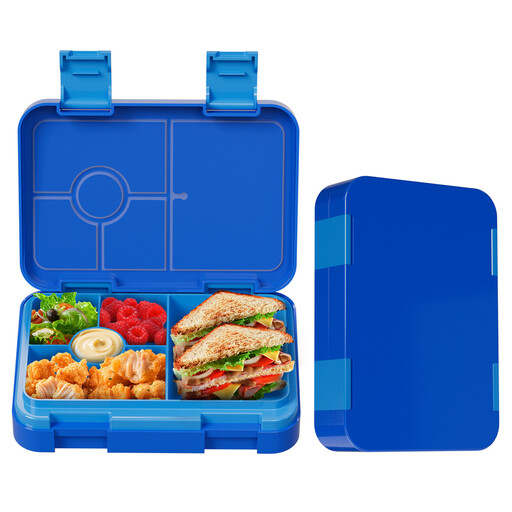
Why it suits this profile: Five fixed compartments make it easy to take bread, fruit and snacks to school or work while keeping them separate.
The double closure is intended to secure the lid firmly, according to the product name. Before buying, check the current information about the material, dishwasher use and liquid foods.
Five compartments and a double closure; suitable for portioned lunches and snacks.

Why it suits this profile: The set combines three sizes for meal prep, fridge storage and carrying larger portions.
The stated set contains 1000 ml, 1800 ml and 3000 ml containers. This means you do not have to use the same large container for every portion.
304 stainless steel containers, glass lids and a stackable design according to the product description.

Why it suits this profile: The wide opening and 1.5-litre capacity are suitable for soup, stews and large portions for long working days or trips out.
The product information mentions a leakproof closure, but advises transporting the jar upright. This is important for liquid meals.
316 stainless steel, a wide opening and vacuum insulation according to the product description. Hand washing is recommended.

Why it suits this profile: The 600 ml, 1100 ml and 2200 ml sizes are useful for snacks, side dishes and full meals.
A set with three sizes prevents small portions from moving around in an oversized container. The product description states that the containers are suitable for freezer and dishwasher use.
Three stated capacities, 316 stainless steel and lids; not suitable for microwave use according to the product information.
We have put together a complete, up-to-date list of products that fully meet these strict selection criteria and the applicable European safety regulations.
Remove the silicone ring and any valves from the lid when the instructions allow it. Rinse away food residue straight away and use mild washing-up liquid. A dishwasher-safe lunch box can save time, but check for each component whether dishwasher use is permitted. Allow the box and lid to dry completely before storing them closed.
Its lifespan depends on the material, closure and how it is used. Stainless steel is less prone to breaking than glass, while glass containers let you see what is inside and are often easy to clean. Silicone rings may lose their flexibility over time. Replace a ring or lid when it becomes misshapen, cracked or no longer closes properly.
It can be, but check the specific product instructions. A lunch box with a secure closure and silicone seal is designed to help prevent leaks, but liquids should preferably be transported upright. For hot soup, an insulated food container is usually more practical. Also check whether the container needs to release pressure and whether the contents must cool down first.
