
Livraison le jour même et le lendemain

Qualité garantie

Débloquez vos offres de bienvenue: Livraison GRATUITE | Jusqu'à -80 % | 30 jours d'essai gratuits à JoyPlus
Téléchargez l'application
A reusable lunch box can save money and reduce packaging waste, but not every box suits every meal. A compact bento lunch box is handy for sandwiches and snacks, while an insulated food flask is better suited to soup, pasta or curry. If you only consider colour or capacity, you may discover after buying that the closure leaks, the compartments are too small or cleaning is impractical.
Joybuy Product Recommendation Officer therefore selects products based on verifiable features such as material, capacity, closure, compartments and care requirements. This helps prevent a lunch box designed for children from proving inconvenient for an adult, or meal-prep containers from not fitting in your fridge.
A product description may promise a leak-proof lunch box, but how well it works in practice depends on the seal, locking mechanism and how the box is filled. A box with a loose silicone rim may be less suitable for thin sauces if the lid does not close fully. So check:
First fill a new box with water at home and move it around gently before carrying it in a bag.
A lunch box with compartments or bento lunch box keeps ingredients separate. However, dividers take up space. So check not only the total capacity, but also the shape and depth of the compartments. A five-section layout works well for fruit, bread, vegetables and small snacks, but less well for a large salad or a meal with sauce.
Plastic food storage containers are often lightweight and suitable for the fridge or freezer. Glass offers good visibility and, according to the product information for some models, can be used in the microwave, but it is heavier and breakable. A stainless steel lunch box is sturdy and reusable, but is generally not suitable for the microwave. Always read the care instructions rather than relying solely on terms such as “durable” or “premium”.
For stainless steel, you will often see designations such as 304 or 316L. These are material types with different compositions and properties. 304 stainless steel is widely used for food containers; 316L is often associated with greater corrosion resistance in product information. This does not automatically mean that every product with such a designation is suitable for every application.
Pay particular attention to:
For lunch at the office or school, a compact size is often the obvious choice. For meal prepping, larger food storage containers or a set of several identical containers may be more practical. Check the capacity in millilitres and compare it with your usual portion size.
A capacity of 1.4 to 1.5 litres in an insulated food flask is generous for soup or a shared meal, but may be relatively large and heavy for a daily commute. Smaller compartments are useful for snacks and portion control.
“Dishwasher-safe storage containers” are particularly practical if the lid and seal can also go in the dishwasher according to the instructions. For some insulated models, hand washing is recommended to protect the insulation and seal. Also check whether the parts can be removed. Otherwise, food residue can easily collect around clips or inside a rubber ring.
The selection below is based on the stated product specifications and usage scenarios. Always check the current product page before buying for dimensions, delivery times and care instructions.
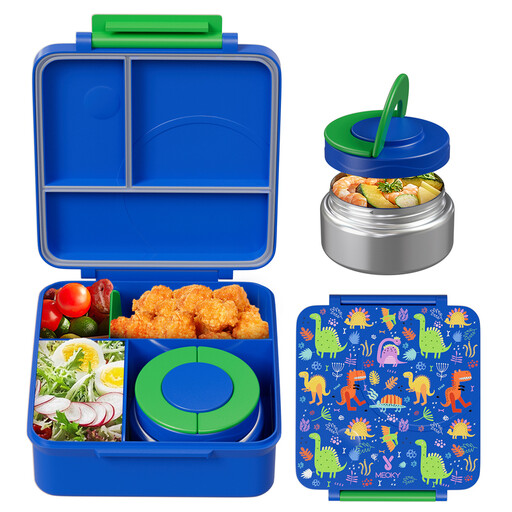
Why it suits this profile: The five compartments are practical for bread, fruit and snacks without needing extra containers. The double closure is well suited to everyday use at school, in the office or on the go.
The compartments reduce the need for separate food storage containers. The product name mentions double latches; check the seal before transporting liquid dishes.
Five compartments and a double closure according to the product listing; suitable for an organised lunch.
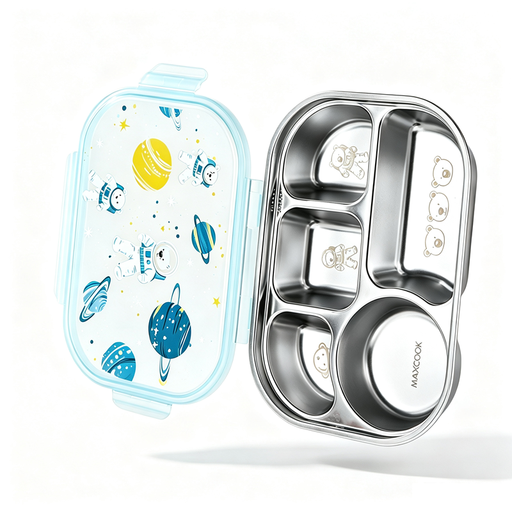
Why it suits this profile: This metal bento lunch box is aimed at anyone looking for a sturdy design and a fixed five-section layout for work, school, picnics or travel.
The five compartments make the available space easier to organise than a single large compartment. However, check that the dimensions fit your bag and fridge.
316 stainless steel and five separate compartments according to the product information; suitable for repeated everyday use.

Why it suits this profile: The spacious insulated food jar is designed for soup, hot meals and cold dishes at work, school, while camping or on short trips.
The wide opening makes filling and cleaning easier than with a narrow flask. The manufacturer states that it has a leak-proof closure, but advises against turning or tilting the jar.
1.5-litre capacity, vacuum insulation and 316 stainless steel according to the product details. Hand washing is recommended for this model.
A reusable lunch box will generally last longer if you care for the closure and material according to the instructions. Do not leave food residue to dry for extended periods and remove silicone rims regularly. Use a soft sponge and mild washing-up liquid on stainless steel. Abrasive products can damage the surface.
For airtight food containers, the lid and container should be completely dry before you close them. For plastic containers such as Curver Fresh & Go, the product information states that they are suitable for the freezer, microwave and dishwasher, with a warning to remove the lid before heating. Use an insulated food flask according to the manufacturer’s specific instructions.
We have put together a complete, up-to-date list of products that fully meet these strict selection criteria and the applicable European safety regulations.
It depends on the meal. Choose a bento lunch box with compartments for sandwiches, fruit and snacks. For soup or a hot meal, an insulated food jar is a better choice. Always check the weight, capacity and whether the box needs to be transported upright.
Do not fill the box above the indicated line, check that the silicone seal is positioned correctly and close all clips fully. Liquid dishes are safest to transport in a container whose product information states that it has a secure-fitting lid. Test a new box with water at home first.
No, metal lunch boxes are generally not suitable for use in the microwave. Check the official care instructions and only use containers that are explicitly marked as suitable for heating. For suitable plastic storage containers, remove the lid if instructed in the product information.
