
Sellers who want to show off their restoration
You want to capture the finish, controls and any signs of wear clearly, so buyers can assess the radio.


Start with even lighting, a simple background and steady overview and detail shots. Don’t buy a new camera just for this listing before testing what your current camera can capture. If you want to photograph small components without changing lenses, compare compact cameras by their close-up capabilities. For regular detail shots, a mirrorless camera could be a good fit if you want to choose the right lens and are happy to factor in additional kit.
You want to capture the finish, controls and any signs of wear clearly, so buyers can assess the radio.
You need separate shots of things like labels, buttons or small restoration details, so you’ll want to check the capabilities of the specific lens or close-up mode.
You want to create a decent listing quickly without buying extra lenses or equipment you don’t need. A simple, stable lighting set-up is a practical first step.
A good fit if: your current camera can capture the whole radio and the important signs of wear clearly.
Consider: a better set-up won’t, by itself, help the camera focus when it’s too close to the subject.
A good fit if: you want to use one camera without changing lenses.
Consider: test whether the buttons and labels you want to show appear clearly in focus; close-up capabilities vary by model.
A good fit if: you want to capture small details as well as overview shots regularly, and choose a lens to suit.
Consider: the kit lens and a separate macro lens are different items; check exactly what’s included in the set.
When taking listing photos of a restored radio, your choice mainly depends on what you want to show first: the colour and finish, small details, a clear overview or the complete set.
| What to consider | What to look for when buying | Who is this important for? |
|---|---|---|
| Colour and finish | Take test shots in even daylight and see whether light areas and signs of wear still look realistic. | If I want buyers to be able to assess the radio’s restoration and condition properly, I look at colour and finish. This is the top priority for around 36% of consumers. |
| Small details | Compare the minimum focusing distance and magnification of the specific lens or camera mode, and test the details you want to show. | If you want to show labels, buttons or small restoration details separately, a good close-up is useful. Around 29% of consumers put small details first. |
| Clear overall view | Check that the whole radio fits in your shooting space and that you can also take pictures of the sides, back and details. | If I want to take a recognisable picture of the whole radio quickly, I look at framing and how easy the set-up is. A simple overall view is the top priority for around 21% of consumers. |
| Complete set | Check exactly what’s included in the kit and decide whether you need an extra lens or other equipment for the detail shot you want. | If you want to avoid extra purchases for a single listing, compare the complete set rather than just the camera body. Around 14% of consumers put the total purchase cost first. |
A stated magnification applies to a specific lens or mode and doesn’t automatically apply to every kit from the same brand.
Check the full model name and what’s included in the kit, then compare the magnification and focusing distance of the lens you’ll actually receive.
You may need a separate lens for the close-ups you want, which means the complete set will include more items.
The minimum focusing distance can vary depending on the zoom setting, so a zoomed-in detail won’t necessarily be in focus.
At the zoom setting you want to use, test whether a button or label appears both large and sharp in the frame.
A dark photo can make details harder to see, while flash can affect how colours look.
Take test shots in suitable daylight too, and check that details are legible and the colours look realistic.
The EOS R50 with RF-S 18-45mm kit zoom is one option for overview shots; a separate compatible RF 35mm F1.8 MACRO IS STM is another choice for details.
The Tough TG-7 is a compact camera with a fixed lens and a close-up feature described by OM Digital Solutions for capturing small details.
The DSC-RX100M7 has a fixed zoom lens for taking different shots without changing lenses.
The Z50II with NIKKOR Z DX 16-50mm kit zoom is designed for general photography; the separate NIKKOR Z MC 50mm f/2.8 is an option for macro details.
Cameras for overview shots and different framings of a restored radio; use test shots to check whether the small details you want to show come out sharp enough.
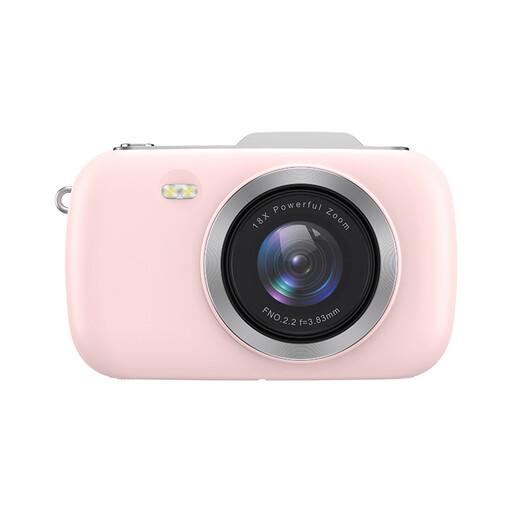 Image unavailable
The stated zoom can help you take different shots; test separately whether small details come out sharp enough.
The product name states 80 MP UHD and 18× zoom.
 Image unavailable
The stated zoom is useful if you want to take different shots; use a test photo to check whether the radio details you want to show are also in focus.
The product name states 12× optical zoom.
 Image unavailable
The supplied zoom lens offers different framing options for overview shots; check separately whether it can focus close enough for the details you want to show.
The description states that it has a 24.2 MP APS-C sensor, a tilting screen and a Product Showcase setting that shifts focus from a face to a subject.
 Image unavailable
The supplied lens is designed for different framing options; take a test shot to see whether the details you want to show appear sharply in the frame.
The description states that it has a 24.2 MP sensor and autofocus.
 Image unavailable
The fixed zoom lens can be handy for different shots without changing lenses; test the focus on the details you want to show.
The product specifications state 2.7× optical zoom, a 24–70 mm range and JPEG and RAW photo formats.
Not necessarily. First, test whether your current camera can capture both the whole radio and relevant details in sharp focus in daylight, against a simple background and from a steady position. Take a test close-up if your camera may not be able to focus close enough.
Use a stable surface or tripod if low light makes the shot susceptible to camera shake. Take a test photo and check that the radio and details are sharp before using the picture.
No. Check exactly what’s included in the kit: Canon states 1:2 magnification for the separate RF 35mm macro lens, while Nikon states 1:1 magnification for the separate NIKKOR Z MC 50mm. The standard zooms are different lenses.
If a product doesn’t perform as you could reasonably expect under normal use, the seller must resolve the problem, according to ACM ConsuWijzer; a manufacturer’s warranty doesn’t replace this legal right. For online purchases from a business, the Dutch government says you’ll also have a 14-day cooling-off period in many cases. According to the Dutch government, an online purchase from a private seller doesn’t count as a distance purchase.