Who is this choice for?

Restorer capturing details

If you want to document lettering, buttons and finishes up close, check the focusing capabilities of the exact camera and lens combination. Nikon specifies 1:1 magnification for the NIKKOR Z MC 50mm f/2.8; OM SYSTEM specifies a minimum focusing distance of 1 cm for the TG-7’s microscope mode.

Creator of a complete radio shot

If you want to show the entire radio from a repeatable angle, consider the angle of view, framing and a stable setup. Canon UK recommends using a tripod for consistent product photos.

Photographer working with tricky artificial light

If you want the cabinet, dial and lacquer colours to look true to life, check the white balance and take test shots with your own lighting. Nikon UK recommends setting the white balance to suit the lighting conditions; Sony UK explains that anti-flicker settings can vary between camera models.

What should you look for when buying?

Mirrorless camera with interchangeable lens

A good fit if: you want to take both full shots and carefully chosen close-up crops, and can select a lens separately.

Bear in mind: a standard zoom lens isn’t automatically suitable for high magnification. Nikon UK specifies 1:1 for the separate NIKKOR Z MC 50mm f/2.8; this specification doesn’t apply to every Nikon kit.

Compact camera with close-up mode

A good fit if: you want to photograph small components up close without choosing an interchangeable macro lens. OM SYSTEM specifies focusing from 1 cm in the TG-7’s microscope mode.

Bear in mind: also check that you can frame the whole radio properly from the available shooting distance. The LG-1 light guide is included with the specific TG-7 Micro Adventure Kit.

Buying consideration What to look for Who is it most important for?
Small restoration details Check the focusing distance or magnification of the exact lens and mode. The 1:1 magnification specified by Nikon UK applies to the separate NIKKOR Z MC 50mm f/2.8. If I want to capture lettering and fine finishes clearly, I look at both magnification and the space available for lighting. Around 31% of consumers put capturing details first.
Colours under artificial light Test the white balance under the lights you’ll use to photograph the radio, and check the colour again if the lighting changes. If the cabinet, dial and lacquer need to retain their true colours, I set the camera up for my own lighting. Around 25% of consumers give colour reproduction top priority.
The whole radio in frame Check the supplied lens or zoom range against the available shooting distance. Canon UK recommends using a tripod for consistent framing. If I want to show the entire radio from a repeatable angle, I consider the framing and a stable setup. Around 19% of consumers prioritise the full shot.
Flicker bands under artificial light Take test shots with your own lights and check which shutter and anti-flicker settings are available on the camera model you’ve chosen. Sony UK notes that features can vary between models. If my test shots show bands, I want to know which settings I can try with my lights. Around 13% of consumers give controlling flicker top priority.
Complete photography setup Compare what’s included in the kit you’ve chosen and work out which lens, lighting or support you’ll need for both full shots and close-ups. The TG-7 Micro Adventure Kit includes an LG-1 light guide. If I don’t want to have to choose essential extras later, I compare the complete setup rather than just the camera body. Around 12% of consumers prioritise the complete kit.

Common mistakes when choosing

  • Mistaking a standard zoom for a macro lens

    A magnification specification for a separate lens doesn’t automatically apply to the lens included in a camera kit. For example, Nikon UK specifies 1:1 for the NIKKOR Z MC 50mm f/2.8, not for the Z DX 16–50mm kit lens.

    Compare the lens that’s actually included and check the focusing distance or magnification of that specific lens.

    High magnification may require a separate macro lens.

  • Assuming a close-up mode is just as good for full shots

    The fact that the TG-7 can focus from 1 cm in microscope mode doesn’t in itself tell you whether the whole radio will fit in the frame from your shooting distance.

    Assess a close-up and a shot of the entire radio separately, in the place where you want to take the photos.

  • Trying to fix artificial lighting problems simply by choosing a different camera

    White balance, the lighting you use and flicker can all affect your shot, as well as your choice of camera. Anti-flicker settings also vary between models.

    Take test shots with your own lights, check the colours and look for any bands, then adjust your setup or the available settings accordingly.

    A tripod or adjusted lighting setup may require extra preparation and equipment.

Camera brands to compare

Canon

The EOS R50 is a mirrorless camera that lets you choose a separate RF or RF-S lens for your setup.

  • Canon Europe specifies an APS-C sensor with 24.2 effective megapixels for the EOS R50.
  • Canon doesn’t specify sensor-shift stabilisation for this model. Your choice of lens also affects how large small details on the radio appear in the frame.

Nikon

The Z50II is a mirrorless camera; for small details, the macro lens mentioned is a separate choice.

  • Nikon UK specifies a maximum magnification of 1:1 for the NIKKOR Z MC 50mm f/2.8.
  • The 1:1 specification applies to that lens and not automatically to a Z50II kit with the Z DX 16–50mm lens.

OM SYSTEM

The Tough TG-7 offers a compact close-up option with a microscope mode.

  • OM SYSTEM specifies focusing from 1 cm in microscope mode. The specific Micro Adventure Kit also includes an LG-1 light guide.
  • This focusing distance isn’t a comparison of colour or image quality with a mirrorless camera.

Sony

Sony is worth comparing by camera model if test shots under artificial light show flicker bands.

  • Sony UK describes shutter speed, shutter and anti-flicker settings as possible options for reducing flicker.
  • Sony notes that the available features can vary between camera models; this information doesn’t support choosing one specific model.

Joybuy cameras

Below are Joybuy cameras offered for photography; one bundle also includes an extra LED light. Check the focusing capabilities of each model and whether the included equipment suits your full shots and close-ups.

DJI Osmo Pocket 3 Creator Combo with Ulanzi VL49 RGB LED light

DJI Osmo Pocket 3 Creator Combo with Ulanzi VL49 RGB LED light

The Ulanzi VL49 RGB LED light mentioned is additional lighting for product photos.

The bundle lists the Ulanzi VL49 RGB LED light.

View at Joybuy

DJI Osmo Pocket 4 Standard Combo

DJI Osmo Pocket 4 Standard Combo

The title mentions photography; check whether the close-up capabilities suit the small details you want to capture.

The product title lists a 1-inch CMOS sensor, 4K/240fps video, 3-axis stabilisation, 2× lossless zoom, 107 GB of built-in storage and a 2-inch rotating screen.

View at Joybuy

Songdian Pocket Camera 4K 44MP, pink

Songdian Pocket Camera 4K 44MP, pink

The title mentions photography; check whether the focusing distance and close-up capabilities suit the small details on the radio you want to capture.

The product title lists 4K, 44 MP and 16× digital zoom. The product description mentions autofocus.

View at Joybuy
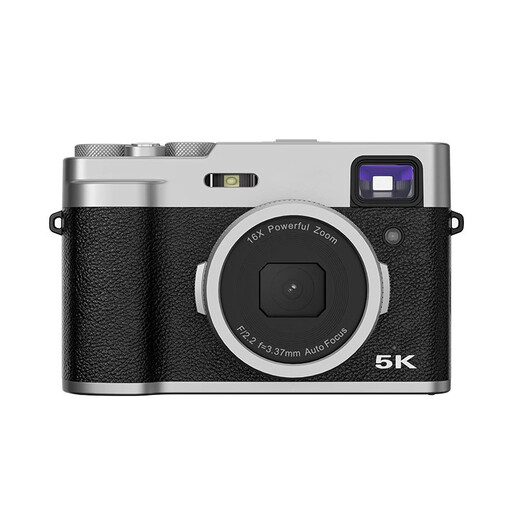
Songdian Retro digital camera 48MP, black

Songdian Retro digital camera 48MP, black

The title mentions photography; check whether the focusing capabilities suit both your full shot and the details you want to capture.

The product title lists 48 MP; the product description mentions autofocus and an optical viewfinder.

View at Joybuy

Komery X9 4K 64MP autofocus camera

Komery X9 4K 64MP autofocus camera

The title mentions photography; before choosing, check whether the focusing capabilities are suitable for the details on the radio.

The product title lists 4K, 64 MP and 18× digital zoom. The product description warns that digital zoom reduces image quality.

View at Joybuy

Frequently asked questions

For details on a radio, should you focus mainly on the camera or the lens?

With a mirrorless camera, both the body and the lens you choose matter. The Canon EOS R50 uses RF and RF-S lenses; Nikon UK specifies 1:1 magnification for the separate NIKKOR Z MC 50mm f/2.8. The TG-7 has a microscope mode, for which OM SYSTEM specifies focusing from 1 cm. Check which lens or version you’re actually choosing.

How do you set up a fixed position for taking several photos?

Mount the camera on a tripod to keep the framing consistent between shots. Canon UK recommends a tripod for product photos; also set the white balance to suit the lighting you’re using and check it again if the light changes.

What can you do if your lights cause bands in your photos?

Take test shots with your own lights and try a different shutter speed or an available anti-flicker setting. Sony UK notes that the features discussed can vary between camera models, so check what your model supports.

Who can help if a camera you bought online turns out to be faulty?

According to the Dutch government, the seller must provide a solution if a product is faulty. The appropriate remedy depends, among other things, on what you could reasonably expect from the product.

When buying a camera online in the Netherlands, do you always have 14 days to change your mind?

No, this doesn’t apply without conditions. The Dutch government states that a 14-day cooling-off period applies in many cases when buying at a distance, but there are exceptions and situations that don’t count as distance selling, such as buying online from a private individual. Check who the seller is and which rules apply to your purchase.
