
Vandaag of morgen in huis

Kwaliteit gegarandeerd

Welkomstaanbiedingen ontgrendelen: GRATIS bezorging | Tot 80% korting | Gratis 30 dagen JoyPlus-proefperiode
Download de app
A resistance band with handles is a versatile tool for strength training at home, in the gym, or for rehabilitation. However, the wide range of options can make choosing difficult. A band that's too light offers an insufficient challenge, while one that's too heavy increases the risk of injury. This guide provides an overview of the most important selection criteria and presents a selection of products based on their specifications, so you can make an informed choice that aligns with your training goals.
To choose the right resistance band, it's helpful to focus on a few specific product features.
The resistance level, often indicated by colors or terms like light, medium, and heavy, is the most critical factor.
Most resistance bands are made of latex. This material is elastic and durable, but it's important to inspect the band for any tears or wear before each use. Note: individuals with a latex allergy should consider a latex-free alternative.
The handles determine your comfort and grip during your workout. Foam handles provide a soft, comfortable grip that absorbs sweat. A secure grip is essential for the safe and effective execution of exercises like bicep curls or triceps kickbacks.
A single resistance band is a great starting point. However, a resistance band set offers greater flexibility. A set allows you to combine different resistance levels and gradually increase the intensity of your workout (progressive overload). This is practical if your goals change or if multiple people with varying strength levels will be using the bands.
Below is a selection of resistance bands, analyzed based on their product features.

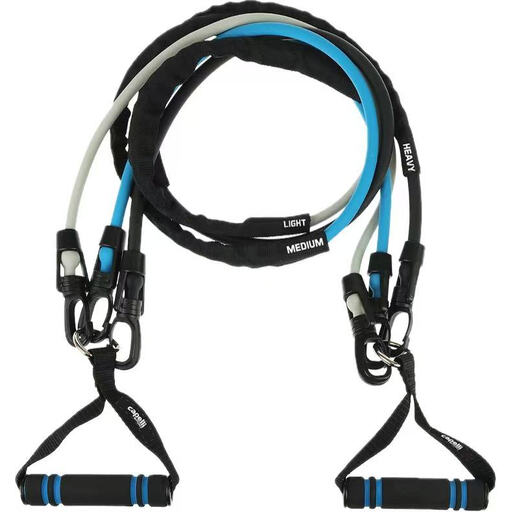

A resistance band with handles is an effective tool, but it's just one of many options for strength training. If you're looking for other ways to train your arms, shoulders, or chest, several alternatives are available. Consider options like free weights, pull-up bars, or other specialized equipment.
For a broader overview of training tools, you can browse our Arm Trainer category.
1. Can I build muscle with a fitness band with handles? Yes, building muscle is possible with a training band. The principle is based on progressive overload: by gradually increasing the resistance (for example, by choosing a heavier band or combining multiple bands), you continuously challenge your muscles to grow. It's an effective method for at-home strength training.
2. How do I maintain my resistance bands? Inspect the band for small tears or damage before each use. Do not use a damaged band. Clean the band after use with a dry or slightly damp cloth. Store the bands in a cool, dry place and avoid direct sunlight, as this can degrade and dry out the latex.
3. Are resistance bands suitable for physical therapy? Yes, resistance bands are often used as physical therapy equipment. They allow for controlled, targeted movements with low impact on the joints. The different resistance levels make them ideal for gradually increasing the load during a rehabilitation program. However, always consult a physical therapist or doctor first for a suitable exercise plan.
Joybuy Product Recommendation Officer
