
Vandaag of morgen in huis

Kwaliteit gegarandeerd

Welkomstaanbiedingen ontgrendelen: GRATIS bezorging | Tot 80% korting | Gratis 30 dagen JoyPlus-proefperiode
Download de app
Working out at home is convenient, but choosing the right equipment can be a challenge. You want something effective and versatile that won't clutter your living space. Resistance bands, also known as fitness bands, are a popular solution. They are compact, affordable, and suitable for numerous goals: from muscle building and rehabilitation to improving your flexibility.
This guide is designed to help you make the right choice. We'll skip the marketing jargon and focus on the specifications that truly matter, so you can make an informed decision that aligns with your fitness goals.
Not all resistance bands are created equal. The type, material, and resistance level determine what the band is best suited for. Here are a few practical points to consider.
The band's material directly impacts its feel and functionality during your workout.
Resistance bands come in various strengths, often indicated by color. A resistance band set with multiple levels (e.g., light, medium, and heavy) is often a smart choice. This allows you to:
Different goals require different types of bands.
Based on product specifications and use cases, we've highlighted some popular choices for you.
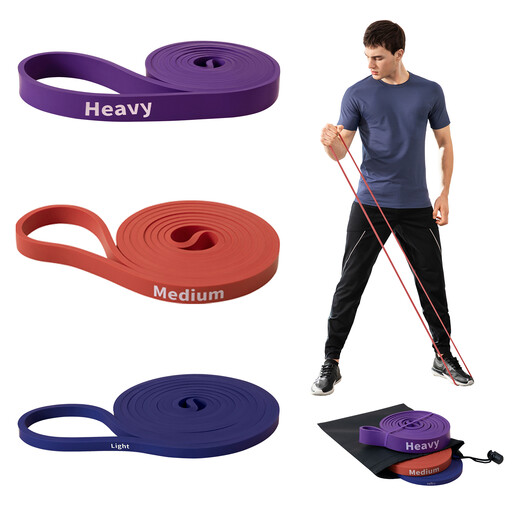
Why It Stands Out: This set offers three different resistance levels in one package, making it a complete solution for progressive strength training. The bands are made from natural rubber latex, ensuring a durable and flexible construction.
View the MISS LULU Pull Up Bands Set
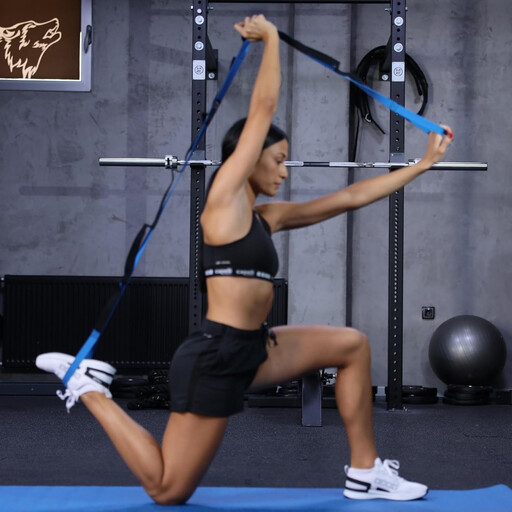
Why It Stands Out: Unlike an elastic band, this stretching strap is designed for controlled, static stretches. The eight loops allow you to precisely adjust the intensity of the stretch without losing your grip.
View the Multi-Level Stretch Strap
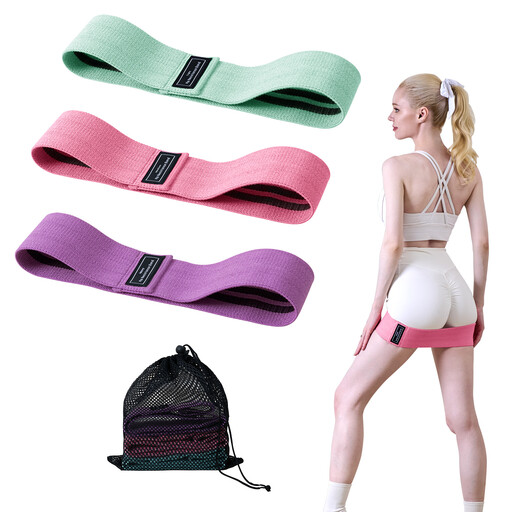
Why It Stands Out: These fabric booty bands are specially designed not to roll or slip during your workout. The high-quality cotton feels comfortable on the skin and provides firm resistance, ideal for targeted training of the legs and glutes.
View the MISS LULU Booty Bands

Why It Stands Out: This resistance band with handles offers a traditional training experience, similar to cable machines at the gym. The foam handles provide a comfortable and secure grip, while the heavy resistance level is suitable for targeted strength training of specific muscle groups.
View the Capelli Sport Resistance Band
The right choice depends entirely on your personal goals and preferences. If the options above aren't exactly what you had in mind, there are many more possibilities. From complete sets to specialized bands, there's always a solution that fits your workout routine.
Explore our full range of inner & outer thigh gym equipment
Yes, you can definitely build muscle with resistance bands. The key is the principle of progressive overload, which means you must continuously challenge your muscles. Resistance bands provide constant tension throughout the entire movement, which is highly effective for muscle growth. By gradually moving to a band with higher resistance, you ensure your muscles continue to grow.
For beginners, a resistance band set with multiple resistance levels is an excellent start. This allows you to begin with a light band to learn proper form. As you get stronger, you can move on to a heavier band. If you're choosing a single band, start with a light or medium resistance.
The right strength depends on your current fitness level and the exercise you're performing. A general rule is to choose a resistance that allows you to perform an exercise for 8-15 repetitions with good technique. The last few reps should be challenging, but not impossible. For larger muscle groups like your legs and back, you can use a heavier band than for smaller muscle groups like your shoulders and arms.
