
Vandaag of morgen in huis

Kwaliteit gegarandeerd

Welkomstaanbiedingen ontgrendelen: GRATIS bezorging | Tot 80% korting | Gratis 30 dagen JoyPlus-proefperiode
Download de app
A resistance band set seems simple enough: a few elastic bands in different colours and you’re ready to go. Yet many people buy a set that ends up unused after a few weeks. The resistance doesn’t suit their fitness level, the band rolls up during leg exercises or the material shows signs of wear surprisingly quickly.
This guide helps beginners and experienced athletes assess product information more effectively. You’ll find out what to look for in fitness resistance bands, which type suits your exercises and which features make a difference in practice.
Colours aren’t standardised. A red band from one brand may offer a different level of resistance from a red band made by another. Check the manufacturer’s description instead: does it specify light, medium or heavy resistance, or a range from extra light to extra heavy?
A set with several levels is usually more practical than a single heavy band. You can adjust the resistance to suit the exercise, the number of repetitions and your progress.
Not every band is suitable for every movement:
So, a set without handles isn’t automatically less suitable. What matters is whether the design suits your training goals.
Latex offers plenty of stretch, but it isn’t suitable for people with a latex allergy. TPE is an alternative material used in various fitness bands. Also check whether the manufacturer provides care instructions.
Don’t store bands in direct sunlight for long periods, near a radiator or next to sharp objects. Before each workout, check for tears, nicks and thin spots. Don’t use a damaged band again.
Latex resistance bands generally have a smooth, flexible feel. Product information may mention features such as elasticity, odour or a soft feel. Treat this as the brand’s product specification, not a guarantee for every user. If you have a known latex allergy, a TPE version is a more suitable option to consider.
TPE bands are often available as standalone bands or with handles. Check that the handles are securely attached to the band or fastening loop, and that the length suits the exercises you have planned.
The size determines how much room you have to move. A band around 120 cm long is suitable for exercises where you hold it by the handles or use it around a fixed point. A closed loop around 50 or 60 cm is more compact and works well around your thighs or ankles.
Also consider the width. A wider mini loop band may feel more stable around your legs, while a narrower band uses less material and may roll up differently. The product specifications should clearly state whether the measurement refers to the total circumference or the length of the stretched product.
Don’t use resistance as a substitute for a weight measurement. The tension changes as you stretch the band further. Even a light band can create a lot of tension when stretched a long way.
Choose a level that lets you perform the exercise with control. With bands that have clips or handles, make sure every attachment is secure. Don’t let a band snap back uncontrollably, and don’t stretch it further than the product information allows.
For physiotherapy, rehabilitation or recovery training, use a band only as directed by a healthcare professional when training under supervision. A product description isn’t personal training advice.
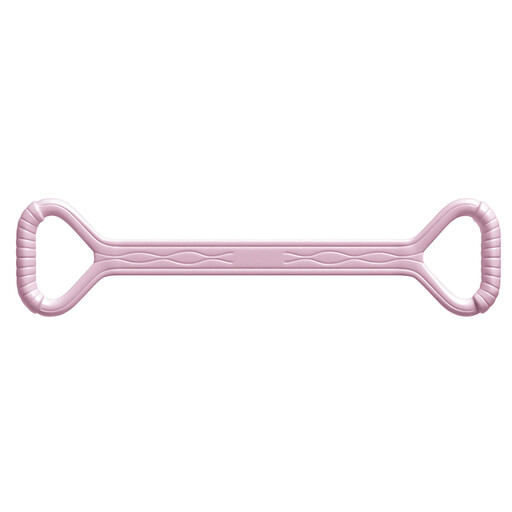
Why it suits this user: This set is a good starting point if you want to try different exercises at home without committing to one specific type of band.
A set makes it easier to avoid buying a single band that’s too heavy straight away. Before purchasing, check which resistance levels are actually included.
Suitable for varied home workouts; check the product page for the items included.
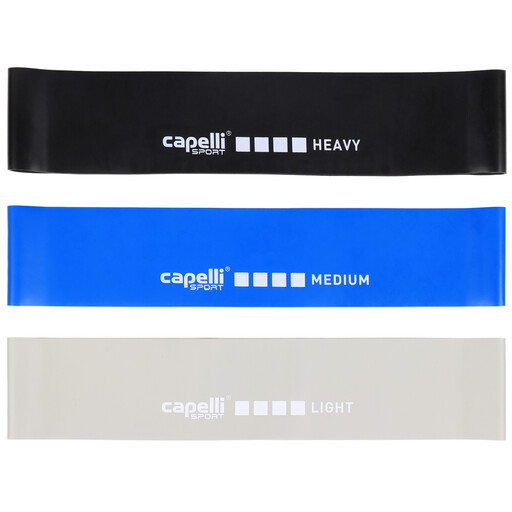
Why it suits this user: The three closed-loop bands offer light, medium and heavy resistance, and are designed for yoga, Pilates and arm and leg exercises.
The three levels mean you don’t need a separate set for every training intensity. The bands are made from latex, so bear potential allergies in mind.
3 bands, 5 cm wide and 50 cm in circumference; storage bag included; described as suitable for yoga and Pilates.
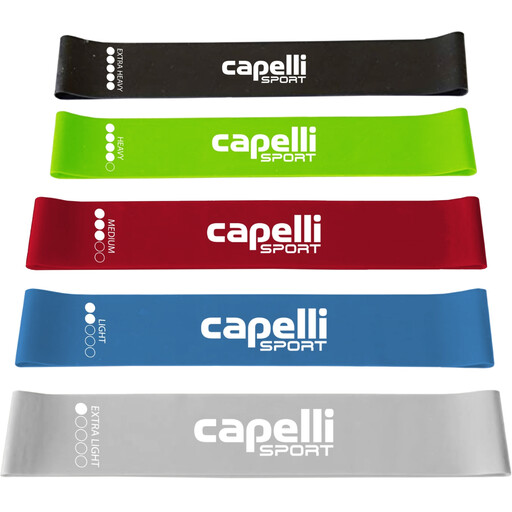
Why it suits this user: This set is designed for leg and glute exercises, but can also be used for yoga, Pilates and some recovery training.
Five clearly differentiated levels offer more steps between resistance levels than a set with just light, medium and heavy bands. The manufacturer states that the bands can be stretched to 2.5 times their original length.
5 levels from extra light to extra heavy; approximately 5 cm wide; carry bag included; made from natural latex.
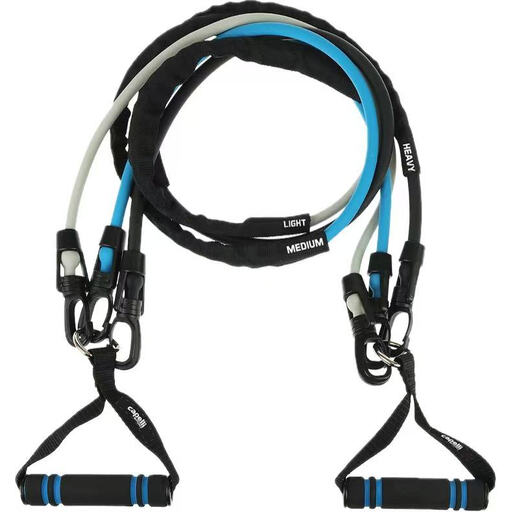
Why it suits this user: The separate cords can be attached to the foam handles using clips. This makes the set suitable for bicep curls, tricep kickbacks and other strength exercises at home.
You can combine one, two or three bands to adjust the resistance. Always check that the clips are fully closed before you begin.
3 levels: light, medium and heavy; 120 cm cords; foam handles with safety straps; natural latex as the main material.
We’ve put together a comprehensive, up-to-date list of products that meet these strict selection criteria and the applicable European safety regulations.
How long a band lasts depends on its material, how often it’s used, how far it’s stretched and how it’s stored. There’s no set lifespan that applies to every band. Check it regularly for tears, stickiness, discolouration and thin spots. Replace any band that shows visible damage.
A set with several resistance levels gives you more scope to build up gradually. Mini loop bands are practical for leg and glute exercises, while bands with handles may feel more comfortable for arm and shoulder exercises. Avoid choosing a resistance that makes you rush through the movement or compensate with other muscles.
Some products are described as suitable for physiotherapy, rehabilitation or recovery training. That doesn’t mean every band is right for every condition. If you have an injury or are receiving treatment, it’s best to discuss the exercises, resistance and range of movement with a physiotherapist or doctor.
