
Maker who wants to show fine details
You want to photograph inclusions and the finish of small resin pendants clearly. So look at the lens magnification and the framing you can achieve with your setup.


Choose a compact camera with a macro mode if you want to get started with minimal extra equipment. Choose a mirrorless camera with a suitable macro lens if you want to bring tiny details closer. Lens specifications help you assess magnification, but working distance, lighting and the depth of field you want also matter when photographing a pendant against a dark background.
You want to photograph inclusions and the finish of small resin pendants clearly. So look at the lens magnification and the framing you can achieve with your setup.
You photograph pendants for product listings and want control over the background, colour and visible reflections. Lighting is a separate consideration alongside the camera.
You want to take close-ups without immediately having to put together a camera body, separate macro lens and elaborate setup. So also compare what comes in a camera kit and which items you’ll need to buy separately.
When photographing small resin pendants, the camera is only part of the picture. Lens magnification, lighting and the depth of field you want all affect how you can set up the shot.
Best for: you want to get started without an interchangeable lens and mainly take wider shots or simple close-ups.
Trade-off: a macro mode alone doesn’t tell you how much of each pendant will fit in the frame. Check this with your own subject.
Best for: you want to show small inclusions, edges or fastenings clearly and assess the magnification of your chosen lens combination.
Trade-off: you may need to buy a suitable macro lens separately. Also consider working distance, lighting and sharpness throughout the depth of the subject.
| What to consider | What to look for when buying | What consumers are looking for |
|---|---|---|
| Bringing small details closer | Compare the maximum magnification of the exact lens and its working distance. The minimum focusing distance isn’t the same as the clear space in front of the lens. | If I want to show inclusions or fine edges clearly, lens magnification is my priority. Around 33% of consumers say this is their main concern when buying. |
| Lighting and a dark background | Take test shots with the same pendant and background. Check how visible the edges, colour and reflections are, and leave room for a lamp or diffuser. | If I want the pendant to stand out against a dark background, I focus on controlling the light and colour. Around 27% of consumers give this the highest priority. |
| Sharpness throughout the depth | Check whether the exact camera model supports focus bracketing and whether the images are merged in the camera or afterwards. | If I want to show several layers of a stationary pendant in sharp focus, I look at focus stacking and the post-processing required. Around 20% of consumers put depth of field at the top of their list. |
| Ease of use and a complete kit | Check what’s included in the kit and the lens mount. Also consider what lighting or support equipment you already have and what else you need. | If I want to get started with as few separate items as possible, I look at the complete setup rather than just the camera body. Around 20% of consumers say ease of use and what’s included in the kit matter most. |
Minimum focusing distance, working distance and maximum magnification describe different things. So the stated distance alone won’t tell you how large the pendant will appear in the frame or how much room you’ll have for lighting.
Compare the maximum magnification and practical working distance of the exact lens, then try to recreate your desired framing with a similar subject.
The Canon EOS R50 kit described by Canon includes an RF-S 18-45mm lens; the RF 85mm F2 Macro IS STM is listed separately. So a kit lens isn’t automatically the macro lens mentioned.
Check exactly what’s included in the kit and make sure the lens mount is compatible before comparing a camera body and lens as one complete set.
The background and lighting setup affect which details of the pendant remain visible. A camera feature alone can’t determine this.
First, take a test shot of your own pendant and adjust the lighting and background separately. A tripod can help you keep the framing consistent across repeated product shots. Allow time for test shots and for any extra lighting or diffuser you may need.
An EOS R50 mirrorless camera can be paired with interchangeable RF lenses; the RF 85mm macro lens mentioned is a separate product.
The Z system lets you pair a Z camera with the NIKKOR Z MC 50mm f/2.8.
An APS-C camera with an E-mount, such as the α6400, can be paired with the separate SEL30M35 macro lens.
The TG-7 is a compact camera with a fixed lens and macro modes, making it a good starting point if you don’t want to buy a separate interchangeable macro lens.
The Joybuy camera options below are intended as general points of comparison for product photography. For each model, check whether the lens and focusing capabilities are suitable for close-ups of your pendant.
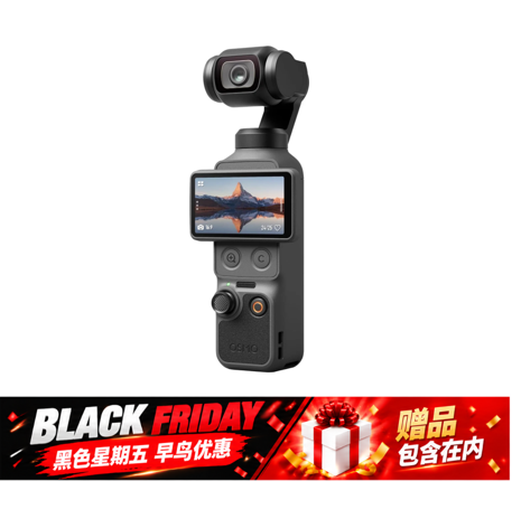 No image available
Check whether the camera can capture the framing and focusing distance you want for your pendant.
The product name lists a pocket gimbal camera, a 1″ CMOS sensor, 4K/240fps, 3-axis stabilisation and 107 GB of built-in storage.
 No image available
Before choosing this for detail photography, test it with your own pendant to see whether it can capture the close-up you want.
The product name lists a 1″ CMOS sensor, 4K/120fps, 3-axis stabilisation and an included microphone.
 No image available
Check whether its close-up capabilities are suitable for the size of the details you want to show on your pendant.
The product name lists a 1″ CMOS sensor, 4K/120fps, 3-axis stabilisation and a 2″ rotatable touchscreen.
 No image available
This mirrorless camera is sold as a body without a lens. Check which compatible lens you’ll need for close-ups of your pendant.
The product information lists compatibility with Sony E-mount lenses.
 No image available
Compare the included zoom lens with the magnification and working distance you need for your pendant.
The product name lists a 16–50mm zoom lens.
No. Also check the lens’s maximum magnification and working distance. Sony distinguishes between the distance measured from the sensor plane and the clear space between the subject and the front of the lens.
With a stationary pendant, you can take and combine shots focused at different points. Check whether the exact camera model supports focus bracketing and what post-processing is required. Canon lists focus bracketing for the EOS R50, and Adobe explains how to merge different focus planes.
Take a test shot to check that the edges, details and colour of your pendant remain visible. Adjust the lighting and background separately. Canon recommends a tripod to keep the framing consistent in product photography.
Consumers generally have a statutory 14-day cooling-off period for online purchases, subject to legal exceptions. The Dutch government also states that the seller is the point of contact if a product is faulty. The consumer cooling-off period doesn’t automatically apply to business purchases, which are covered by different warranty rules.