
Maker of detailed pendants
You want to show small inclusions, edges or finishes clearly. So, focus on the magnification offered by the lens you choose.


For overall shots, try your existing smartphone or camera first, using a stable setup and diffused light. If capturing the very smallest details is your priority, compare the magnification of the exact lens. A mirrorless camera gives you a choice of lenses, but a standard kit doesn’t automatically include a macro lens. A compact camera with a close-up mode keeps your setup simpler, although the minimum focusing distance alone won’t tell you how much detail fills the frame.
You want to show small inclusions, edges or finishes clearly. So, focus on the magnification offered by the lens you choose.
You want consistent overall shots where reflections and changing light don’t overpower the shape and colour.
You want to find out whether your existing equipment or a camera with a fixed lens will do the job before adding separate macro lenses.
Choose this option: if you mainly photograph whole pendants and your current phone can capture the framing you want in sharp focus.
The trade-off: try a stable position and diffused light first. Check a test shot to see whether small details are clear enough.
Choose this option: if you want a dedicated camera without interchangeable lenses. OM SYSTEM says the TG-7 can focus from 1 cm away and has a microscope mode.
The trade-off: a short focusing distance isn’t the same as 1:1 magnification, and there may be little room to light the pendant.
Choose this option: if small details are your priority and you want to choose the lens, lighting and support separately.
The trade-off: check which lens comes in the kit. Canon lists a maximum of 0.25× in MF mode for the RF-S 18-45mm; Nikon says its separate Z MC 50mm f/2.8 lens offers 1:1 magnification.
| Consideration | What to look for when buying | Who is this important for? |
|---|---|---|
| Small details | Check the exact lens’s maximum magnification and whether you can take a stable shot or a focus-stacked series. | If I want to show small inclusions or edges clearly, I look beyond the words ‘close-up’. An estimated 33% of consumers put detail reproduction first. |
| Reflections and colour | Check whether you can use diffused light and still have enough room to light the pendant. | If I want to photograph shiny pendants consistently, I want to control reflections and my shooting space. An estimated 27% of consumers give this the highest priority. |
| Workflow | Weigh up a fixed lens against a mirrorless camera, checking your lens options and what’s included in the kit. | If I want to photograph several pendants in the same way, a simple, repeatable setup matters. An estimated 20% of consumers say this workflow comes first. |
| Complete setup | Compare what you already own with a complete kit, including the lens, support and diffused light you need. | If I don’t want to add a separate macro lens or studio equipment unnecessarily, I compare the complete setup. An estimated 20% of consumers put the total purchase first. |
The term ‘close-up’ doesn’t tell you how much magnification a lens offers. Canon lists a maximum of 0.25× in MF mode for the RF-S 18-45mm; Nikon lists 1:1 for its separate Z MC 50mm macro lens.
Before buying, check the exact lens included in the kit and compare its maximum magnification with the smallest details you want to photograph.
Direct light and the surroundings can reflect off small, shiny objects. A different camera won’t replace suitable lighting.
Try a diffuser or light tent, then assess the reflections in a test shot of your own pendant.
OM SYSTEM says the TG-7 can focus from 1 cm away; Nikon specifies 1:1 magnification for a separate macro lens. These are different specifications.
Compare both the focusing distance and the reproduction ratio, and check that there’s room for your lighting when shooting up close.
EOS R mirrorless cameras can be paired with a range of RF and RF-S lenses.
The Z50II is a mirrorless camera with a Z mount that you can pair with a separate macro lens.
The Tough TG-7 is a compact camera with a fixed lens and a microscope mode.
Alpha cameras with an E mount can be paired with the separately available E 30mm F3.5 Macro.
An X Series camera, such as the X-S20, can be paired with the separate XF30mmF2.8 R LM WR Macro.
This Joybuy selection includes compact action cameras and a Sony mirrorless camera. If you’re using one to photograph resin pendants, pay particular attention to the specifications of the exact lens and check that it can deliver the close-up you want.
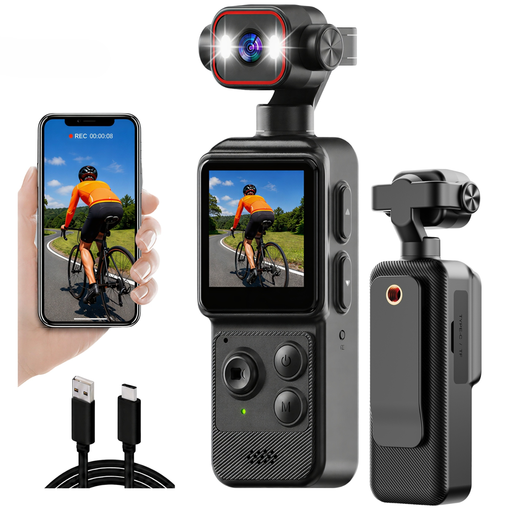 No image available
The product information lists a photo function. For pendant photography, check whether the lens can capture the close-up you want.
The title mentions a rotating wide-angle lens and a 1.54-inch display. The information doesn’t confirm a maximum magnification for macro shots.
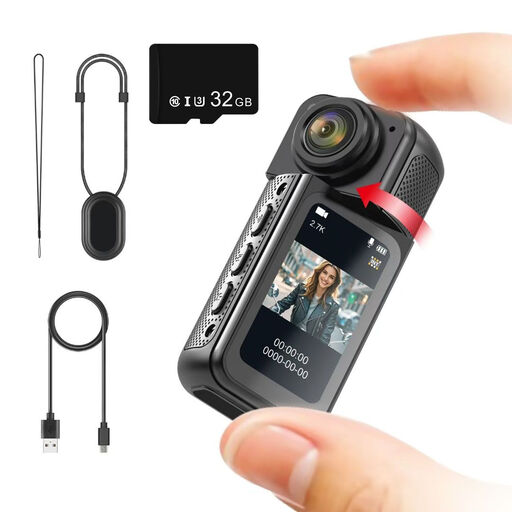 No image available
The product information lists photo controls. Check whether the lens can capture the details of your pendant.
The title mentions a 32 GB memory card and a 1.47-inch IPS screen. Maximum magnification isn’t specified.
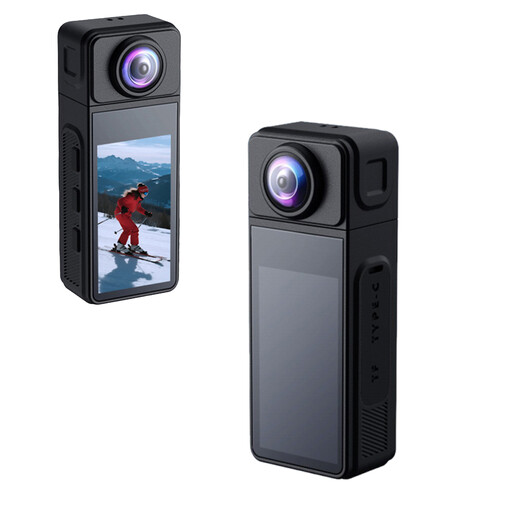 No image available
The product information lists a photo function. Check its close-up capabilities before choosing this camera for small details.
The title mentions electronic image stabilisation. The information doesn’t confirm a maximum magnification for macro shots.
 No image available
This mirrorless camera is supplied with a 16-50mm zoom lens. Check its magnification for close-ups of small details.
The product information lists a 24.2 MP APS-C sensor and a vari-angle LCD screen. Check which lens is included in the kit.
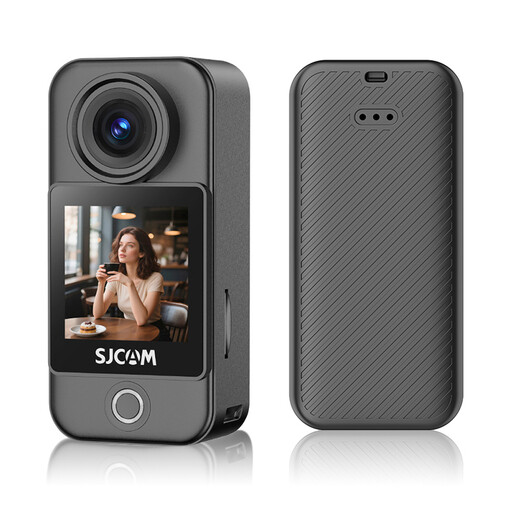 No image available
The product information says it supports still photography. Check whether the lens can capture the framing you want for your pendant.
The information lists photos up to 16 MP, a touchscreen and adjustable white balance. Maximum magnification isn’t specified.
No, not necessarily. For an overall shot, first try your existing camera or smartphone with a stable setup and diffused light. If small details don’t appear large enough, compare the magnification of the exact lens. A standard kit isn’t automatically a macro kit.
At high magnification, the depth of field can be shallow. If needed, use a sturdy tripod to take several shots with different focus points and combine them. Check in advance which features and software work with your camera.
Not on its own. Diffuse the light and consider what the surface is reflecting. A diffuser or light tent can be part of a setup for small, shiny objects.
Check which lens is included and whether you’ll also need a macro lens, stable support or diffused light. The EOS R50 kit described by Canon includes an RF-S 18-45mm lens, not the separate RF 100mm macro lens.
According to the Dutch government, when you buy at a distance, the seller must provide information about the product and the cancellation period, among other things. This is usually 14 days. Business.gov.nl explains that consumers have statutory rights if a product is faulty, including repair or replacement. Consumer rules don’t automatically apply to purchases made in a business’s name.