
Vandaag of morgen in huis

Kwaliteit gegarandeerd

Welkomstaanbiedingen ontgrendelen: GRATIS bezorging | Tot 80% korting | Gratis 30 dagen JoyPlus-proefperiode
Download de app
Choosing a resin 3D printer can be overwhelming. Specifications like 14K resolution, build volume, and print speed determine the final result, but what do they actually mean for your projects? Making the wrong choice can lead not only to unnecessary costs but also to the frustration of failed prints. This article will help you understand the key parameters and presents a selection of models based on their specifications, enabling you to make an informed decision.
Before purchasing a resin 3D printer, it's essential to understand which specifications impact quality and ease of use.
Resolution (K and XY Resolution in ?m): The 'K-value' (e.g., 9K, 14K, 16K) refers to the number of pixels on the horizontal axis of the LCD screen. A higher K-value on a screen of the same size means smaller pixels. The XY resolution, measured in micrometers (?m), is the most direct measure of detail: the lower the number, the finer the details the printer can produce. For printing miniatures and jewellery, a low XY resolution (e.g., 18-25 ?m) is crucial. For larger, less detailed objects, a higher XY resolution is often sufficient.
Build Volume (mm?): This indicates the maximum dimensions (length x width x height) of an object you can print. A small build volume may suffice for miniatures or small parts, but a larger volume is necessary for bigger prototypes or for printing multiple objects simultaneously.
Print Speed (mm/h): The speed is expressed in the height the printer can build per hour. A high-speed resin printer can reach up to 150 mm/h. This is influenced by the exposure time per layer and the technology used to release the print from the FEP or nFEP film in the resin vat. Features like 'tilt release' can significantly increase the speed.
Ease of Use: Modern printers offer features that simplify the printing process. Consider auto-leveling, which eliminates the need for manual calibration. Other useful additions include Wi-Fi connectivity for wirelessly sending files and AI cameras that detect print issues.
Below is an overview of three resin 3D printers, selected based on their technical specifications and features.
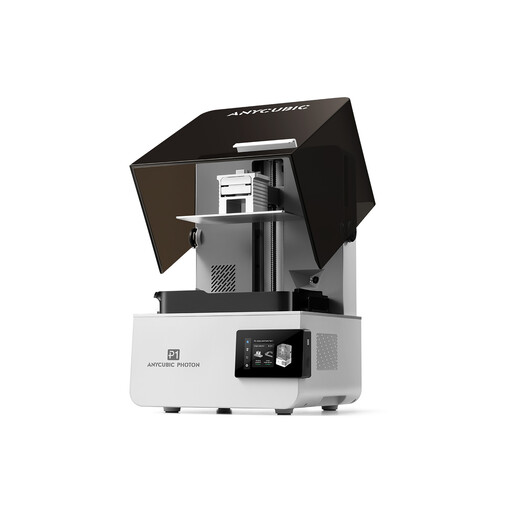
Why We Chose It This printer is designed for users who demand high precision and reliability. The combination of a 14K 3D printer screen and an industrial-grade mechanical structure makes it suitable for professional applications.
Advantages
Who It's For Professionals and prosumers, such as engineers, designers, and creators of detailed models, who need a reliable high-resolution 3D printer for prototyping and small-batch production.
View the Anycubic Photon P1 14K on Joybuy.nl
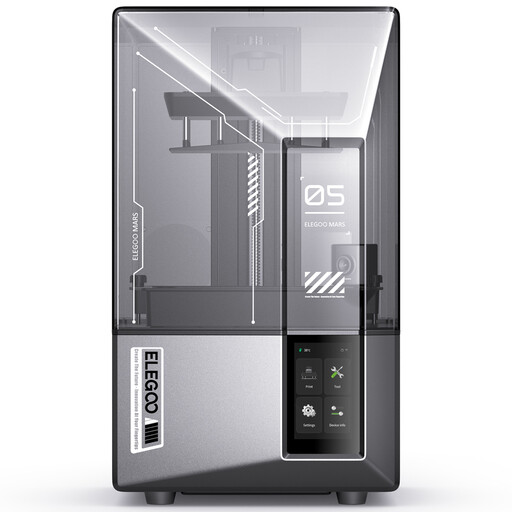
Why We Chose It The Elegoo Mars 5 Ultra combines high print speeds with smart features, making it highly accessible, even for beginners.
Advantages
Who It's For Hobbyists and beginners looking for a user-friendly and fast 3D printer for miniatures. The smart features lower the entry barrier and increase the success rate of prints.
View the Elegoo Mars 5 Ultra on Joybuy.nl

Why We Chose It This 16K resin printer combines an extremely high resolution with a large build volume and smart features, including a heated resin vat.
Advantages
Who It's For Demanding users who need both a large build volume and the highest possible resolution. The heating function makes it an attractive option for those printing in cooler environments.
View the Elegoo Saturn 4 Ultra on Joybuy.nl
This selection is based on a combination of resolution, speed, and ease of use. However, the market for resin 3D printers is broad and diverse. If these models don't fully meet your needs, or if you're looking for a different budget or specific features, you can browse our full range.
Discover all resin printers on Joybuy.nl
1. What is the difference between a resin 3D printer and an FDM printer? A resin 3D printer (SLA/DLP/LCD) uses a liquid, light-sensitive resin that is cured layer by layer with a UV light source. This results in highly detailed and smooth objects. An FDM (Fused Deposition Modeling) printer builds an object by depositing molten plastic filament layer by layer. FDM printers are generally more affordable and easier to use, but their print quality is less detailed than that of resin printers.
2. Is a higher K-resolution always better? Not necessarily. A higher K-value is only meaningful if it results in a smaller pixel size (a lower XY resolution in ?m). A 16K screen on a very large surface might have the same or even a larger pixel size than a 9K screen on a small surface. Therefore, always focus on the XY resolution in micrometers (?m) if you want the finest details. For many applications, the difference between, for example, 14K and 16K is barely perceptible to the naked eye.
3. What else do I need besides the printer itself? Besides the printer and resin, you will need several accessories for post-processing. This includes nitrile gloves and a mask for safety, isopropyl alcohol (IPA) or a special cleaning fluid to clean the printed models, and a UV curing station to fully harden the prints and give them their maximum strength. Many brands offer combined wash and cure stations.
