
Vandaag of morgen in huis

Kwaliteit gegarandeerd

Welkomstaanbiedingen ontgrendelen: GRATIS bezorging | Tot 80% korting | Gratis 30 dagen JoyPlus-proefperiode
Download de app
Stepping into the world of resin 3D printing unlocks unparalleled detail, from razor-sharp miniatures to functional prototypes. But the market is saturated with technical specifications and marketing promises. Without careful consideration, you could invest in a machine that brings more frustration than joy. As a Joybuy Product Recommendation Officer, I'm here to help you make the right choices, based on facts, not hype. Let's review the most common pitfalls and the key specifications to look for.
Before you buy an SLA printer, it's crucial to understand where things often go wrong. Many buyers focus on a single standout feature, overlooking critical weaknesses.
To avoid these pitfalls, focus on the specifications that truly matter. These are the factors that determine the reliability and quality of your prints.
A 14K 3D printer has an extremely high pixel density, resulting in a very small XY resolution (often under 20 microns). This is the foundation for fine details. But also pay attention to the light source. A 'COB + Fresnel' light source ensures high light uniformity (ideally >90%). This means the UV light is equally strong across the entire print area, making details in the corners just as sharp as in the centre. Without good uniformity, a high resolution is useless.
The Z-axis moves the build plate upward after each cured layer. Its stability is crucial. A system with dual linear rails and a ball screw is significantly more stable than a single rod. This minimises vibrations and ensures perfectly consistent layer thickness, which is essential for smooth, professional surfaces.
The choice of a UV resin 3D printer also heavily depends on the material you plan to use. The resin determines the properties of your final product and the ease of your workflow.
Below is a selection of products tailored to specific user profiles. These choices are based on their objective specifications and how they address the pitfalls mentioned earlier.
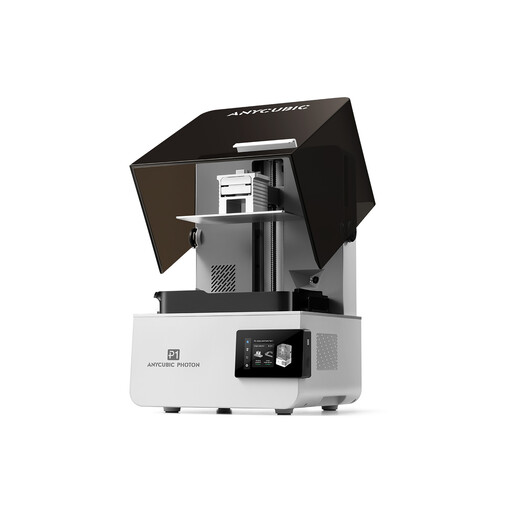
Why This Fits Their Persona: For professionals and prosumers who demand the highest accuracy for rapid prototyping, model making, or jewellery. Reliability and detail are more important here than pure speed.
This printer bypasses the 'resolution race' trap by combining its 14K screen with an industrial-grade ball screw and dual Z-axis rails. This ensures the high resolution actually translates into perfect prints, without Z-wobble.
Exceptional mechanical stability for consistent results. The high light uniformity (>92%) and the ability to process viscous resins offer versatile and reliable performance.
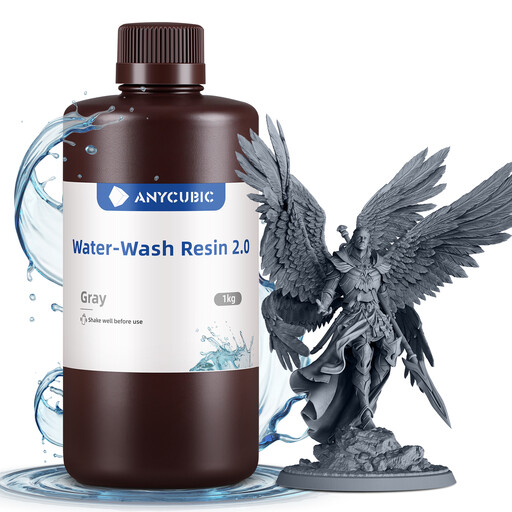
Why This Fits Their Persona: Perfect for anyone printing at home who wants to avoid the mess, odour, and cost of IPA. Ideal for beginners and hobbyists who want a clean and simple workflow.
This product directly tackles the 'hidden hassle' pitfall. By allowing cleaning with simple water, it eliminates the most impractical part of the resin printing process. No more fussing with chemicals.
Low odour and water-based cleaning for maximum convenience. The resin maintains high precision and low shrinkage, so print quality is not sacrificed for ease of use.
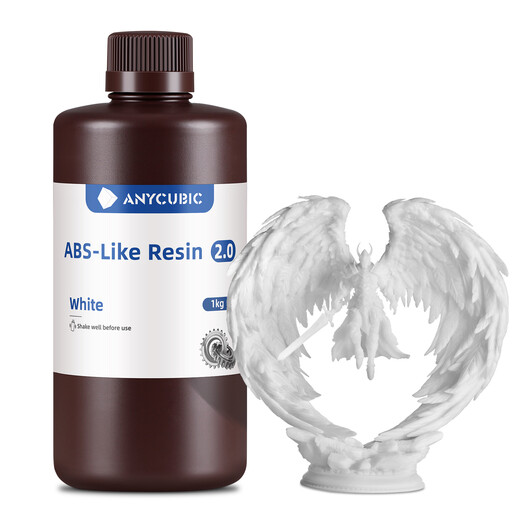
Why This Fits Their Persona: For users who print parts that will be under mechanical stress, such as enclosures, jigs, or replacement parts. The focus is on strength and durability, not just appearance.
This resin prevents the disappointment of brittle prints. Instead of using a standard resin for a functional part that then breaks, ABS-like resin provides the toughness needed for durable, practical applications.
High toughness and impact resistance (Izod Impact Strength 109 J/m). The parts are strong enough to be drilled and tapped, which significantly increases their functionality.
We have a complete, up-to-date overview of resins that meet these strict selection criteria and EU safety regulations.
The difference lies in the XY resolution, or the size of the pixels. A 16K screen typically has smaller pixels than a 14K screen of the same size, which can theoretically lead to finer details. In practice, this difference is often barely perceptible to the human eye. Factors like mechanical stability, light uniformity, and the quality of the 3D printer resin have a much greater impact on the final print quality.
It's not strictly necessary, but it is highly recommended for an efficient and clean workflow. Manual washing in tubs of IPA and curing in the sun is possible, but it's messy and inconsistent. A 'Wash & Cure' station automates this process, delivers more consistent results, and ensures a safer working environment. If you opt for water washable resin, the washing process becomes significantly simpler, and you can manage without a station.
This depends entirely on the size and volume of your prints. A 1 kg bottle (approximately 900-950 ml) can yield hundreds of small miniatures (like D&D figures) but only a few large, solid objects. Most slicing software (like Chitubox or Lychee) provides an estimate of the resin consumption per print, including supports, so you can get a good idea of the cost per project.
