
Manager with a small storage cupboard
Wants to put the coffee machine away after events, so considers both the cupboard and the space needed to fill the machine and access the filter.


Choose based on how much coffee you’ll need during the busiest break, then measure both the storage space and the room needed to fill and use the machine. A compact machine may mean brewing several batches when it’s busy; a larger jug takes up more space, while a thermal jug can be useful if visitors help themselves at different times. Also check that the terms of use and warranty are suitable for the organisation buying the machine.
Wants to put the coffee machine away after events, so considers both the cupboard and the space needed to fill the machine and access the filter.
Wants to serve several visitors during one break and weighs the amount brewed per batch against the available storage space.
Makes coffee before or between repairs and wants to carry the jug easily to where visitors are pouring their drinks.
A good fit when: cupboard and worktop space is limited and visitors usually have coffee in small groups.
Trade-off: a smaller brew may mean making several batches in a row during a shared break.
A good fit when: several visitors want coffee at the same time and there’s enough room for the machine and jug.
Trade-off: check the machine’s dimensions and the available height, width and depth.
A good fit when: visitors help themselves at different times and the jug needs to sit away from the machine, where coffee is served.
Trade-off: measure the space for the jug too, and check how long it keeps coffee warm enough for your needs.
| Consideration | What should you look for? | Who is this important to? |
|---|---|---|
| Storage and access | Measure both the cupboard and the place where you’ll use the machine; check that the water tank, filter and jug are accessible while brewing. | If I want to put the machine away afterwards, I still need to be able to reach the tank and filter while it’s in use. Around 34% of consumers making this repair café choice would prioritise storage and access. |
| Coffee during the break | Compare the litres brewed per batch with the number of people drinking coffee and the capacity of your own cups. | During a busy break, I want to know whether one batch will be enough for everyone having coffee at the same time. Around 33% of consumers would focus mainly on the amount brewed per batch. |
| Serving at different times | Choose the type of jug based on the time between brewing and serving; also check whether a compatible replacement jug is available. | If visitors help themselves at different times, I want to be able to carry the jug to where coffee is served and take the serving routine into account when choosing. Around 20% of consumers would prioritise serving coffee over time. |
| Cleaning and use | Check which parts are removable, follow the cleaning instructions for the specific model and ask about the terms for your intended use. | When a machine is shared, I want to know how its parts should be cleaned and what happens if a part needs replacing. Around 13% of consumers would prioritise maintenance, spare parts and terms of use. |
The stated number of cups can vary from one model to another. It doesn’t necessarily tell you how many of your own mugs one batch will fill.
Work out the capacity of the cups you use and compare it with the stated number of litres per batch.
If you need to brew more batches than expected, you may also need extra coffee and filters.
A machine may fit in storage but still be awkward to use if you can’t easily reach the tank, filter or jug while brewing.
Measure both the storage space and the place where you’ll use the machine. Check how the parts open or come apart too.
According to Bosch, the hotplate on the Bosch TKA2M113 switches off after 40 minutes. Inventum says the Inventum KZ818D has a thermal jug that can be used separately, so the way you serve coffee differs by model.
Choose based on your serving routine and check the model number before ordering a replacement jug.
A replacement jug must be compatible with the machine, so check the model number on the appliance.
These brands offer examples of different jug types and capacities. The features below apply to the product lines mentioned, not necessarily to the entire brand.
The Single 5 is designed for smaller batches; the Enjoy Top Therm is a separate range with a thermal jug.
The MyMoment TKA2M113 has a larger glass jug and is an option for shared coffee breaks.
According to Inventum, the KZ818D combines a larger brew with a thermal jug.
The KA 4808 is a compact model to consider when space is a key priority.
The KBG Select is designed for those who want to switch between a half and a full glass jug.
This selection includes filter coffee machines with a glass or thermal jug for shared coffee breaks or serving over time. Measure your cupboard and workspace, and check the terms for use by your organisation before choosing a model.
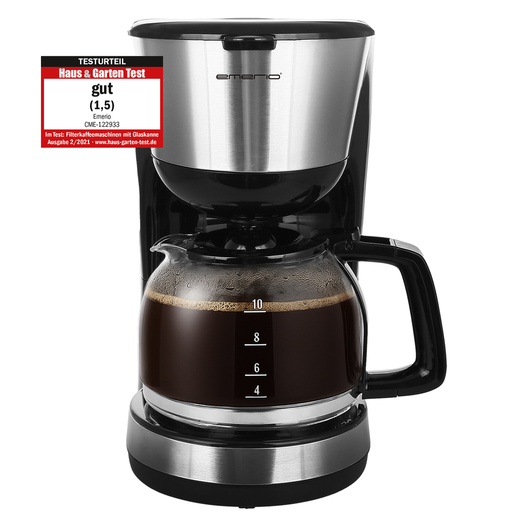 No image available
An option to compare for a shared coffee break; measure the available cupboard and workspace before choosing.
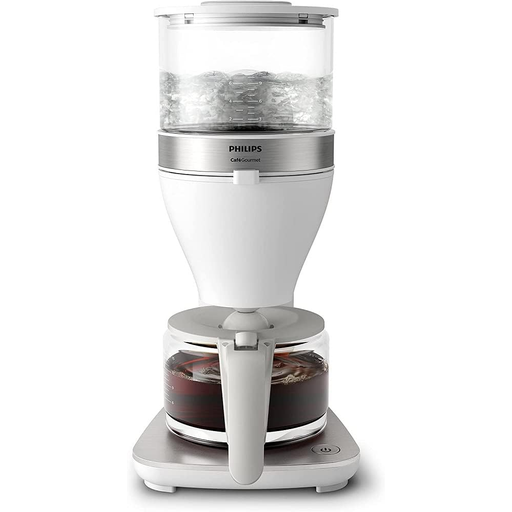 No image available
Consider this model for making coffee for a group, and compare its stated capacity and dimensions with your own requirements.
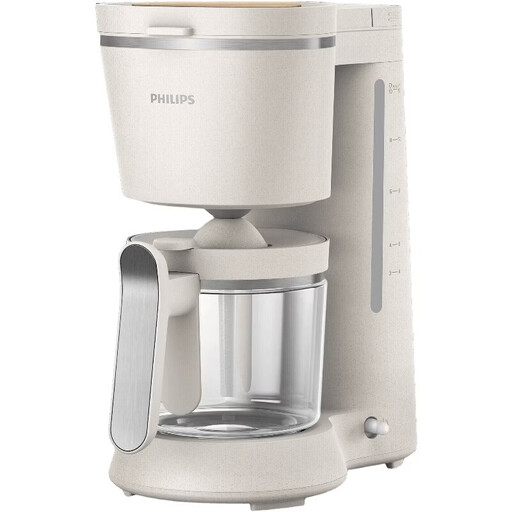 No image available
The stated capacity can help you compare batch sizes for a break with several visitors; check how much space you’ll need too.
The product name states a capacity of 1.2 litres.
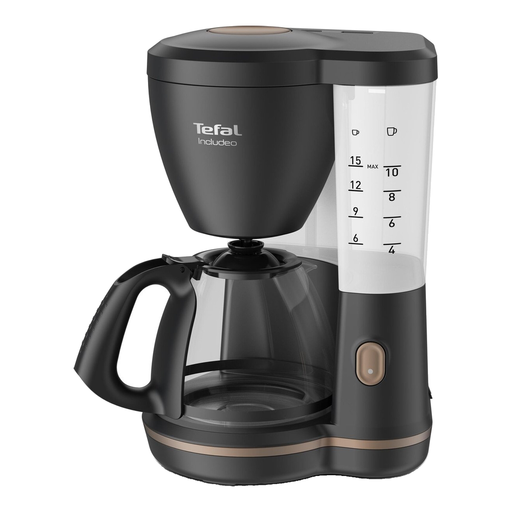 No image available
A model to compare for a shared break; check the stated cup count against the capacity of your own mugs.
The product name lists a capacity of 1.25 litres and 10 to 15 cups.
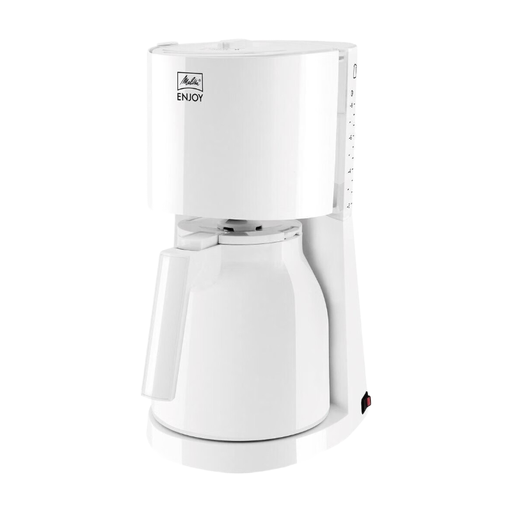 No image available
The thermal jug makes this an option to consider if visitors serve themselves at different times; measure the space needed for the machine.
Work out how much you’ll need for the busiest shared break by multiplying the expected number of cups by the capacity of your own cups. Compare the result with the stated brewing capacity; a manufacturer’s cup count won’t necessarily match your mugs.
As well as measuring the storage space, set aside a stable spot where the tank, filter and jug are accessible. Follow the chosen model’s manual for plugging in, cleaning and descaling; the Inventum manual, for example, warns about hot surfaces and using a damaged appliance.
Before buying, check who the legal purchaser is and which terms apply to use in the repair café. The Netherlands Authority for Consumers and Markets describes statutory consumer protection for sales to consumers; don’t assume the same rules apply to a business purchase.
That depends on the specific activity and whether the organisation falls under the rules for food businesses. The Netherlands Food and Consumer Product Safety Authority says that food businesses supplying food directly to consumers must register, and outlines the hygiene requirements for such businesses. The organisation should check how these criteria apply to its own circumstances.
For the specific model you’re buying, check the required CE marking, the manual, the plug and the connection requirements. The Dutch government outlines the applicable EU safety requirements for electrical products; a product listing alone doesn’t confirm that an individual item has been checked.