Who is this choice relevant to?

Organisers with limited counter space

You want to set up a coffee station without blocking the repair area, while keeping the reservoirs and drip tray within easy reach. Melitta gives the Purista’s width as 20 cm; compare this with the full space available for the machine.

Organisers expecting a busy turnout

You want to be able to serve visitors and repairers during peak periods. Compare the expected number of cups with the reservoir capacity and any recommended daily capacity; JURA recommends a maximum of 50 preparations per day for the W4.

Volunteers taking care of the coffee

When shifts change, the machine needs to be easy for different volunteers to operate and clean. Repair Café specifically lists preparing coffee and tea as a host’s responsibility.

What should you look for when buying?

Slim machine for black coffee

When it’s a good fit: If counter width is your main constraint and espresso or café crème is enough, the Melitta Purista is worth comparing. Melitta specifies a width of 20 cm.

Consider: Check the clearance around the machine and its terms of use. Don’t assume it can make milk-based drinks without checking the specific model.

Domestic machine with a milk option

When it’s a good fit: If visitors sometimes want a cappuccino, compare manual milk frothing with a model that makes milk-based drinks at the touch of a button.

Consider: The De’Longhi Magnifica Start ECAM220.20.W has a manual milk frother. Check that the terms of use and service for domestic models suit your organisation.

Professional machine for regular busy periods

When it’s a good fit: If your café regularly serves a high number of cups and a machine designed for business use is important, the JURA W4 is worth comparing. JURA lists workshops as a suitable setting.

Consider: The W4 is 29.5 cm wide and its stated drinks menu does not include milk-based drinks. JURA recommends a maximum of 50 preparations per day.

Factor to consider What to look for when buying Who should give this more weight?
Space and accessibility Measure the width, depth and height of the space, and check that you can fill, empty and clean the machine there. Melitta specifies a width of 20 cm for the Purista; JURA gives the W4’s dimensions as 29.5 × 44.3 × 44.6 cm (width × height × depth). If I need work space as well as room for the machine, I want to know that the reservoirs and parts that need cleaning will remain accessible. Around 36% of consumers cite available space as their main purchasing concern.
Busy periods and refilling Estimate how many cups you’ll need during your busiest event and compare this with the reservoir capacity and any recommended daily limit. A recommended daily maximum does not guarantee how many cups the machine can make consecutively. When we’re expecting a busy turnout, I want to serve visitors without having to refill the water reservoir constantly. Around 29% of consumers cite peak capacity as their main purchasing concern.
Operation and maintenance Consider whether volunteers can easily use the machine, reservoirs and parts that need cleaning. Siemens specifies a removable brewing unit; De’Longhi lists a manual milk frother for the ECAM220.20.W. When volunteers take turns, I want everyday operation and cleaning to be easy to hand over. Around 21% of consumers make ease of maintenance their main purchasing concern.
Drink choice and milk Decide whether espresso and regular coffee are enough. If not, check for each model whether milk is prepared manually or at the touch of a button, and arrange hygiene procedures and allergen information where applicable. If visitors also ask for cappuccino, I want to know what extra steps are involved in preparing milk-based drinks. Around 14% of consumers cite their preferred drinks as their main purchasing concern.

Common buying mistakes

  • Looking only at the machine’s width

    A width measurement won’t tell you whether you can fill the reservoirs or clean the parts where you plan to put the machine. A cramped spot can take up valuable work space or mean you have to move the machine every time it needs maintenance.

    Measure the full space and check that you can access the reservoirs and parts that need cleaning before choosing a model.

  • Assuming a domestic model is suitable for heavy use

    De’Longhi describes the Magnifica Start ECAM220.20.W as a machine for home use. JURA lists workshops as a suitable setting for the professional W4 and recommends a maximum of 50 preparations per day. You may therefore need to refill it more often or meet different service conditions.

    Estimate how much the machine will be used, then ask the retailer or manufacturer about its intended use and the service conditions for your organisation before buying.

  • Offering milk-based drinks without planning who will prepare them

    A manual milk frother requires extra operation and cleaning. If rules for unpackaged food apply to your activity, the organiser must also provide allergen information.

    First decide whether you need to offer milk-based drinks. Then agree who will clean the milk parts and, where required, provide allergen information.

Brands to compare

Melitta

The Purista is worth comparing if counter width is a priority and black coffee is all you need.

  • Melitta specifies a width of 20 cm for the Purista and lists espresso and café crème.
  • Check how much clearance the model needs and whether its drinks and terms of use suit your requirements.

De’Longhi

The Magnifica Start ECAM220.20.W combines bean-to-cup coffee with a manual option for milk-based drinks.

  • De’Longhi specifies dimensions of 240 × 440 × 350 mm and a 1.8-litre water reservoir.
  • The manual milk frother requires an extra step; the product page describes this model as a machine for home use.

Siemens

The EQ300 TF301E09 is worth considering if you’re weighing up ease of use and one-touch milk drinks against reservoir capacity.

  • Siemens specifies dimensions of 383 × 251 × 433 mm (height × width × depth), a 1.4-litre reservoir, one-touch milk drinks and a removable brewing unit.
  • These model specifications don’t tell you how many cups a repair café can make on a busy day.

JURA

The professional W4 is an option to compare if you regularly expect busy periods and mainly serve black coffee.

  • JURA lists workshops as a suitable setting, recommends a maximum of 50 preparations per day and specifies a 3-litre reservoir.
  • At 29.5 cm wide, the W4 needs more counter space than the Purista; its stated drinks menu does not include milk-based drinks.

Philips

The 2200 Series EP2220/10 is a domestic option to compare for bean-to-cup coffee with a classic milk frother.

  • Philips lists a touch display and a classic milk frother with two parts to clean.
  • Check the expected frequency of use and the terms for using the machine in your organisation.

Joybuy products

These Joybuy products are espresso machines that make coffee from beans; some also make milk-based drinks or filter coffee. Before buying, check that the available space, intended use and any service conditions are right for your repair café.
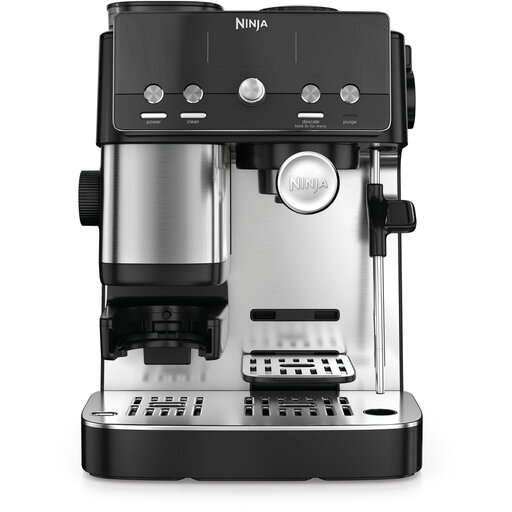
Ninja Luxe Café Mini ES301EU espresso and filter coffee machine with integrated grinder and manual milk frother

Ninja Luxe Café Mini ES301EU

Worth comparing if you want to offer both espresso and filter coffee made from beans.

The product description lists an integrated grinder and weight-based dosing. The manual milk frother requires an extra step; the product is described as being for home use, so check that the terms of use and service suit your organisation.

Joybuy
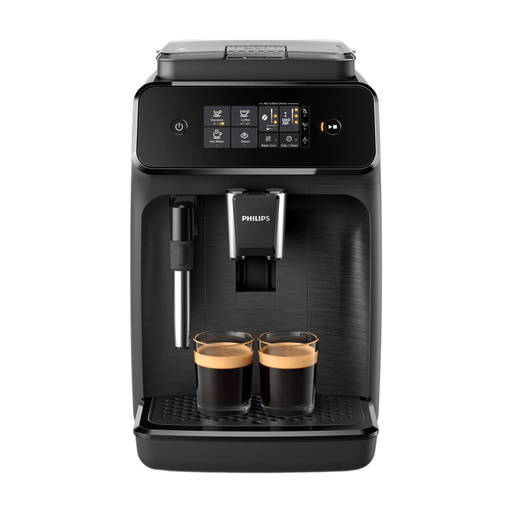
Philips 1200 Series EP1220/00 fully automatic espresso machine with classic milk frother

Philips 1200 Series EP1220/00

Worth comparing if a removable brewing unit and classic milk frother fit your cleaning routine.

The product description lists 12 grinder settings, a 1.80-litre water reservoir and a removable brewing unit. The classic milk frother requires a separate step for milk-based drinks.

Joybuy
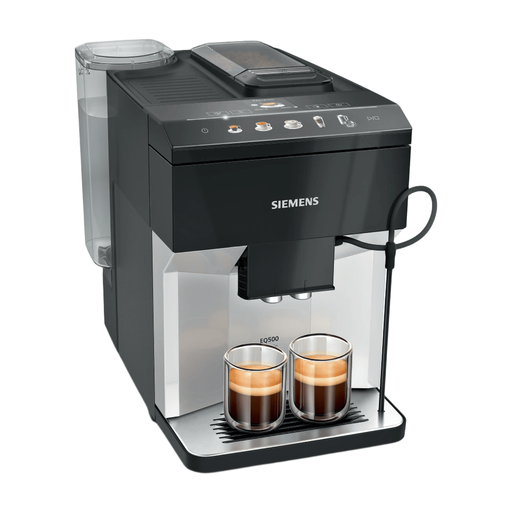
Siemens EQ500 TP511R01 fully automatic espresso machine

Siemens EQ500 TP511R01

Worth comparing if oneTouch preparation and a removable brewing unit suit the way volunteers will operate and maintain the machine.

The product description lists oneTouch preparation for drinks including espresso, latte and cappuccino, as well as a removable brewing unit. For the milk system, it recommends rinsing daily and taking it apart and cleaning it periodically.

Joybuy

De’Longhi Rivelia EXAM440.55.G fully automatic espresso machine with automatic milk system and two bean hoppers

De’Longhi Rivelia EXAM440.55.G

Worth comparing if you want to switch between two types of beans and serve automatically prepared milk-based drinks.

The product description lists Bean Adapt, two interchangeable bean hoppers and the preparation of two milk-based drinks at once.

Joybuy

Philips 5500 Series EP5547/90 LatteGo coffee machine

Philips 5500 Series EP5547/90 LatteGo

Worth comparing if a choice of coffee drinks and user profiles matters for volunteers who take turns.

The product description lists 20 coffee drinks, two user profiles and the ability to make two cups at once. The LatteGo parts are described as dishwasher-safe.

Joybuy

Frequently asked questions

Does a repair café have to register with the NVWA to serve coffee?

It depends on the organisation and how the coffee is served. According to the NVWA, food businesses that supply food directly to consumers must register, although some exceptions apply. Check whether your café’s legal structure and actual coffee service mean it needs to register. The NVWA says that anyone registered before 10 March 2026 must register again.

Is an HACCP plan always needed for serving coffee?

A food safety plan based on HACCP or an approved hygiene code is required when your activities fall under the rules for food businesses. First establish whether those rules apply to your repair café before assuming that the venue has a legal obligation; the NVWA explains these requirements for catering and craft businesses.

What changes if volunteers serve cappuccino with milk?

Preparing milk-based drinks adds steps for operation and cleaning, and may also mean you need to provide information. If your activity falls under the rules for supplying unpackaged food, the organiser must inform consumers about the allergens present, including milk, according to the NVWA.

Does the manufacturer’s guarantee automatically cover use by a repair café?

Don’t assume so based on the product page alone. Before buying, ask the retailer and manufacturer which intended-use and guarantee terms apply to your organisation and expected frequency of use. The Authority for Consumers and Markets describes statutory consumer guarantees specifically in relation to sales to consumers.

How do you choose a spot for the machine without disrupting repair work?

Measure the available width, depth and height, then check that volunteers can fill the reservoirs and clean the parts in that spot. Where possible, compare the machine’s full external dimensions; its width alone doesn’t prove that the space will work in practice.
