What should you consider when choosing?
Shallow front-loader
When: if you have enough width for a front-loader but limited depth.
Trade-off: the stated depth isn’t the full installation space you’ll need; allow for hoses and an open door too.
Slim top-loader
When: if width is your main constraint and there’s space above the machine.
Trade-off: the lid needs room to open fully, so you can’t use the top as a work surface or for stacking.
Standard front-loader
When: if a deeper machine will fit and you regularly use its drum capacity.
Trade-off: a larger drum isn’t necessarily practical for small, frequent loads; compare its capacity with the size of your usual load.
| What to consider |
What should you check? |
Who is this important for? |
| Space and opening |
Measure the space and access route; compare width, depth and height, allowing for hoses and the open door or lid. |
If the alcove is tight, I want to be sure the machine will still fit when connected and open. Around 33% of consumers prioritise fit. |
| Sportswear care |
Check whether the temperature and spin speed can be adjusted, and look at the load limit for the suitable programme. |
If I have clothes with different care labels, I want to be able to adjust the wash accordingly. Around 27% of consumers prioritise sportswear care. |
| Drum capacity |
Compare the amount of laundry you usually wash with the rated capacity and the maximum load for your chosen programme. |
For small, regular loads, I don’t want to choose a larger drum than my usual load calls for. Around 20% of consumers choose capacity mainly to suit the amount of laundry they wash. |
| Energy use and noise |
Compare label values on a like-for-like basis and check the figures for the programmes you actually use. |
If the machine is close to a living space, I also want to take spin noise into account. Around 20% of consumers focus mainly on running costs or noise. |
The energy-label consumption figures are based on eco 40–60; they don’t automatically show how much energy another sportswear or synthetic programme uses. The Consumers’ Association explains this basis. Always follow the care label on each garment.
Washing machines at Joybuy
This selection includes front-loaders with different drum capacities and stated depths, for anyone weighing up the available space against their usual laundry load.
 No image available
AEG LR73S840 7000 Series, 8 kg, 1400 rpm
An option to consider if an 8 kg standard front-loader suits your usual laundry load.
The product information lists dimensions of 84,7 × 59,6 × 57,2 cm. The title mentions ProSteam, PreciseWash and energy class A-40%.
View at Joybuy
 No image available
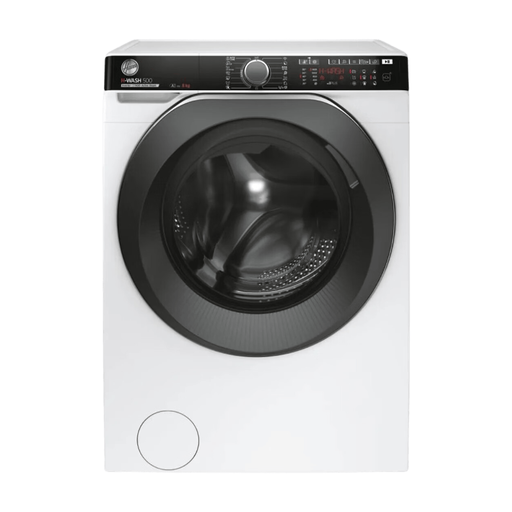
Hoover HWP 48AMBC7/1-S, 8 kg, 1400 rpm
Consider this model if an 8 kg front-loader suits the size of your usual laundry load.
The product information lists external dimensions of 600 × 540 × 850 mm; the depth of 470 mm excludes the door and hoses. Auto Care is described as a programme that takes the fabric type and load into account.
View at Joybuy
 No image available
Comfee CFP01EW70W-JD, 7 kg
A front-loader to consider if its stated depth of 400 mm fits your available space.
The product name lists a 7 kg capacity and a design depth of 400 mm. According to the product description, the 15-minute programme is intended for small, lightly soiled loads.
View at Joybuy
 No image available
TCL FF1006WB0, 6 kg
This front-loader is worth comparing if its stated depth of 45 cm and 6 kg capacity suit your space and laundry load.
The product name mentions Steam Wash and a 15-minute quick programme.
View at Joybuy
 No image available
Coocaa Galaxy A3 Series F702A3AВC0, 7 kg
Consider this model if its stated external dimensions and capacity suit your laundry space and usual load.
The product information lists external dimensions of 595 × 440 × 850 mm and adjustable temperatures of cold, 20, 40, 60 and 90 °C.
View at Joybuy
Frequently asked questions
Do I need to ask my landlord for permission to install a washing machine?
That depends on the alterations needed. According to the Dutch government, some minor, reversible changes don’t require permission, while renovations do. Before arranging any work, check the existing connections, the work planned and your agreement with the landlord.
Can I always wash sportswear on eco 40–60?
No. Follow the care label on the garment. The European Commission describes eco 40–60 as a programme for normally soiled cotton that the care label allows to be washed at 40 °C or 60 °C; that doesn’t automatically make it suitable for every synthetic sports top.
Can I use the maximum capacity for every programme?
No. Check the permitted load for the programme you want to use. The manual for the exact model tells you how much laundry a sportswear, synthetic or delicate programme can take.
How can I care for worn sportswear and my washing machine?
According to Nike Netherlands, let damp sportswear air out and follow the care label. Milieu Centraal recommends running a 60 °C wash about once a month to remove detergent and dirt residue as part of machine maintenance; only use this temperature for laundry that can be washed at 60 °C.
What do the energy and noise figures on the label tell me?
You can use label figures such as energy consumption, water consumption and spin noise to compare models on a like-for-like basis. The consumption figures are based on eco 40–60 and don’t automatically predict the consumption of another programme, such as one for sportswear.


