Start with the exact model of the camera you’re using: the connection or explicit wireless support determines which remote shutter release will work. For a fixed tripod setup, a compatible cable release may be all you need. If you want to move around while arranging your shots, compare a supported wireless release with the camera app. Canon also recommends the self-timer for still-life photography, so you may not need a separate accessory.
Who can benefit from a remote shutter release?
Photographers with a fixed setup
You’re photographing vintage cameras on a tripod and don’t want to touch your camera when taking the shot. Nikon describes the MC-DC2 as helping to prevent camera shake during tripod photography; just make sure its connection is compatible with your camera.
Photographers arranging their collection
You switch between arranging the vintage cameras and taking photos. A compatible wireless release or camera app may be more practical than a short cable. Canon and Nikon each describe wireless control for specific camera models.
Photographers who want to try their camera’s existing features first
You’re taking still-life photos and want to see whether the self-timer or an available camera app will do the job. Canon recommends the self-timer for still-life photography and describes app control for compatible cameras.
What should you look for when choosing one?
First, check your camera model and its connection or wireless support. Then consider whether you’ll be staying by the camera while arranging your shots, want to move around freely or would prefer to use a feature that’s already available.
| What to consider |
What to look for |
Who is this important for? |
| Compatibility |
Check the full camera model, the connector or explicit support for wireless control. |
If I want to avoid buying a release that won’t work with my camera, I check the model and connection. Around 36% of consumers put compatibility first. |
| Steady shooting |
Compare a compatible cable release with the self-timer. If you choose a cable, also check that it’s long enough for your position. |
When taking close-up photos on a tripod, I want to take the shot without touching the camera just beforehand. Around 29% of consumers are mainly looking for stable close-up shots. |
| Freedom to move |
Check which app or Bluetooth features are supported and whether the controls will work at the distance you’ll be shooting from. |
If I move around the setup while arranging my shots, I don’t want to keep walking back to the tripod. Around 21% of consumers prioritise freedom of movement. |
| Avoiding an unnecessary accessory |
First, see whether the self-timer or a compatible camera app can handle your photography. |
For still-life photos, I want to make the most of my camera’s existing features and only buy something extra if it solves a specific problem. Around 14% of consumers want to avoid an extra purchase. |
How to avoid common buying mistakes
-
Choosing a remote shutter release because it’s the same brand as your camera
Connections and supported camera models can vary even within the same brand. Fujifilm specifies a separate adapter for some combinations with the RR-100.
Before buying, check your camera’s full model name and the compatibility information for the release you’ve chosen.
Some Fujifilm combinations also require a separate adapter.
-
Buying a wireless release when an existing feature will do
The self-timer may work well for a stationary subject, and compatible cameras may also support control via an app.
Try these features with your portfolio setup first and see if they let you take the shot when you want to.
-
Assuming every cable gives you the same freedom to move
How far you can stand from the camera depends on the cable length and your setup. Canon specifies an 80 cm cable for the RS-80N3; Sony lists 800 mm for the RM-VPR1.
Measure where you’d like to stand while taking photos, then compare suitable wired and wireless options.
Relevant camera brands to consider
Canon
Canon offers wired and wireless remote shutter releases for specific EOS and PowerShot cameras, among other options. Choose one based on your exact camera model and connection.
- Canon specifies an N3 plug, an 80 cm cable and a locking switch for the RS-80N3. For the BR-E1, Canon lists Bluetooth and a stated range of 5 metres.
- This doesn’t mean both models work with every Canon camera; check compatibility for your specific model.
Nikon
Nikon offers the wireless ML-L7 for specific cameras and the wired MC-DC2 for certain DSLR cameras, among other options.
- Nikon lists separate photo and video buttons for the ML-L7. The MC-DC2 can help you avoid touching the camera when shooting on a tripod.
- Check whether the release you’re considering is supported by your camera model.
Fujifilm
The RR-100 is a wired option for the X and GFX camera models listed by Fujifilm.
- Fujifilm lists an angled extension cable with a 2.5 mm jack as included.
- For some models, including the X-S10 and X-T200, the Dutch compatibility information lists a separate 2.5 mm to 3.5 mm adapter. Check the footnote for your model.
Sony
The wired RM-VPR1 is designed for compatible Sony cameras with the correct multi-terminal connection.
- Sony specifies an 800 mm cable, photo and video controls, and a shutter lock.
- These features apply to the RM-VPR1; check that its connection is compatible with your camera.
Joybuy products for smartphone photography
These products are designed for taking photos with a smartphone as your camera. Use them only if you’re photographing vintage cameras with your phone. For a separate camera, check that a compatible remote shutter release is available.
 No image available
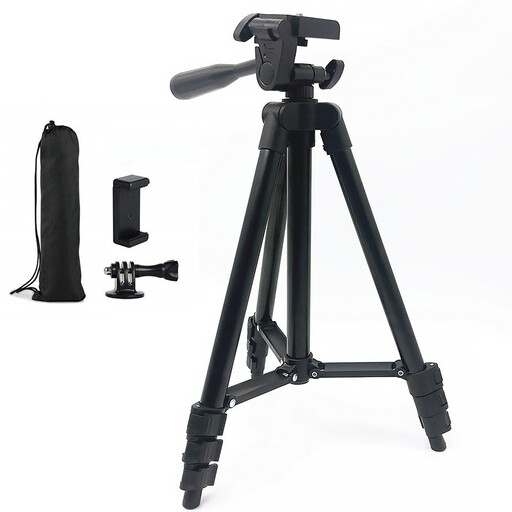
KINSI smartphone tripod with Bluetooth remote control
A good option if you’re taking photos with a compatible smartphone and want to position it on a flat surface.
Foldable and height-adjustable; the product title specifies a Bluetooth remote control.
View at Joybuy
 No image available
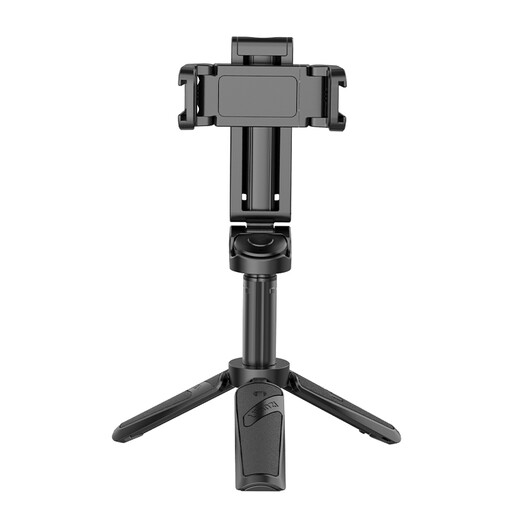
Ulanzi JJ02 3-in-1 Bluetooth selfie stick
An option for smartphone photography if you want a mini tripod and remote control in one accessory.
The product name lists compatibility with iPhone and Android, an extendable stick and dual cold shoe mounts.
The remote control isn’t waterproof, so avoid heavy rain and immersion in water. In windy conditions or on uneven ground, use the tripod at its lowest setting only, and keep the small battery out of children’s reach.
View at Joybuy
Frequently asked questions
Do I always need a separate remote shutter release to photograph vintage cameras?
No. Canon also recommends using the self-timer for still-life photography, so you don’t have to touch your camera just before taking the shot. You may also be able to control it via a camera app if your model supports this.
How do I connect a wired remote shutter release?
Compare the connection on your exact camera model with the release’s plug. For example, the Canon RS-80N3 uses an N3 connection; Fujifilm lists an additional adapter for some RR-100 combinations. Don’t rely on the brand alone or on a plug that simply looks similar.
What should I look for in a wireless remote shutter release?
Check that your camera model supports the release you’ve chosen, and read the power and pairing instructions. Canon lists Bluetooth for the BR-E1, but that doesn’t automatically apply to other remote controls.
What are my rights when shopping online in the Netherlands?
According to the Rijksoverheid (Dutch government), distance purchases are often covered by a 14-day cooling-off period; check which exceptions apply. Your statutory guarantee is separate from any manufacturer’s guarantee. ACM ConsuWijzer explains that the retailer is responsible for providing an appropriate solution if a product is faulty.


