Who might find a remote shutter release useful?

Maker capturing fine details

You’re photographing a mosaic sample close up and don’t want to touch the tripod while taking the shot. First, see whether your camera’s self-timer does the job. Canon Netherlands recommends both the self-timer and a remote control for still-life photography.

Photographer documenting several samples

You want to keep the camera in the same position between shots and check the framing as you change samples. Canon Netherlands and Canon Europe highlight remote operation and consistent framing as considerations for product photography.

Photographer working beside the set-up

You want to release the shutter without a cable running across your work surface, provided your camera model supports the wireless control you choose. Nikon Netherlands and Sony Netherlands list wireless options for specific compatible cameras.

What should you look for when choosing one?

Self-timer or camera app

Choose this when: your camera supports the feature and you want to try releasing the shutter without touching the camera body.

Bear in mind: the self-timer delays the shot, and app features vary by camera model.

Wired remote shutter release

Choose this when: you’ll be beside the tripod and want a physical button, with a connection that fits your camera.

Bear in mind: the cable limits your freedom of movement, and the plug must fit exactly.

Wireless remote shutter release

Choose this when: you want to move around the set-up without a cable and the manufacturer lists your camera model as compatible.

Bear in mind: wireless operation may depend on the camera model, pairing and battery use.

Consideration What should you check? Which consumers?
Compatibility Check the full camera model and connection. For wireless use, also check model compatibility and whether an adapter is needed. When I buy a remote shutter release, I want to be sure it works with my exact camera model and connection. Around 36% of consumers put compatibility first.
Taking shots without touching the camera Try the self-timer with your camera on a stable tripod; choose a separate button if you want to release the shutter straight away. When I take a close-up, I don’t want to move the camera by pressing the shutter button on its body. Around 29% of consumers want to avoid movement caused by touching the camera.
Freedom of movement Check whether your camera supports wireless control. A cable will only work if you can stay within its reach. When I want to move around my work surface, I don’t want a cable running across my set-up. Around 21% of consumers put freedom of movement first.
Avoiding an unnecessary purchase First, test the built-in self-timer or a supported camera app with your own tripod set-up. If an existing feature already lets me take the shot, I’d rather not buy an extra remote shutter release. Around 14% of consumers want to make the most of their camera’s existing features first.

Common mistakes

  • Assuming an accessory for my camera brand will automatically fit

    Connections can vary by model. For example, Canon distinguishes between E3 and N3 connections; Nikon and Fujifilm also list model-specific compatibility.

    Check your full camera model against the manufacturer’s compatibility information, and check the connections and model footnotes before choosing an accessory.

  • Buying a remote shutter release before trying the self-timer

    For still-life photography, Canon Netherlands recommends both the self-timer and a remote control to avoid touching the camera while taking the shot.

    First, take a test shot with your camera’s self-timer and a sturdy tripod.

  • Expecting a remote shutter release to correct changing window light

    A remote shutter release operates the shutter; it won’t keep daylight or white balance constant.

    Assess the light and white balance separately, and keep your set-up as consistent as possible when comparing samples.

Brands to compare

Canon

Canon offers wired remote shutter releases with different connections and lists Camera Connect as an option for supported cameras.

  • Canon Netherlands distinguishes between accessories for E3 and N3 connections.
  • Check the exact camera model and app support; these aren’t automatically available for every EOS camera.

Nikon

Nikon describes the wired MC-DC3 for compatible Nikon Z cameras and the wireless ML-L7 for specific Nikon cameras.

  • According to Nikon Netherlands, the MC-DC3 supports half-pressing and fully pressing the shutter button.
  • The ML-L7 isn’t compatible with all Nikon cameras by default, so check the information for your camera model.

Sony

The RMT-P1BT is Sony’s Bluetooth option for cameras that support this type of control.

  • Sony Netherlands lists control via the built-in Bluetooth receiver and a status indicator.
  • Compatibility depends on the camera model. Sony’s description of its reliability is a manufacturer claim.

Fujifilm

Fujifilm lists the wired RR-100 for certain X and GFX cameras.

  • Fujifilm says an L-shaped extension cable for a 2.5mm connection is included.
  • Check the camera model footnote: some models may need an adapter.

JJC

JJC offers the wired S-C2 as an alternative to products such as the Canon RS-60E3.

  • JJC lists half-press operation, a shutter button lock and a list of compatible cameras.
  • These are the manufacturer’s specifications and compatibility claims, so check that your combination is listed.

Joybuy products for smartphone photography

These products are designed to hold a smartphone hands-free and control it remotely. They aren’t a replacement for a remote shutter release compatible with a camera, so check whether you want to take photos with your phone or your camera.
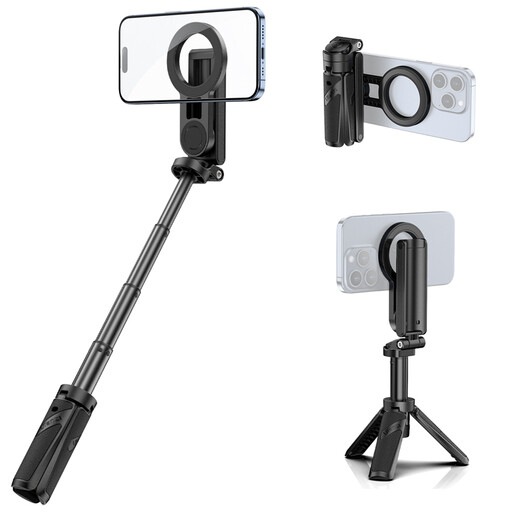
Ulanzi JJ03 3-in-1 Magnetic Tripod with remote control

Ulanzi JJ03 3-in-1 Magnetic Tripod, 10 m remote control

This set is designed to hold a smartphone hands-free and control it remotely; it doesn’t release the shutter on a separate camera.

The description lists Bluetooth control for iOS and Android phones, with a stated range of 10 m. Phone compatibility is limited to models up to 6.0 inches.

View at Joybuy

Ulanzi JJ02 Bluetooth Selfie Stick with mini tripod and dual cold shoe mounts

Ulanzi JJ02 Bluetooth Selfie Stick, 3-in-1 Phone Tripod

This combination is designed to support a smartphone and take photos remotely; it doesn’t operate a separate camera.

The description lists compatibility with iPhone and Android, a stated range of 10 m and dual cold shoe mounts. The product information warns you to keep strong magnets at least 15 cm away from pacemakers, defibrillators and other medical implants. Test the magnetic attachment before use on vertical or overhead surfaces, and secure your device properly.

View at Joybuy
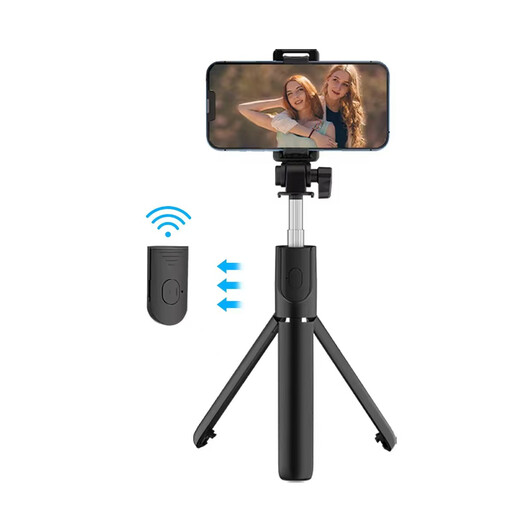
Verbex New K50 Black Dual-Light Remote Control Selfie Stick

Verbex New K50 Black Dual-Light Remote Control Selfie Stick

This extendable phone holder is designed for remote smartphone photography and isn’t a replacement for a camera-specific remote shutter release.

The description lists Bluetooth control for iOS and Android with a range of approximately 10 m, a maximum phone size of 6.0 inches and an extendable stand measuring approximately 193 cm. Set the three legs up securely, and don’t extend the telescopic pole beyond its stated maximum length.

View at Joybuy

Frequently asked questions

Do I need to buy a remote control for a mosaic photo in window light?

Not necessarily. Set your camera up securely and try the self-timer first; Canon Netherlands recommends a 2-second self-timer or a remote control for still-life photography. A camera app can only control the camera remotely if your model supports this feature.

Can a remote shutter release fix colour differences caused by window light?

No. A remote shutter release operates the shutter and doesn’t change the light or white balance. Keep the lighting as consistent as possible between photos and assess the white balance separately; Nikon USA explains that your chosen white balance can affect colour rendition.

How do I know whether a wired remote shutter release will fit my camera?

Check the connection and compatibility information against your full camera model before choosing an accessory. Canon distinguishes between E3 and N3 connections; Fujifilm lists an adapter for certain RR-100 combinations. Don’t force the plug if the connection doesn’t match.

What are my rights when buying online from a business in the Netherlands?

According to the Government of the Netherlands, distance purchases are often covered by a 14-day cooling-off period; check the applicable terms and exceptions. If a product is faulty, contact the seller. The Netherlands doesn’t have a general, fixed statutory warranty period of two years.

What should I check for product safety when choosing a wireless remote shutter release?

For radio equipment sold in Europe, check the applicable product information and CE marking. The Dutch Authority for Digital Infrastructure advises contacting the seller if the CE marking is missing or incorrect; this doesn’t confirm that an individual product on sale complies with the requirements.
