
Close-up photographer with a fixed set-up
You want to photograph a small clasp without touching the camera when taking the shot. A compatible connection and a lower risk of camera shake are important.


First, choose a remote shutter release that’s compatible with your exact camera model. A cable works well for a fixed set-up, while wireless control or a supported app gives you more freedom to move around. A remote release means you don’t have to touch the camera when taking the shot, but it won’t solve limited depth of field or reflections on metal. So check the connection, whether you’ll need an adapter and whether your camera is supported before choosing.
You want to photograph a small clasp without touching the camera when taking the shot. A compatible connection and a lower risk of camera shake are important.
You switch between pieces of jewellery or shooting angles and want to operate the shutter without running a cable across your set-up. Check whether your camera supports wireless control.
You want to see whether your camera and phone can already take photos remotely before buying a separate shutter release. Nikon, for example, says SnapBridge control is available only for supported cameras.
Start by checking whether the release is compatible with your camera. Then decide whether you’ll be using a fixed set-up or need more freedom to move around, and check whether an existing app can already operate the shutter.
The percentages below relate to consumers who want to photograph a small jewellery clasp against a white background. They show an approximate breakdown of the main priorities when choosing for this scenario.
| What to consider | What to look for | Who is this most important for? |
|---|---|---|
| Camera and connection | Check the full model name and connection. For some cables, check whether you’ll need an adapter. | If I buy a shutter release, I want to be sure it works with my camera. Around 36% of consumers put compatibility first. |
| Shake during close-ups | Choose a control that lets you activate the shutter without touching the camera body. Assess sharpness and depth of field separately. | When taking a close-up, I don’t want to move the camera as I press the shutter. Around 29% of consumers give shake-free shutter release top priority. |
| Space around your set-up | Consider whether a cable will get in the way when you move pieces of jewellery. If you choose wireless control, check that your camera is supported. | When I move jewellery or change the shooting angle, I don’t want a cable running across the set-up. Around 21% of consumers prioritise having room to work freely. |
| Existing app function | Check whether your camera app can release the shutter remotely before buying a separate accessory. | I want to find out first whether my camera app can already operate the shutter. Around 14% of consumers mainly want to avoid an unnecessary purchase. |
Cameras from the same brand can have different connections or supported features. A model that isn’t compatible with your camera may not operate the shutter.
Compare the full model names of your camera and shutter release with the manufacturer’s compatibility information. If you’re buying a cable, check whether you’ll need an adapter too.
Releasing the shutter remotely means you don’t have to touch the camera when taking the shot, but it won’t automatically make the whole clasp sharp. Nikon describes focus stacking as a separate macro technique that combines shots taken at different focus points.
Consider camera shake and depth of field as two separate factors.
Focus stacking may require extra attention when focusing and editing your images.
Control through a camera app depends on the camera model. You may already be able to use the feature you need with a supported app.
First, check whether your exact camera model can take photos remotely using its companion app.
Canon offers both wired and wireless shutter releases for specific compatible cameras.
The MC-DC3 is a wired option for compatible Nikon Z cameras. SnapBridge may be an alternative for supported models.
The RR-100 is a wired shutter release for a selection of X and GFX cameras listed by Fujifilm.
The RMT-P1BT is a Bluetooth option for cameras that support this specific remote control.
JJC offers, among other products, wired models for cameras with a compatible connection.
These product options are designed for remote control of a compatible smartphone camera or certain Osmo cameras. They aren’t universal shutter releases for cameras used to photograph jewellery clasps.
 No image available
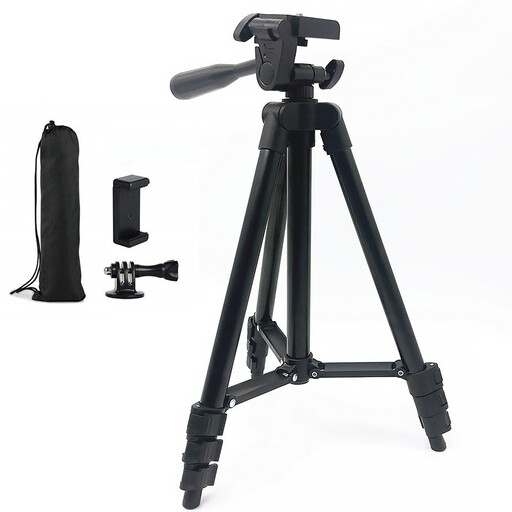
This product is only relevant if you want to control the camera on a compatible smartphone remotely; it isn’t a shutter release for a standalone camera.
The product title describes a foldable tripod for tabletop and outdoor use, with an adjustable-height design.
 No image available
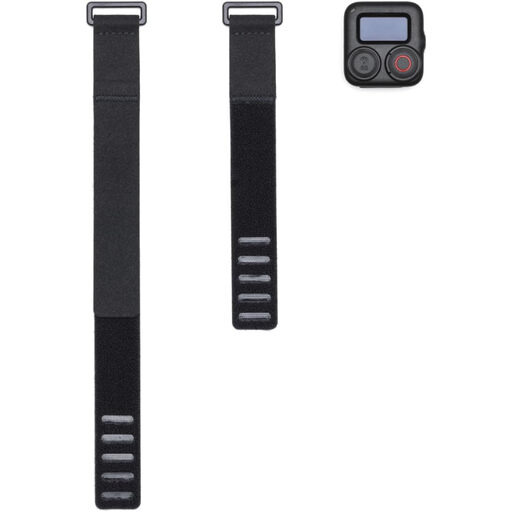
This remote control is designed for certain Osmo cameras, not for a standard camera used for jewellery photography.
The product title lists compatibility with Osmo Action 4, Osmo Action 5 Pro, Osmo 360 and Osmo Action 6. Check that your exact model is on the list.
No. You can avoid touching the camera when releasing the shutter, but a separate technique such as focus stacking may be needed to increase depth of field in a macro shot. Reflections on metal also need to be considered when setting up your lighting.
No. Check the exact camera model and connection for the specific shutter release. Fujifilm, for example, says certain combinations with the RR-100 require an additional adapter.
Not just for this type of photography. Nikon and Fujifilm describe the lock function on specific models as a way to keep the shutter button pressed for longer, among other uses. Check whether your way of shooting requires this feature.
Online consumer purchases generally come with a statutory 14-day cooling-off period from the date of delivery, subject to exceptions described by ACM ConsuWijzer. If a product doesn’t meet the terms of the agreement, you may also have statutory rights. Where the conditions are met, the seller must offer an appropriate solution free of charge. A manufacturer’s warranty doesn’t replace these statutory rights.
Check the information for the specific version and the applicable requirements for radio equipment. The Dutch Authority for Digital Infrastructure explains that a manufacturer applies the CE marking when the relevant European requirements have been met. Don’t assume this based on the brand name alone.