Who might find a remote shutter release useful?

Tripod user taking close-up photos of chess pieces

You want to keep your carefully composed frame and avoid touching the camera when you take the photo. Canon Netherlands describes remote operation as a way to avoid touching the camera, while a tripod helps you keep your framing consistent.

Photographer who adjusts the setup between shots

You move the pieces or lighting and want to take a photo from another position. A wireless release could suit you if your exact camera model supports the remote you’ve chosen.

Photographer who wants to try the camera’s existing features first

You’re taking one photo at a time at your own pace and want to see whether the camera app or self-timer gives you enough control before choosing an accessory.

What should you consider when choosing one?

Wired remote shutter release

A good fit if: you’ll be close to the tripod and your camera is confirmed to support the cable connection.

Keep in mind: the cable limits how far you can move. Canon has E3 and N3 connections; Nikon lists the MC-DC2 for certain cameras.

Wireless remote control

A good fit if: you want to move around the setup without a cable and the manufacturer confirms that your camera is compatible with that specific remote.

Keep in mind: check the pairing process and power requirements. The stated range isn’t guaranteed in every setup.

Camera app or self-timer

A good fit if: your camera already offers the control you need and you have time to set up a still scene.

Keep in mind: a self-timer won’t let you take a photo at any moment you choose. Check the features of your own camera.

What to consider What should you check? Who is this important for?
Compatibility Compare your exact camera model with the compatibility list. If you’re choosing a cable, check the connection too, such as E3 or N3. If you want to avoid the risk of a connection or control that doesn’t work with your camera, check model support first. Around 36% of consumers put compatibility first.
Taking photos without touching the camera Check that the release operates the shutter and that your tripod and framing are stable. If you want to take a photo without shifting the camera and keep your carefully chosen framing, low-vibration shutter release may be a priority. Around 29% of consumers put it first.
Freedom to move For wireless use, check model support, pairing and the range in the conditions of your setup. If you move pieces or lighting between shots, you may want to take a photo from another position. This is the top priority for around 21% of consumers.
Existing controls Try the camera app or self-timer with your own tripod setup before choosing a separate shutter release. If you want to find out whether your camera already gives you enough control for an unhurried shot, avoiding an extra purchase may matter most. Around 14% of consumers prioritise this.

Common buying mistakes

  • Choosing a shutter release by camera brand rather than connection

    The brand name alone doesn’t tell you whether a cable will fit. Canon uses E3 and N3 connections, among others, and compatibility can also vary by camera model.

    Before ordering, check the full camera model and connection in the relevant product list or manual.

  • Expecting a shutter release to improve exposure against a dark background

    A shutter release operates the shutter; exposure, background and lighting for the chess pieces are separate parts of the setup.

    First check your tripod, lighting, background and camera settings. Then decide how you want to take the photo.

  • Assuming wireless range is always the same

    Sony states that the RMT-P1BT has a communication range of approximately 5 m and notes that this can vary depending on conditions.

    Check that the remote maintains its connection in your own setup; don’t treat the stated distance as a guarantee.

Camera brands to consider

Canon

Canon users can choose from wired and wireless models for different connections. The right option depends on which camera models it supports.

  • Canon lists an E3 connection and shutter lock for the RS-80E3, an N3 connection for the RS-80N3, and Bluetooth control for the BR-E1.
  • These product features don’t confirm that every model works with every Canon camera. Check the compatibility list for your camera.

Nikon

Depending on their camera, Nikon users can consider the wireless ML-L7 or the wired MC-DC2.

  • Nikon lists a separate shutter button for the ML-L7 and describes the MC-DC2 as a cable for certain cameras, including for bulb exposures.
  • Compatibility isn’t automatic for all Nikon cameras. Check support for your exact model.

Sony

The RMT-P1BT is a wireless option for Sony camera users whose model is confirmed to work with it.

  • Sony lists control via the camera’s Bluetooth receiver and a status light.
  • Sony states a communication range of approximately 5 m and says this depends on conditions. This is the manufacturer’s stated range, not a guarantee for every setup.

Joybuy product selection

This product selection is for anyone who wants to operate the shutter remotely with one of the specified compatible Osmo cameras.
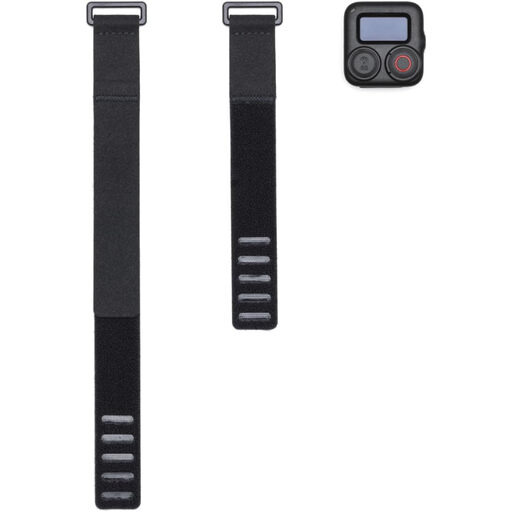
Osmo Action GPS Bluetooth Remote Controller for Osmo Action 4, Osmo Action 5 Pro, Osmo 360 and Osmo Action 6

Osmo Action GPS Bluetooth Remote Controller

This may be a good option if you use one of the specified compatible Osmo cameras and want to operate the shutter remotely.

Compatibility according to the product name: Osmo Action 4, Osmo Action 5 Pro, Osmo 360 and Osmo Action 6.

View at Joybuy

Frequently asked questions

Will a remote shutter release automatically improve the exposure of a dark background or chess pieces?

No. A remote shutter release operates the shutter; you control exposure using your camera and the lighting in your setup. Canon discusses tripods, backgrounds and lighting separately in its product photography advice.

How can you avoid buying a remote shutter release that won’t fit your camera?

First, find the full model name of your camera. For a cable, compare the connection with the product specifications. For Bluetooth, check that the manufacturer confirms compatibility between the remote and your specific camera. Then follow the instructions for connecting or pairing it.

Do you need a bulb lock for chess photos?

Not just because you’re using a dark background. A lock is relevant if your exposure settings require you to operate the shutter for longer: Canon lists this feature for the RS-80E3, and Nikon mentions bulb exposures for the MC-DC2. Check whether your camera and chosen exposure settings require this type of control.

What should you check with a wireless remote?

First, check that the manufacturer confirms your camera model is compatible with the remote, then follow the pairing instructions. Also check what power source it needs and whether this is included. Assess the range in the conditions of your own setup.

What rights apply to an online purchase in the Netherlands?

According to ACM ConsuWijzer, the statutory cooling-off period for an online consumer purchase ends 14 days after the product is delivered, subject to statutory exceptions. The statutory guarantee is separate: if a product breaks too soon during normal use, the seller must put it right free of charge under the law.
