For still-life jewellery photos, the self-timer or a compatible camera app is a sensible place to start. Choose a separate remote shutter release if you want to take the photo from your workstation or avoid touching the camera. A cable, infrared or Bluetooth model will only work if it is compatible with your exact camera model and connection or pairing method. Nikon lists the self-timer and a cable as ways to take photos remotely; no shutter release will correct reflections, exposure or focus.
Which type of control is right for you?
For makers with a fixed photo setup
If you photograph several pieces of jewellery on a tripod, you’ll want to keep your composition steady when you take the shot. Compare the self-timer with a cable that fits your camera; Nikon describes the MC-DC2 for certain cameras.
For makers who keep arranging their jewellery
If you want to take photos from your workbench without having to walk over to the camera each time, check whether your camera supports a suitable app or model-specific wireless control. Canon and Sony describe these options for compatible models.
For makers who check the details
When taking close-ups, releasing the shutter without touching the camera can help avoid movement caused by pressing the button. Reflections, exposure and focus still need separate attention, as Canon and Shopify Netherlands explain.
What should you look for when choosing?
Self-timer or camera app
Choose this if: you’re photographing a still piece of jewellery and can wait before the photo is taken. Nikon lists the self-timer as a control option.
Bear in mind: the self-timer doesn’t give you the same instant shutter release as a button beside your workstation. App features vary between cameras and phones.
Wired remote shutter release
Choose this if: you work beside a fixed tripod setup and don’t want to touch the camera. Check that the connector fits your model.
Bear in mind: the cable limits where you can work. Sony lists an 800 mm cable for the RM-VPR1; this length doesn’t apply to other models.
Infrared or Bluetooth control
Choose this if: you want to take photos from another spot while arranging your jewellery, and the manufacturer lists your exact camera as compatible with the remote.
Bear in mind: infrared requires you to be in a suitable position in front of the camera; Bluetooth may need to be paired. Canon lists a range of up to around 5 metres in front of compatible cameras for the RC-6.
| What to consider |
What should you check? |
Who is this most relevant to? |
| Compatibility |
Check the full camera model and specific remote shutter release against the manufacturer’s information. For a cable, also check the connector and whether you need an adapter. |
I want to know in advance whether the control will work with my camera, so I don’t choose an unsuitable accessory. Around 36% of consumers prioritise compatibility with their own camera. |
| Steady tripod setup |
Check that a cable fits the connector and is long enough for your workspace. Assess focus and exposure separately, too. |
With a fixed setup, I want to take photos without touching the camera body. For around 29% of consumers, taking photos steadily from a tripod is their main priority. |
| Freedom of movement |
Check which cameras are supported and, for Bluetooth, whether pairing is required. With infrared, consider your position in front of the camera. |
I want to stay at my work surface while arranging my jewellery, rather than having to walk over to the tripod each time. Freedom of movement is the top priority for around 21% of consumers. |
| Existing features |
Try the self-timer and check your camera documentation to see whether an app supports your camera. |
If the jewellery stays still, I want to find out first whether my camera can already take the photo without an extra control. Around 14% of consumers prioritise making use of existing features. |
Common mistakes
-
Choosing based only on the camera brand
Manufacturers list support by camera model and type of control. So, an accessory from the same brand won’t necessarily fit your camera.
Note down the full camera model and compare it with the manufacturer’s information for the exact remote shutter release, connector and any adapter you may need.
-
Assuming every wireless trigger releases the camera shutter
A wireless control may be designed for another function or a different type of device. The word ‘wireless’ alone doesn’t prove that it will work with your camera’s shutter.
Check the product page and the camera manufacturer’s information to confirm that the control supports the shutter on your specific camera.
-
Expecting a remote shutter release to solve every photo problem
Taking a photo without touching the camera button can reduce movement caused by pressing it, but it won’t fix reflections, incorrect exposure or soft details.
First check your setup, lighting and focus; then choose a remote shutter release to address the specific issue you have when taking the photo.
Brands to compare
Canon
For certain EOS cameras, Canon describes both wired and wireless control options. The RC-6 is an infrared option for models that Canon lists as compatible.
- Canon says the RC-6 can release the shutter immediately or with a 2-second delay; it lists a range of up to around 5 metres in front of the camera.
- This information doesn’t automatically apply to every EOS model. Check compatibility with your full camera model; Canon remote shutter releases aren’t necessarily interchangeable.
Nikon
Nikon offers the wired MC-DC2 for certain cameras, as well as the ML-L7 Bluetooth remote control for specific models.
- Nikon describes the MC-DC2 as a way to avoid touching the camera directly when using a tripod. The ML-L7 has separate buttons for photos and video.
- The two controls support different cameras. Check compatibility for your model; the Nikon logo alone doesn’t confirm that an accessory will fit.
Sony
Sony describes the RM-VPR1 as a wired option for compatible cameras with the specified connector. Sony also describes Bluetooth control for specific models.
- Sony lists an 800 mm cable and a shutter-release button for the RM-VPR1, which may be useful if you work close to the tripod.
- For Bluetooth, check compatibility with your camera separately and bear in mind that pairing may be required.
FUJIFILM
FUJIFILM describes the RR-100 as a wired remote shutter release for the X and GFX cameras listed on its Dutch product page.
- The manufacturer lists a right-angle 2.5 mm plug extension cable.
- For some cameras, including the X-S10 and X-T200, FUJIFILM lists a separate 2.5 mm-to-3.5 mm adapter. Check which combination is right for your camera.
Joybuy products
The products below are designed for Bluetooth control of specific Osmo cameras, as well as smartphone or action camera setups. Choose them only if they’re suitable for the camera you use to photograph your jewellery.
 No image available
Osmo Action GPS Bluetooth remote control
The product title lists Bluetooth control and the Osmo Action 4, Osmo Action 5 Pro, Osmo 360 and Osmo Action 6 as compatible models.
Joybuy
 No image available
KINSI smartphone tripod with Bluetooth remote control
This tripod with Bluetooth remote control is designed for the camera on a compatible smartphone, not as a remote shutter release for a standard camera.
The product title describes the tripod as foldable and height-adjustable. The description says it can be used on flat surfaces.
Joybuy
 No image available
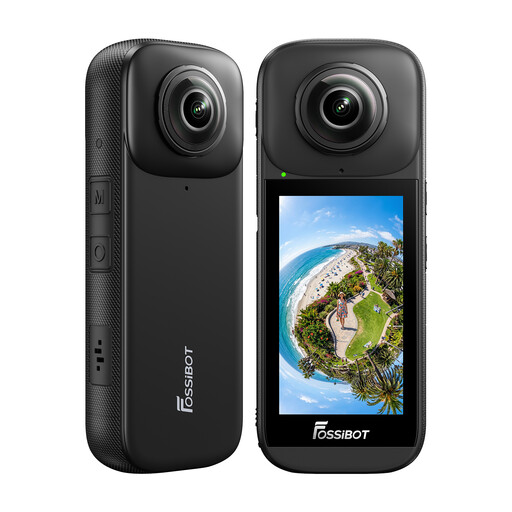
Fossibot FC360 action camera, 6 GB built-in RAM
This is an action camera with a Bluetooth remote control, not a separate remote shutter release for your existing camera.
The product title lists 6 GB of built-in RAM, 8K video at 10 fps and IP68.
Joybuy
Frequently asked questions
Do I always need a separate remote shutter release for a still piece of jewellery?
No. Nikon lists the self-timer as a way to take a photo without pressing the camera button just as the photo is taken. Try this feature and check whether your camera supports app control before choosing a separate accessory.
How do I connect a wired remote shutter release or pair a wireless control?
Connect a compatible cable to the dedicated socket on the camera. Bluetooth controls may need to be paired; Sony describes this for the RMT-P1BT. First check that your full camera model supports the control you’ve chosen.
Will a remote control fix reflections or blurry photos?
No. Taking a photo without touching the camera can help reduce movement caused by pressing the button, but reflections, exposure and focus need separate attention.
What are my rights when buying online in the Netherlands?
For online consumer purchases, you’re generally entitled to a 14-day cooling-off period, according to the Dutch government. You have statutory rights if a product is faulty; the Netherlands doesn’t have a standard general warranty period. The statutory consumer cooling-off period doesn’t apply to business purchases made by a trader, according to Ondernemersplein.


