
Vandaag of morgen in huis

Kwaliteit gegarandeerd

Welkomstaanbiedingen ontgrendelen: GRATIS bezorging | Tot 80% korting | Gratis 30 dagen JoyPlus-proefperiode
Download de app
A remote-controlled stunt car may seem versatile on paper: LED lighting, 360-degree rotation, all-terrain tyres and sometimes even gesture control. In practice, the wrong choice can quickly disappoint. A car that only performs well on a smooth floor, a remote control without batteries or small parts that are unsuitable for young children can lead to unnecessary costs.
This buying guide helps parents and family members translate product claims into features they can check. That way, you can choose an RC stunt car for children that suits the child’s age, play area and preferred way of playing.
A model with both a remote control and a gesture controller sounds appealing. However, it is important to check which functions are actually available. Can the car only move forwards and backwards, or can it also drive sideways, rotate and switch driving modes?
With a remote-controlled car with gesture control, it should also be clear whether the wrist controller needs to be charged separately and whether additional batteries are required. Missing AAA batteries may mean the gift is not ready to play with straight away.
A radio-controlled off-road vehicle is not automatically suitable for grass, deep-pile carpet or gravel. Pay attention to the ground clearance, wheel width and recommended surface. A car that can drive on both sides has a practical advantage when it overturns, but that says nothing about its speed or pulling power on a rough floor.
A stunt car often includes a battery, cable, remote control and small accessories. Always check the age recommendation and warnings on the product page. For children aged 3 and over, direct supervision is advisable, especially during first use and with models that have loose parts.
A 2.4GHz remote control is often used with toy cars because several vehicles can generally be used at the same time without immediately sharing the same basic frequency. However, check whether the range is specified in metres; without this information, it is difficult to compare remote-control performance.
A dual control system can be useful. A traditional controller is usually straightforward for beginners, while a gesture-control watch offers a more interactive experience. Pay attention to the button layout: sideways driving, turning left and right, demonstration mode and transformation are functions that can make play more varied.
A transformable RC car can sometimes switch between a narrower road mode and a wider off-road mode. This is relevant if the child wants to play both indoors on a wooden floor and outdoors on a flat patio. In particular, look at:
A 360-degree rotating toy car needs plenty of clear space indoors. Clear a path beforehand, removing fragile vases, cables and small objects.
A built-in rechargeable battery means you do not need new batteries for every play session. Check the voltage, capacity and supplied USB cable. The product information provided for some models may list different battery capacities, so check the current specifications on the product page when ordering.
Bear in mind that remote controls or gesture controllers may still use AAA batteries. Keep spare batteries out of the reach of young children and charge lithium batteries under supervision, following the manufacturer’s instructions.
The following selection is based on the listed functions, accessories, age recommendations and usage characteristics. Brand claims about playtime or development are not presented here as guaranteed results.
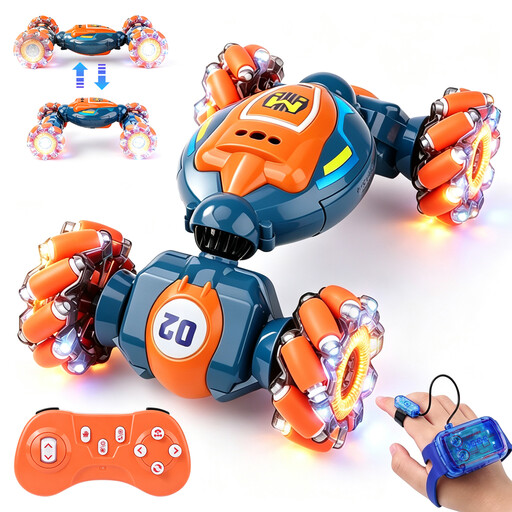
Why it suits this profile: This model combines a hand controller with a gesture-control watch. This allows a child to start with traditional controls and try the interactive mode later.
The product description specifically mentions the control modes, transformation function and ability to drive on either side. However, check which batteries the controllers require.
2.4GHz control, colourful LED wheels, 360-degree rotation, road and off-road modes and a rechargeable battery according to the product information.
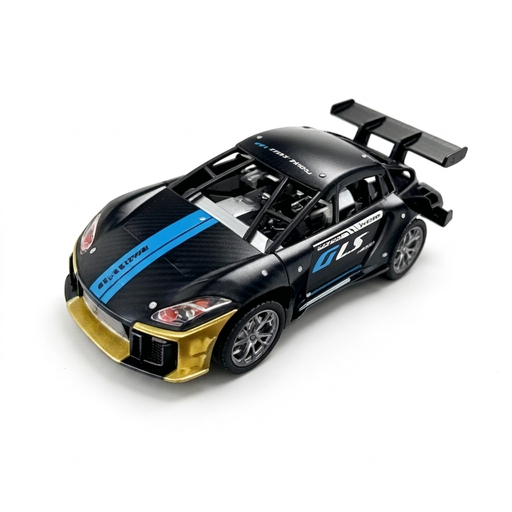
Why it suits this profile: Suitable for children who are mainly interested in speed, cornering and drifting on a smooth indoor floor.
The description mentions a rechargeable battery and reinforced bodywork. According to the description, the low-friction tyres are intended for smooth surfaces, not demanding terrain.
Metal alloy body, 4WD, drift tyres, lighting and battery included according to the product listing.
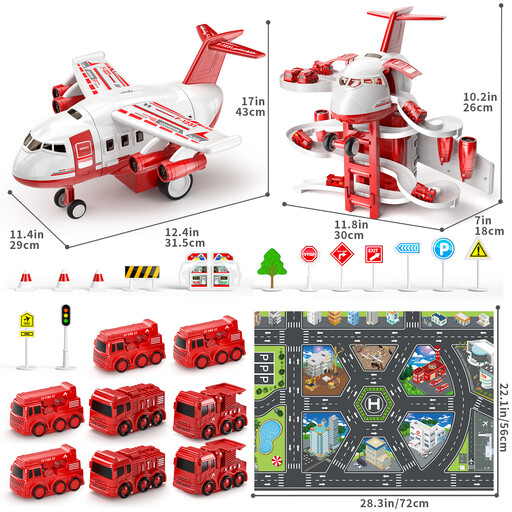
Why it suits this profile: An alternative for children who enjoy vehicles and race tracks but do not yet need a radio-controlled model.
The cars are friction-powered and have no battery or remote control. This avoids unexpected charging and battery requirements, but this is not an RC stunt car.
Play mat, vehicle garage, light and sound effects and two race tracks according to the product description.
We have put together a complete, up-to-date list of products that fully meet these strict selection criteria and the applicable European safety regulations.
Before checking out, check the age recommendation, warnings, battery details and package contents. A CE mark should be visible and verifiable on the product or packaging; do not use this as your only purchase criterion. The relevant European toy safety requirements, including EN 71 where applicable, cover mechanical, physical and fire-safety aspects, among other things.
Use a stunt car in a clear, flat area and do not let young children play unsupervised. Stop using it if wheels, cables, casing or small parts become loose. Charge the battery according to the instructions and store the product in a dry place.
First, check the official age recommendation and warnings for the specific model. A gift for boys aged 3 and over may also be suitable for girls; the controls, parts and play environment are more important than gender. Direct supervision remains advisable for models with small accessories or a gesture controller.
This varies according to battery capacity, driving style, surface and use of the LED lighting and stunt functions. If the manufacturer does not state a specific playtime, no reliable duration can be given. Also check whether only the car has a battery or whether the remote control requires additional AAA batteries.
That depends on the tyres, ground clearance and surface. A model with wide wheels and an off-road mode may, according to the product description, be more suitable for rough surfaces, but grass, sand and moisture can put strain on the motor and wheels. Only use the car outdoors on a dry, relatively flat surface if the product information permits it.
