
Vandaag of morgen in huis

Kwaliteit gegarandeerd

Welkomstaanbiedingen ontgrendelen: GRATIS bezorging | Tot 80% korting | Gratis 30 dagen JoyPlus-proefperiode
Download de app
A remote-controlled car for children can often seem easy to choose: a striking colour, large tyres and a remote control are quick to find. However, children’s RC cars vary considerably in terms of drive system, controls, battery and suitability for use in British conditions. A car that drives well on a smooth floor may be less suitable outdoors on grass or gravel.
This practical guide focuses on verifiable product details rather than marketing claims alone. That way, you can find the right RC car for children, whether it is for indoor use, outdoor driving, racing or stunts.
A remote-controlled toy car may have LED lighting, music and an automatic demonstration mode, but that says little about its performance on different terrain. For grass, paving, sand or gravel, wheel drive, tyre tread, ground clearance and body shape are particularly important.
A small drift RC car for smooth floors is usually a different choice from an off-road remote-controlled vehicle. Always check what the vehicle is designed for according to the product description.
‘Rechargeable’ does not automatically mean you can play for a long time. Check the battery type, capacity, supplied cable and estimated play time. Also check whether the remote control requires separate batteries. With various models, AA or AAA batteries for the controller are not included.
Also pay attention to charging times and store the battery according to the instructions. A battery stored while flat or used with an unsuitable charger may need replacing sooner.
An RC stunt car with lots of buttons or a wrist controller requires more coordination than a simple remote-controlled car with forward, reverse, left and right controls. Products with small parts are not suitable for children under 3 years old. Young children need adult supervision, even if the car seems easy to operate.
4WD RC cars have four driven wheels. This can help when driving on grass or uneven terrain, but the result also depends on motor power, tyres and weight. Mecanum wheels make sideways movement and diagonal travel possible. This is particularly interesting for stunt models, but not necessarily for a child who simply wants to race.
For outdoor use, rubber tyres with tread are more practical than smooth racing tyres. A model with interchangeable tyres may suit different play styles: racing tyres for flat surfaces and drift tyres for controlled sliding.
A 2.4GHz remote control is used with many toy cars. According to the product descriptions of the models mentioned, several vehicles can be used simultaneously without the signals interfering with one another, as stated in those descriptions. However, check the specified range and the controller’s functions.
A standard handheld controller is usually easy for beginners to understand. A gesture watch or gravity-sensor control adds interaction, but may require extra practice at first.
Check whether the product page provides information about:
According to the suppliers’ own product descriptions, various models are made from ABS plastic with rounded edges. This is product information, not a guarantee that damage or injury will be prevented in every situation. Do not use a car in water unless the product page expressly states that it is designed for this. Supervision is still required with amphibious models, and charging must take place away from water.
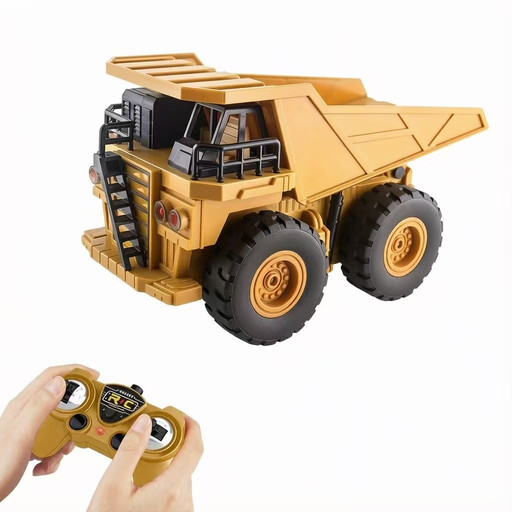
Why it suits this profile: The clear forward, reverse, left and right controls, along with a lifting tipper bed, are accessible for children receiving their first remote-controlled toy car.
The product description specifies a 3.7V 500mAh battery and USB cable. The controller uses 2 AA batteries, which are not included; this is clearly stated.
Lifting tipper bed, rubber tyres, LED headlights and rear lights. The product page states that it can be used from age 3 with supervision.
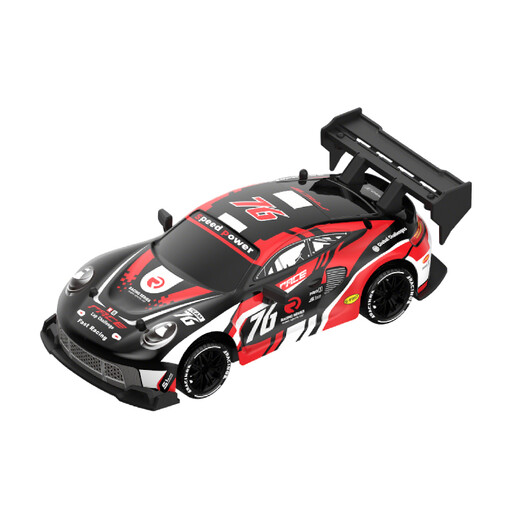
Why it suits this profile: This model is designed for racing and drifting on flat surfaces, for children who want to try more precise steering and different driving styles.
The product description distinguishes between drift tyres and racing tyres. This makes it clearer which set-up is suited to the surface and play style.
4WD drive, interchangeable tyre sets, LED lighting and a stated play time of approximately 20 to 40 minutes per charge.
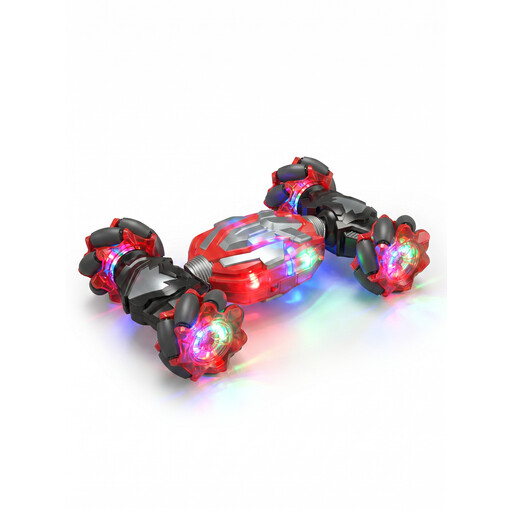
Why it suits this profile: For children from the stated age who find off-road driving, spinning and stunt combinations more interesting than speed alone.
The 4WD drive, Mecanum wheels and dual-sided driving function are clearly specified. According to the product description, the car can continue driving on either side after turning over.
Two control modes, transformable body, sideways drifting and LED lighting. The stated age indication is 8 years and over.
We have put together a complete, up-to-date list of products that fully meet these strict selection criteria and the applicable European safety regulations.
For indoor use, a compact size, limited speed and a tight turning circle are important. A drift RC car or stunt car works particularly well on tiles, laminate or another smooth floor. Be mindful of furniture, fragile items and the noise level of music and engine effects.
This varies depending on the model, surface and driving style. The Porsche 1:24 states approximately 20 to 40 minutes per charge. Other product pages mainly specify battery capacity, such as 220mAh or 500mAh, without promising a fixed play time. So look at both capacity and charging time, and check what is included in the packaging.
4WD only describes the drive system, not the level of difficulty or safety. Check the age indication, the number of control functions and whether there are small parts. The models mentioned are not suitable for children under 3 years old because they contain small parts; young children require direct supervision.
