
Vandaag of morgen in huis

Kwaliteit gegarandeerd

Welkomstaanbiedingen ontgrendelen: GRATIS bezorging | Tot 80% korting | Gratis 30 dagen JoyPlus-proefperiode
Download de app
A remote-control RC car might seem straightforward to choose at first. However, models vary considerably in how they handle, the surfaces they’re designed for, battery life and maintenance. A compact racing car that works well on tiles, for example, won’t necessarily perform well on grass, while a sturdy off-road RC car can be difficult to steer indoors.
For parents and family members, three common pitfalls are worth watching out for: marketing claims without clear specifications, choosing a car that’s unsuitable for the surface, and unexpected costs for batteries or replacement parts.
An RC stunt car might spin 360°, drive sideways or perform a demonstration automatically. That can look impressive, but it’s also important to check how the standard controls work. A child driving for the first time will benefit more from clear buttons, a low-speed setting or proportional controls than from spectacular stunts alone.
If a model uses wrist or motion controls, it’s worth checking whether a standard remote control is included too. This makes the car easier to use when more precise steering is needed.
An RC drift car with smooth tyres is well suited to a flat floor, tiles or an indoor track. On grass, sand or gravel, it may be less predictable. An off-road RC car, on the other hand, needs larger tyres, greater ground clearance and often four-wheel drive.
Be wary of product descriptions that make broad claims about where a car can be used. The seller may state that a model is suitable for certain surfaces, but that doesn’t mean it’s suitable for every surface or weather condition. Check the manual and any usage restrictions.
A rechargeable RC car is convenient, but the stated play time depends on speed, lights, sound, temperature and driving style. Different models quote around 20 to 40 minutes per charge. Also check whether the battery, USB cable and batteries for the controller are included.
An extra battery can be useful, but only use one with the correct voltage, connector and capacity. Charge lithium batteries according to the instructions, and don’t let children do so unsupervised.
4WD means all four wheels are driven. This can help with acceleration, turning and driving over slightly uneven ground. For an RC racing car for children used on a flat floor, 2WD may be enough, while a 4WD RC car offers more grip and room to play.
For outdoor use, these points are particularly relevant:
Don’t look only at the age recommendation on the packaging. An RC car for ages 6 and up should also suit the child’s motor skills. A simple controller with clear directional buttons is easier to use than a model with lots of settings.
For older children and teenagers, proportional controls, adjustable speed and a gyroscope may be useful features. According to the product description, a gyroscope can help keep the car steadier while drifting. Treat this as an assistive feature, not a guarantee of flawless driving.
Check whether the product page lists a clear manufacturer, EU responsible person, warnings and instructions for use. Any claim that an item complies with European toy regulations should be supported by the product and compliance information; don’t treat it as a substitute for supervision.
Also look out for:
A rugged remote-control toy car will stay usable for longer if you remove sand and grass after driving and avoid storing the battery flat for extended periods.
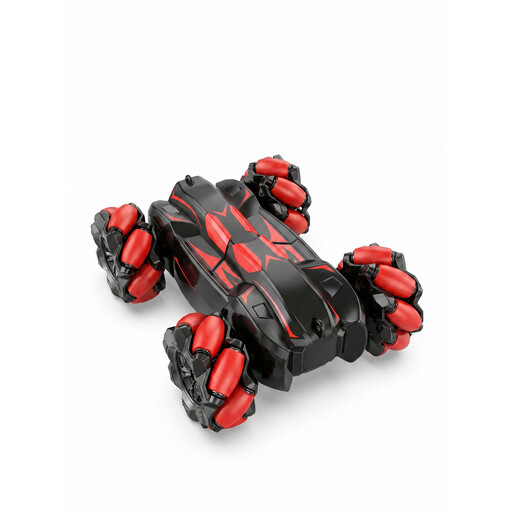
Why it suits this type of user: Designed for children aged 6 and up, this car combines a standard handheld remote control with optional motion controls. The Mecanum wheels allow it to drive sideways, spin and perform flips on either side.
As well as stunt features, it offers button controls. The product description lists 4WD, driving on either side and LED lights in the wheels.
Suitable for indoor and outdoor use according to the product information; rechargeable battery and 360° spinning and tilting functions.
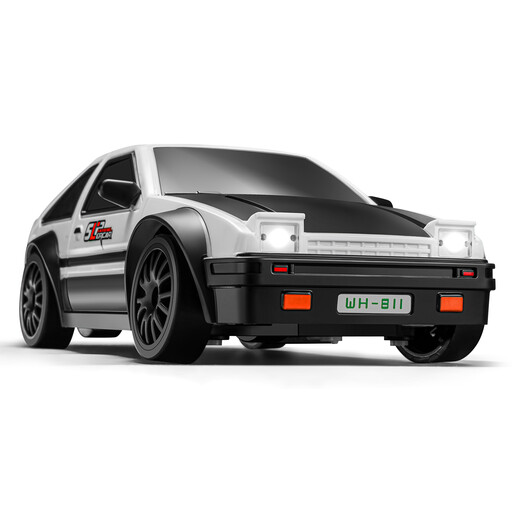
Why it suits this type of user: This model is aimed at users who want to practise drifting and gain more control over time. The product description lists two speed settings, interchangeable drift and racing tyres, and an adjustable gyroscope system.
The low-speed setting can make it easier to get started. The tyres can be swapped to suit racing or drifting on the right flat surfaces.
4WD, LED lights and a stated battery life of around 20 to 40 minutes per charge.
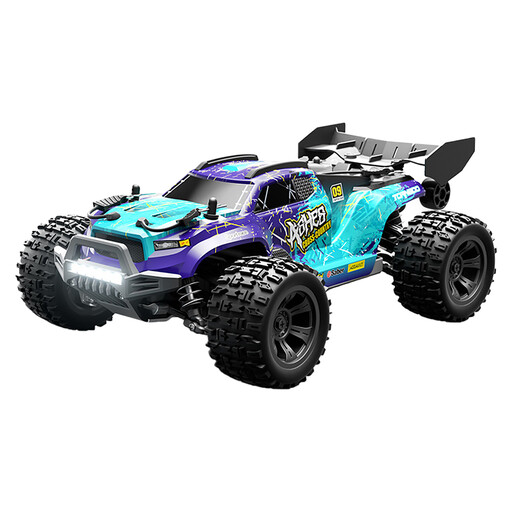
Why it suits this type of user: This off-road RC car is aimed at teenagers aged 14 and up, and users who want to drive outdoors. The description lists 4WD, large all-terrain tyres, an aluminium chassis plate and a 2.4GHz controller with adjustable settings.
Its intended terrain is clearer than that of a drift model: it has deep-tread tyres, 4WD and a chassis designed for rougher use. Check the water and terrain restrictions before use.
7.4V 1500mAh battery according to the product information; adjustable speed, steering trim and light controls on the transmitter.
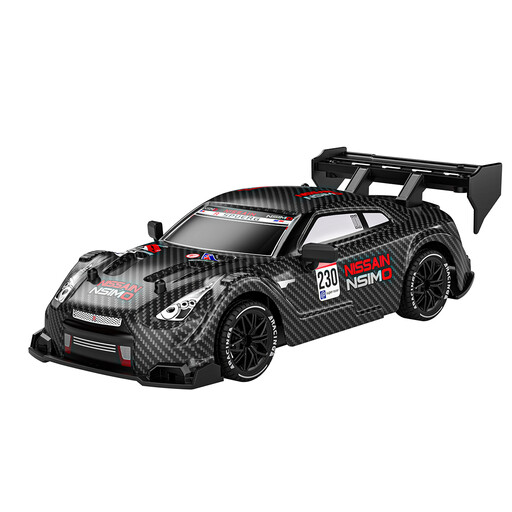
Why it suits this type of user: Its compact design is well suited to driving indoors on tiles or other flat floors. The car is described as coming with two sets of tyres, USB charging, LED lights and around 20 to 40 minutes of play time.
The interchangeable tyres make the distinction between drifting and racing clear. The product information doesn’t list rough terrain as a main use.
4WD, proportional 2.4G controls and two types of tyres for different ways to play.
We’ve put together a full, up-to-date list of products that meet these strict selection criteria and comply with the applicable European safety regulations.
Choose a model with clear button controls, a manageable speed and a sturdy body. An RC stunt car that can drive on either side can be useful if it often tips over. Always check the age recommendation, warnings and small-parts information on the product page.
Play time varies by model and how you use it. The product information cited gives around 20 to 40 minutes per charge. High speeds, LED lights, sound and frequent drifting can reduce running time. A second compatible battery can help reduce waiting time.
You can drive one on a flat, clean surface, such as a patio or smooth path, if the product information supports this. An off-road RC car is more suitable for grass, sand or gravel. Avoid puddles unless the manufacturer explicitly states that the car has suitable water resistance.
