
Vandaag of morgen in huis

Kwaliteit gegarandeerd

Welkomstaanbiedingen ontgrendelen: GRATIS bezorging | Tot 80% korting | Gratis 30 dagen JoyPlus-proefperiode
Download de app
A remote-controlled car for children may seem easy to choose. However, models vary considerably in how they handle, their batteries, off-road performance and suitability for different ages. A fast RC toy car for indoor use, for example, needs different features from a toy off-road car for grass, sand or gravel.
Marketing terms such as “waterproof”, “off-road” and “long playtime” sound appealing, but they don’t always tell the whole story. Use these practical checks to compare models based on verifiable specifications, rather than just appearance or advertising.
A drift RC car or remote-controlled stunt car may appeal to older children, but a fast car can be difficult for a three-year-old to control. So check:
A toy car for boys isn’t automatically suitable for every age. The motor, turning speed and controls all affect how much supervision is needed.
For an amphibious RC car, check the exact product description. If it says the model can drive on water, check whether this only applies to shallow water, a swimming pool or a smooth water surface. Avoid flowing water, deep puddles and situations where it would be difficult to retrieve the car.
After using the car in water, clean and dry it according to the instructions. Seals can wear over time, and the remote control isn’t always water-resistant.
A larger battery doesn’t automatically mean longer playtime. Weight, motor power, terrain and driving style also make a difference. Check:
Some products may have different battery details in their product information. Always check the latest specifications on the product page before ordering.
A 2.4GHz remote control is useful when several children are playing with remote-controlled cars at the same time. Product descriptions often say this technology is designed to reduce signal interference between multiple vehicles, but the actual range depends on walls, obstacles and the surroundings.
For younger children, large buttons and simple forward, reverse and steering controls are usually easier to understand. A model with wristwatch or gesture controls can be fun, but it takes more explanation and supervision.
A 4WD RC car has power going to all four wheels. This can help with grip on grass, gravel or uneven ground, but it doesn’t guarantee that every surface is suitable. Also check:
A drift RC car with interchangeable tyres is generally designed mainly for smooth floors or tarmac. An off-road model with large rubber tyres is better suited to grass and light obstacles.
Check whether the packaging includes an age warning and keep small parts out of reach of young children. For lithium batteries, it’s best to use only the charger supplied or recommended by the manufacturer. Don’t leave a battery charging unattended, and store the car somewhere dry.
A CE mark is relevant for toys sold in the European Union, but it doesn’t prove that a model is safe or suitable for every surface. Also look for rounded edges and check for moving tyres and accessible gears. For an electric ride-on car, a seat belt, soft start and parental remote control are also useful features to check.
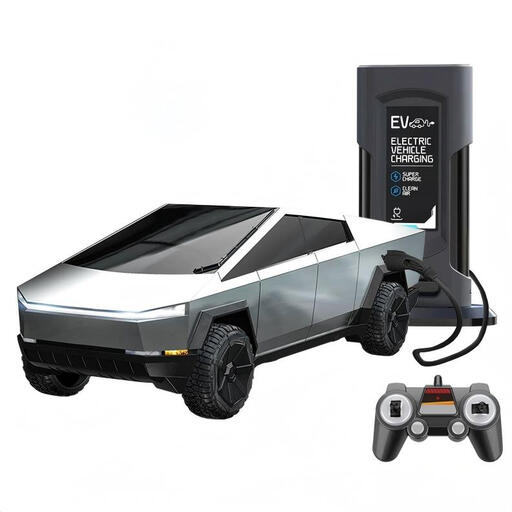
Why it suits this type of user: This model is a straightforward choice for children taking their first steps with an RC toy car who like the familiar look of a pickup truck.
The product name mentions 2.4GHz control and a rechargeable design. Before buying, check the full package contents and exact charging time.
2.4GHz remote control, LED lights and an off-road look, according to the product listing.
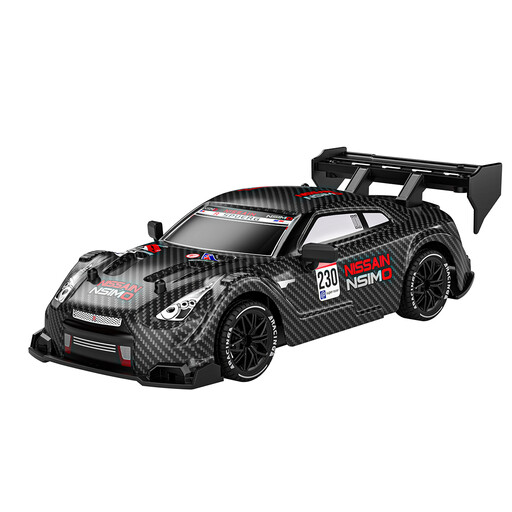
Why it suits this type of user: Suitable for older children from the stated minimum age and teenagers looking specifically for racing and drifting on a flat surface.
The description mentions two sets of tyres for racing and drifting. This makes it easier to match the surface to your preferred style of play.
4WD, interchangeable tyres, LED lights and a stated playtime of 20 to 40 minutes per charge.
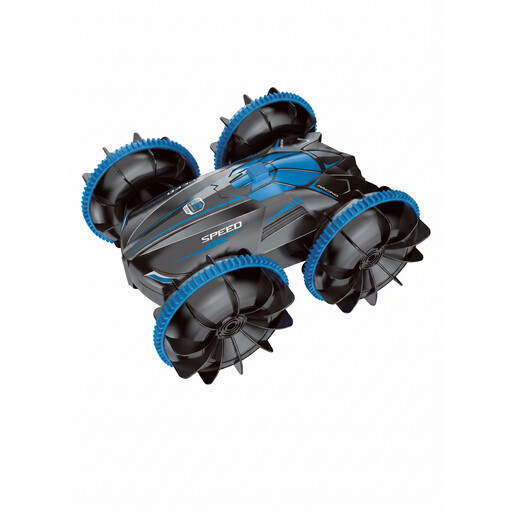
Why it suits this type of user: For children who are mainly after stunt action and want a car they can use on grass, sand, gravel or shallow water.
According to the product description, the car is designed for use on land and water. Follow the instructions, avoid deep or flowing water, and dry the model after use.
4WD, drives on both sides, 360° spins and two control options: remote control and wristwatch.
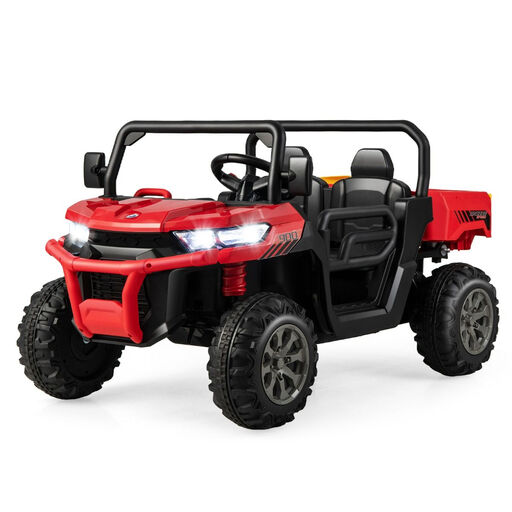
Why it suits this type of user: This electric ride-on car is designed for children aged around 3 to 8 and has room for two small children.
The product description mentions a seat belt, soft start, three speeds controlled by the parental remote and an emergency stop button.
12V battery, two seats, stated speed of 3 to 8 km/h and a maximum load of 50 kg.
We’ve put together a complete, up-to-date list of products that meet these strict selection criteria and the applicable European safety requirements.
Choose a model with a clear age recommendation, low speed and simple controls. Parental remote control is useful for an electric ride-on car. For small RC models, watch out for loose accessories and choking hazards. Always supervise your child and follow the warnings on the packaging.
It varies by model and how it’s used. For example, a drift RC car may have a stated playtime of 20 to 40 minutes per charge, according to the product description. Off-road driving, frequent turns and driving on grass generally use more power than steady driving on a flat floor. Also check whether the remote control uses separate AAA or AA batteries.
No. Even if the manufacturer describes a model as waterproof in the product description, you should follow the stated conditions of use. Shallow, still water is best. Keep the remote control dry and check the car after use. Don’t use the model near drains, flowing water or deep water where you can’t retrieve it safely.
