
Photographers checking camera compatibility
You know your camera model, but you’re not sure which connection, wireless control or app it supports. Check the official compatibility information before choosing a shutter release.


First, check whether your camera can already take photos remotely using a compatible app; you may not need a separate shutter release. If you want a physical button, choose a wired release if the connection and cable route suit your table, or a wireless control if you want to keep the work surface clear. The right choice depends on your exact camera model and setup.
You know your camera model, but you’re not sure which connection, wireless control or app it supports. Check the official compatibility information before choosing a shutter release.
You repeatedly photograph folded textiles and want to trigger the shutter without touching the camera you’ve set up. A suitable wired shutter release may be all you need.
You reposition textiles or change the composition and don’t want a shutter cable crossing your small work surface. Check whether your camera works with a wireless control or app.
Choose this option: if your camera supports the connection used by the specific cable model and you can route the cable away from the work surface.
Bear in mind: the cable will remain part of your table setup, and connections are not interchangeable.
Choose this option: if you want to work around the table without a shutter cable and your exact camera model supports the one you’ve chosen.
Bear in mind: wireless does not mean universally compatible; check the manual for the required pairing and power supply too.
Choose this option: if your camera and phone or tablet can already take photos remotely, and you want to use the screen when framing or adjusting settings.
Bear in mind: functionality depends on the camera and app combination; a separate physical shutter button is not included.
| Consideration | What should you check? | Who is this important to? |
|---|---|---|
| Compatibility | Make a note of the full camera model and check the official compatibility list, connection and any app functionality. | If I choose a shutter release, I want to know for certain that it works with my camera. Around 36% of consumers say compatibility is their main consideration. |
| Taking photos without touching the camera | Check that the control is suitable for your camera and that you can keep the cable clear of your setup. | With a fixed composition, I want to trigger the shutter without touching the camera. Around 29% of consumers put this first. |
| Clear work surface | Check that a wireless control works with your exact camera model. | When arranging textiles on a small table, I don’t want a shutter cable crossing the work surface. Around 21% of consumers give having clear space top priority. |
| Existing app | Try the shooting function in the official camera app with your camera and phone or tablet. | Before buying an accessory, I want to know whether my existing equipment can already take photos remotely. Around 14% of consumers check this first. |
Manufacturers specify particular camera models or connections. So a shutter release for a certain brand will not automatically work with every camera from that brand.
Before buying, compare the full camera model with the official compatibility information and check the required connection.
How practical a wired shutter release is depends on the distance between the camera, button and textiles. Sony lists an 800 mm cable for the RM-VPR1; this length applies to this model.
Measure the distance in your own setup and work out where the cable can go without getting in the way of the area where you arrange the textiles.
Canon and Nikon describe remote control through their apps for supported combinations. An app may already provide the control you’re looking for.
First, check and try the official app functionality with your camera and phone or tablet.
Canon offers wired, wireless and app-based options for specific compatible cameras.
Nikon describes wired and wireless controls, as well as control through SnapBridge for supported combinations.
The wired RM-VPR1 is an option for a Sony camera with the appropriate multi-terminal connection.
The products below are described as offering remote control of smartphone photography. They are not automatically a replacement for a shutter release for a separate camera, so check that the product suits the equipment you use to take your textile photos.
 No image available
The remote control is described as triggering a compatible smartphone camera remotely; the tripod is designed for use on a table.
The product name describes a height-adjustable, foldable tripod.
 No image available
The product description mentions wireless control for taking photos without touching the camera.
The product name lists compatibility with Osmo Action 4, Osmo Action 5 Pro, Osmo 360 and Osmo Action 6. Check that your exact model is included.
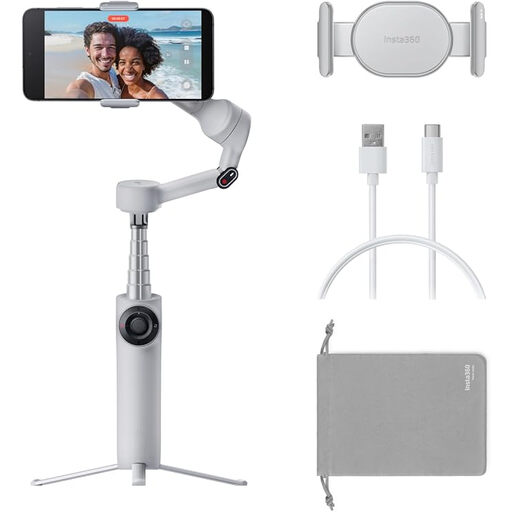 No image available
The product description mentions taking photos hands-free with a hand gesture and controlling the device using a second phone.
Control from a second screen is described as using a second phone; check that this way of working suits your shoot.
No. Check your exact camera model and the connection it requires. Canon specifies a 2.5 mm E3 connection for the RS-80E3; Nikon describes the MC-DC2 as suitable for certain cameras with the corresponding accessory connection.
That depends on the camera and the control you choose. Before buying, check that the combination is compatible and follow the manual for connecting or pairing it. For app-based control, your phone or tablet must also work with the camera.
For an online purchase by a consumer, ACM ConsuWijzer says you generally have a statutory 14-day cooling-off period after delivery, subject to legal exceptions. Separately, you’re entitled to a product that meets what you could reasonably expect under normal use. If there’s a fault, the seller must resolve it in line with the applicable rules. Also check the shop’s returns policy and any return costs.
EU rules on radio equipment are relevant to products with a radio function, such as a Bluetooth remote control. The European Commission outlines requirements covering areas including safety, electromagnetic compatibility and spectrum use. If a product is subject to CE rules, the CE marking indicates the manufacturer’s declaration of conformity; it is not an independent quality assessment. These rules for radio equipment do not necessarily apply to a wired shutter release with no radio function.