Choose your set-up based on what you want to preserve in the recording: for one narrator, place a suitable microphone close to the speaker, and consider separate microphones if you need to hear several people clearly. Sprekende Geschiedenis recommends using two microphones when both the interviewer and narrator need to be clearly audible. If you also want to capture the rehearsal room, deliberately include more room ambience and check with a short test recording and headphones that the words remain clear. The Oral History Association recommends choosing a quiet location unless the surrounding sounds are themselves part of the oral history.
Who is this guide for?
Interviewer speaking to one narrator
You mainly want to be able to hear every word again, even if there’s noise from the rehearsal room. Microphone distance and listening back to a test recording can help you choose the right set-up. Sprekende Geschiedenis highlights the importance of distance from the sound source.
Recording a group conversation
You want to capture both the narrator and other people’s questions and responses. The number of microphones that can be used at the same time is therefore an important consideration. Sprekende Geschiedenis recommends two microphones when both the interviewer and interviewee need to be clearly audible.
Collecting stories about a place
You may also want to preserve instruments or other meaningful sounds from the location. You’ll need to balance this sense of space against the clarity of the voices. The Oral History Association recognises capturing ambient sound as a deliberate exception to recording in a quiet location.
What should you consider when choosing?
Dynamic speech microphone
Suitable when: one person is mainly speaking while seated and clarity matters more than room ambience.
Consider: other voices won’t necessarily be captured as clearly. Also check that the connection is compatible with your recording device.
Two wireless microphones
Suitable when: both the interviewer and narrator need to be heard, or they move around during the conversation.
Consider: check the power supply, connection, clothing noise and receiver connection.
Portable recorder with stereo microphones
Suitable when: the sound of the rehearsal room is deliberately part of the story.
Consider: microphones placed further away also pick up ambient sound, which can obscure words.
| Consideration |
What should you check before buying? |
Who is this important for? |
| Clarity of the narrator |
Check the microphone position, recording pattern and connection. Make a test recording and listen back to it. |
If I mainly want to hear the narrator clearly, I’ll place the microphone close to them and check the sound beforehand. Around 36% of consumers give clarity of a single narrator top priority. |
| Hearing everyone in the conversation |
Count the speakers who need to be heard clearly at the same time, and check the number of microphones or transmitters. |
If both my questions and the story itself need to be audible, I want to be able to record both voices separately. Around 29% of consumers prioritise multiple speakers. |
| Freedom of movement |
Check that the receiver is compatible with your recording device and that clothing or hair won’t brush against the microphone. |
If the speaker moves around the room, I’m looking for a microphone that can move with them. For around 21% of consumers, freedom of movement is the top priority. |
| Capturing room ambience |
Decide which ambient sounds you want to capture, and compare a test recording with the microphone close to the speaker. |
If instruments or other sounds from the rehearsal room are part of the story, I want to capture them deliberately without losing sight of the words. Around 14% of consumers prioritise room ambience. |
Common pitfalls
-
Placing a recorder in the middle of the room and expecting to hear only the narrator
The recording captures sound from wherever you place the recorder. More room ambience can make the voice less clear; capturing atmosphere is a different goal from recording a voice up close.
Choose the position based on the most important sound and compare short test recordings before the interview. The Oral History Association recommends a quiet location unless the ambient sound is itself part of the recording.
-
Treating Wireless Micro, Wireless Micro Camera Kit and Wireless PRO as the same version
RØDE describes different receivers for the Wireless Micro and Wireless Micro Camera Kit. According to RØDE, 32-bit float recording on the transmitters is a feature of the Wireless PRO and does not automatically apply to the camera recording.
Check the full model name, what’s included in the kit and whether the connection is compatible with your recording device before choosing a set.
-
Assuming 32-bit float removes background noise from speech
The recording format and microphone placement solve different problems. RØDE limits the Wireless PRO’s 32-bit float feature to recordings made on the transmitters; it won’t automatically make words obscured by ambient sound clear.
Check how clear the recording is using headphones, and choose the microphone position based on the sound source you want to capture.
You may need to spend extra time editing, but this won’t bring back words that can’t be heard.
Brands to consider
Audio-Technica
The ATR2100x-USB combines a dynamic handheld microphone with connections for computer recording and a compatible XLR input.
- Audio-Technica lists USB and XLR connections, a headphone socket and a cardioid recording pattern for the ATR2100x-USB.
- A single microphone won’t necessarily record several speakers who are spread out separately.
Shure
The SM58 is a dynamic XLR speech microphone; the MV7+ has USB-C and XLR connections for a different set-up.
- Shure specifies a cardioid directional pattern for the SM58.
- Shure’s description of the MV7+’s noise processing is a manufacturer claim, not a guarantee of clear speech in a rehearsal room.
RØDE
The Wireless Micro Camera Kit and Wireless PRO are different two-transmitter sets for wireless recording.
- RØDE describes the Camera Kit as including a camera receiver and a USB-C receiver. Check which receiver is compatible with your device.
- According to RØDE, the Wireless PRO’s 32-bit float recording applies to recordings on the transmitters, not automatically to the camera recording.
Zoom
The H1essential is a portable recorder with built-in XY microphones for a self-contained stereo set-up.
- Zoom specifies 32-bit float recording and an input for, for example, a lavalier microphone.
- The position of the built-in microphones still matters; the recording format won’t remove distracting room noise.
Tascam
The DR-05XP is a portable recorder with built-in stereo microphones, offering an alternative to a separate speech microphone.
- Tascam lists a 32-bit float mode and omnidirectional condenser microphones for the DR-05XP.
- A recording that captures sound from all around the recorder may also pick up unwanted ambient noise.
Joybuy products for conversations with multiple speakers
These Joybuy product picks focus on wireless microphone set-ups for conversations with multiple speakers. Before use, check that the receiver is compatible with your recording device.
 No image available
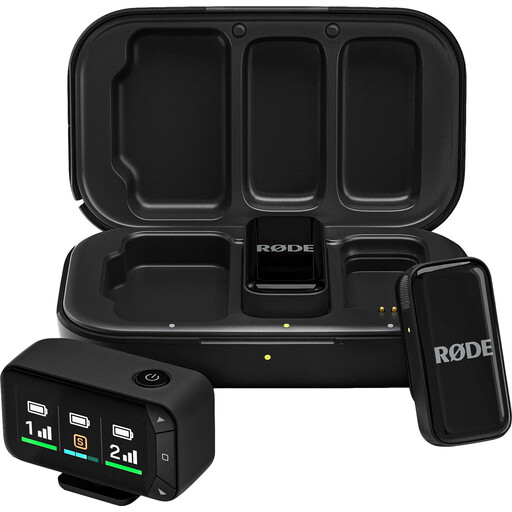
RØDE Wireless Micro Camera Kit, two microphones
A wireless kit with two microphones for conversations involving multiple people.
The set includes a camera receiver, a USB-C receiver and a charging case. Check which receiver is compatible with your recording device.
View at Joybuy
 No image available
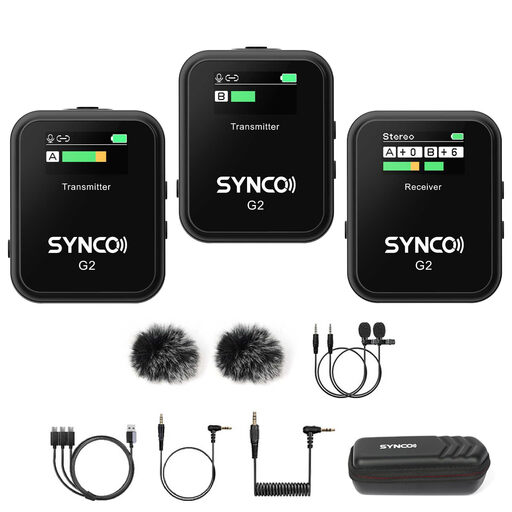
SYNCO G2(A2) 2.4G Dual Channel Wireless Lavalier Microphone
A wireless lavalier microphone set-up to consider if you want to record a conversation involving multiple people.
The product name specifies 2.4G and Dual Channel. Check that the connection and complete set are compatible with your recording device and set-up.
View at Joybuy
 No image available
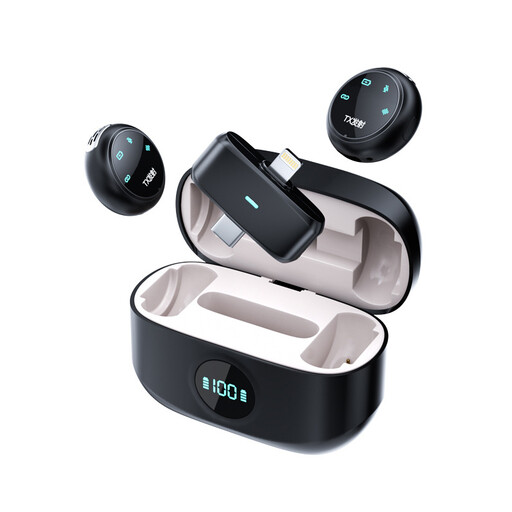
Verbex K31Pro-Black Dual Microphone
This dual wireless clip-on set-up is designed for conversations where more than one person needs a microphone.
The product name specifies compatibility with iOS and Type-C interfaces. Check that the connection matches your device.
View at Joybuy
 No image available
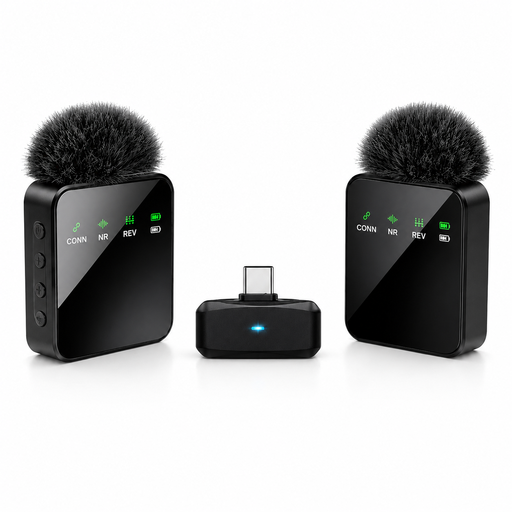
Verbex ST5 dual-mic wireless lapel microphone, Type-C
A wireless dual-mic set-up to consider for conversations with multiple people.
The product name specifies a Type-C interface. Check that it connects to your recording device.
View at Joybuy
 No image available
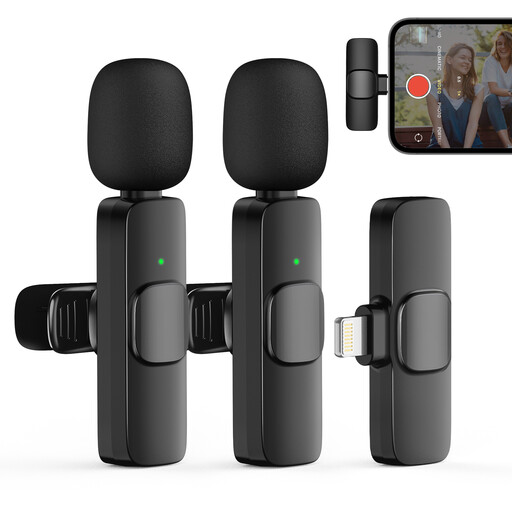
Moman CP1XA Wireless Lavalier Microphone Set (2TX&1RX), for iPhone
This wireless clip-on set is worth considering for a conversation between two people.
The product name specifies two transmitters, one receiver and use with iPhone. The product information mentions omnidirectional microphones; in a noisy room, the recording may also pick up ambient sound.
View at Joybuy
Frequently asked questions
Should you use one or two microphones?
If both the interviewer and narrator need to be clearly audible, Sprekende Geschiedenis recommends using two microphones. Make a test recording and check that you can hear both voices.
What should you check just before a long interview?
Record a short clip and listen back to it with headphones. Sprekende Geschiedenis recommends checking the sound to spot any interference or noise; also check that the voices you need to capture are clearly audible.
What if a microphone you bought online doesn’t work properly?
For a consumer purchase in the Netherlands, the seller is your point of contact if a product does not perform as you could reasonably expect under normal use. ACM ConsuWijzer explains that the seller must put this right under the statutory guarantee. According to the Dutch government, distance purchases are also usually covered by a 14-day cooling-off period, although exceptions apply.
Can you record and publish an identifiable oral history interview?
This depends in part on the purpose and how the recording will be used. Processing personal data requires a lawful basis under the GDPR; consent is one possible basis. According to the Dutch Data Protection Authority, consent is required in most cases to publish other people’s personal data online. Discuss the purpose, access and any plans to publish with the narrator in advance.


