
Listeners in an open-plan living space
If you listen to reggae in different spots, you can try moving the speaker and changing where you sit. Genelec explains how speaker placement affects how noticeable room resonances are.


For reggae albums in an open-plan flat, one suitable speaker is the simplest set-up. A stereo pair is a better choice if you want separate left and right channels from a fixed listening position. Check how the bass sounds in your own listening spots and make sure the connection works with your album source. A higher power rating on paper doesn’t guarantee even bass throughout the room.
If you listen to reggae in different spots, you can try moving the speaker and changing where you sit. Genelec explains how speaker placement affects how noticeable room resonances are.
A stereo pair suits a fixed listening position where two compatible speakers can be placed separately for the left and right channels. Denon and WiiM document specific combinations for stereo pairs.
If you use a CD player or turntable, you’ll need to match the source’s output to the speaker’s input. Sonos and Marshall outline additional connection requirements for their models.
| What to consider | What should you check? | Who is this important for? |
|---|---|---|
| Bass and sound in different spots | Listen from where you sit and eat; check whether bass adjustment is available. | If you want the bass to sound good in your listening spots, pay attention to sound settings and placement; around 29% of consumers prioritise bass and sound. |
| Stereo imaging | Check which speaker combinations are supported and whether there’s room for two speakers. | If you want to hear separate left and right channels from a fixed position, look for a suitable stereo pair; around 24% of consumers prioritise channel separation. |
| Connection to your album source | Check the source’s output, the speaker’s input and whether you need an adapter or preamp. | If you play albums from a CD player or turntable, you’ll want to know in advance what connection you need; around 18% of consumers prioritise source compatibility. |
| Volume at home | Check that the volume and bass are easy to adjust. | If you want to listen without disturbing housemates or neighbours unnecessarily, you’ll want to be able to adjust the volume quickly; around 18% of consumers make controllable sound their main priority. |
| Complete set-up | Factor in a second speaker and any cables, adapters or preamps you need. | If you want to see the full set-up before choosing, look beyond a single speaker; around 11% of consumers make putting together all the necessary components their first priority. |
What you hear also depends on speaker placement and where you’re listening from. A higher stated power rating doesn’t prove that the bass will sound even everywhere.
Compare the sound in your own listening spots and try different placement or any available sound settings before assuming that more power is the answer.
A turntable without a built-in phono preamp won’t automatically provide the line-level signal you need. The Sonos Era 100 also requires a separate line-in adapter.
Check the turntable’s output, the preamp, the input on your chosen model and any accessories you need as one complete connection chain.
Depending on the combination, you may also need a suitable cable, a model-specific adapter or a separate phono preamp.
A stereo pair consists of two compatible speakers that can be positioned separately for the left and right channels.
First decide whether you want to hear separate left and right channels from a fixed listening position. Then check which models can be paired for stereo and whether you have room for both speakers.
You’ll need a second compatible speaker to set up separate left and right channels.
Playing music louder won’t automatically solve a placement problem and may disturb housemates or neighbours.
Try moving the speaker or your listening position, and listen at a suitable volume. If you’re concerned about noise, check local rules and agree arrangements with others where needed.
The Era 100 is an option for a fixed Wi-Fi or Bluetooth set-up, which can be expanded with two Era 100 speakers.
The Home 250 is designed as a fixed home speaker with streaming and an AUX connection; two matching speakers can be set up as a stereo pair.
The Stanmore III is an example of a fixed Bluetooth speaker with physical bass and treble controls and analogue inputs.
WiiM Sound is a fixed, app-controlled speaker with a line input; WiiM documents stereo pairs using Sound and Sound Lite models.
The Authentics 300 is a home speaker with a battery, Wi-Fi and Bluetooth, for anyone who wants to move their speaker between different spots.
This Joybuy selection includes both wireless speakers and soundbars. If you’re considering a soundbar, check that a more complex home cinema set-up suits your album source and the space available.
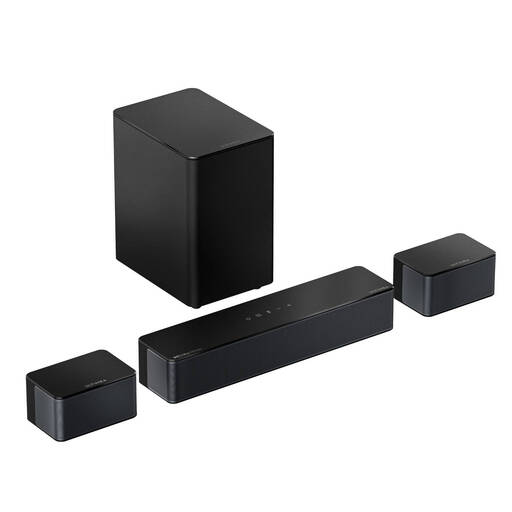 No image available
This model is suited only to anyone specifically looking for a soundbar set-up rather than a separate stereo home speaker.
The product name lists a 5.25-inch wireless subwoofer, 450 W, Dolby Atmos, HDMI eARC, Bluetooth 5.4 and app control.
The stated configuration includes a soundbar and subwoofer; make sure you have room to position both components.
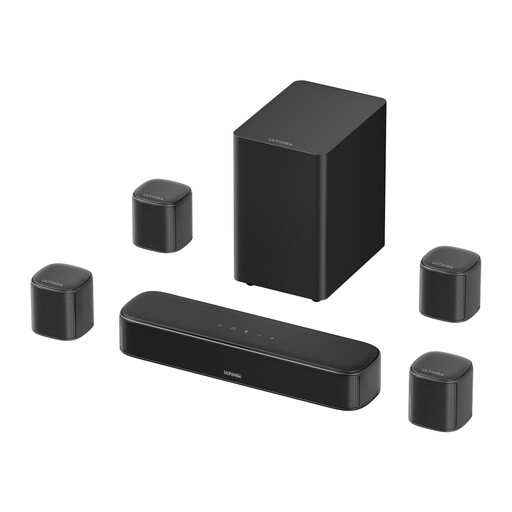 No image available
This home cinema set-up is worth considering if you have room for a soundbar, subwoofer and surround speakers; it’s not a simple replacement for a single speaker.
The product name lists four surround speakers, a 5.25-inch subwoofer, 350 W, app control and HDMI, optical and AUX connections.
The supplied set-up includes several components; plan where to position them before you choose.
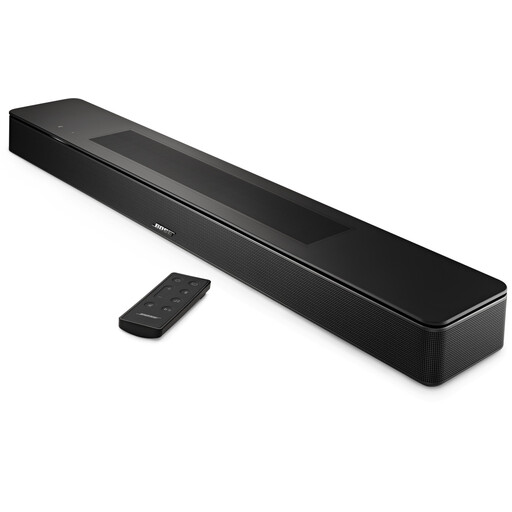 No image available
This is a soundbar option; check whether you want to use a soundbar to play albums rather than a separate stereo speaker.
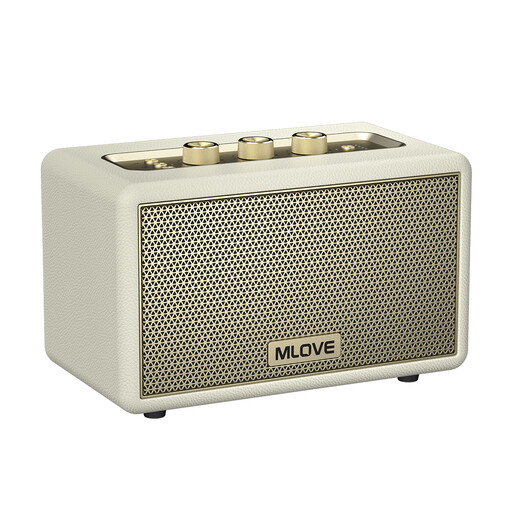 No image available
This portable Bluetooth speaker is an option if you want to move a speaker between listening spots; check that its connections work with your album source.
The product name lists Bluetooth 5.3 and 24 hours of playback time.
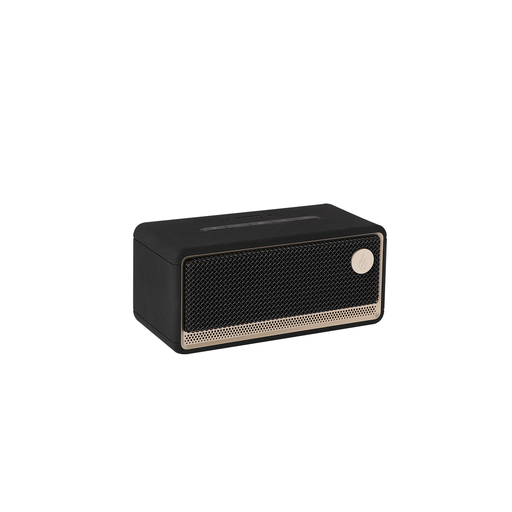 No image available
This fixed speaker is an option if you want to play albums over Wi-Fi or Bluetooth; check that it supports your preferred music service and source.
The product name lists 60 W, AirPlay 2, LDAC, USB and AUX.
No, not just to play an album. If you want to position the left and right channels separately around a fixed listening spot, choose two speakers that the manufacturer explicitly supports as a stereo pair, and check that you have room for both.
Only if the turntable or a separate device provides a suitable pre-amplified output. Sonos and Marshall note that a separate preamp may be needed for a turntable without a built-in phono or RIAA preamp; check the cable and any model-specific adapter too.
First try moving the speaker or your listening position, then adjust the bass if the model allows it. Genelec explains how room resonances and placement affect the low frequencies you hear; a power rating alone won’t solve the problem.
In many cases, you have 14 days to change your mind when you buy remotely from a business. You also have statutory rights in the Netherlands if a product is faulty, and the seller is your point of contact. The Dutch government states that there is no fixed statutory two-year guarantee period for every product.
You shouldn’t assume there’s a set time when loud music is permitted in every flat across the country. According to the Dutch government, nuisance to neighbours may be covered by municipal APV regulations; check local rules and any building agreements. The government recommends discussing and agreeing music arrangements with your neighbours first.