If you’re looking to cut down on fat, compare the nutritional values per 100 g and check exactly what a reduced-fat claim is based on. A reduced-fat claim is not the same as the low-fat label. The 30% claims mentioned for Duyvis apply to specific borrelnoten varieties whose product pages say they have been discontinued. If your main aim is to limit how much you snack, you can measure out a portion of regular peanuts in advance, but this won’t change their fat content.
Who is this buying guide for?
Reducing fat is your main priority
You’re looking for peanuts where the fat reduction in the specific variety is clearly stated, and want to know what the manufacturer compares it with. A reduced-fat claim and the low-fat label don’t mean the same thing.
A measured lunch-time snack
You want to take a limited amount with you rather than eat straight from a large bag. Compare your portion with the nutritional values per 100 g.
Unsalted peanuts for regular use
You’re looking for plain, unsalted peanuts to take on the go, and want to check the ingredients and storage instructions without assuming that unsalted means lower in fat.
What should you look for in peanuts to take on the go?
First decide what matters most to you: the fat content of the variety, the amount you take with you, the ingredients or how easy it is to store.
| What to consider |
What should you look for? |
Who is this important to? |
| Fat content and claim |
Check the fat value per 100 g and the full claim, including the stated basis for comparison. For solid foods, the European Commission sets a maximum of 3 g of fat per 100 g for the low-fat label. |
If reducing fat is my main priority, I want to be able to assess the exact variety and what it is compared with. Around 36% of consumers prioritise demonstrable fat reduction. |
| Portion size |
Compare the pack size with the portion shown on the label, then decide how many grams you want to take with you. Labelled portion sizes can vary by product. |
If I want a lunch-time snack with a set limit, I’d rather take a measured amount than the whole bag. Around 29% of consumers prioritise portion control. |
| Salt and ingredients |
Check the salt per 100 g, the proportion of peanuts, any added oil and the allergen information for the exact variety. |
If I’m mainly looking for an unsalted product, I also check what else is listed alongside peanuts in the ingredients. Around 21% of consumers give this the highest priority. |
| Taking them with you and storage |
Check the pack size, closure and storage instructions. A multi-portion pack isn’t automatically one lunch-time portion. |
If I want to buy, carry and store my lunch-time snack conveniently, ease of use matters a lot to me. Around 14% of consumers prioritise convenience. |
Common pitfalls
-
Assuming oven-baked or unsalted means low-fat
These terms describe how a product is prepared or whether salt has been added; they don’t automatically tell you its fat content. For example, AH Pinda’s ongezouten lists 51 g of fat per 100 g.
Use the nutrition table for the exact variety, and assess the preparation method, salt and fat claim separately.
-
Comparing a reduced-fat claim with a different product category
The Duyvis Herbs&Onion claim compares the product with regular peanuts in a crunchy coating, on average in the Netherlands. The claim for Tomato and Herbs refers to other Duyvis product lines. Neither is necessarily a comparison with regular unsalted peanuts.
Read the reference for the claim carefully and keep claims for different varieties separate.
-
Taking a multi-portion pack as one snack
The checked 500 g AH bag lists 20 portions. The pack weight and the stated portion size are two different things.
Measure out the amount you want to take with you in advance, and follow the storage instructions for the opened pack.
A separate, airtight food container can be handy if you want to take the remaining peanuts with you or store them.
-
Looking only at the reduced-fat claim
As well as 21 g of fat, the checked Herbs&Onion product lists 2 g of salt per 100 g and contains wheat and gluten.
Alongside fat, check the energy, salt, ingredients and allergen information for the exact variety.
Brands to consider
Duyvis
Worth considering if you’re comparing regular peanuts, oven-baked peanuts and borrelnoten with a reduced-fat claim specific to the product.
- Duyvis describes Oven Baked Peanuts Original as made without added oil or fat.
- Albert Heijn listed a product-specific claim of 30% less fat for the Herbs&Onion and Tomato and Herbs varieties, with different bases for comparison. The relevant product pages say these varieties have been discontinued.
Albert Heijn
Albert Heijn’s own-brand unsalted peanuts are a regular peanut variety with a stated portion size of 25 g.
- The checked 500 g bag lists 97% peanuts and sunflower oil.
- The label lists 51 g of fat and 620 kcal per 100 g; this is not a confirmed reduced-fat variety.
Jumbo
The own-brand unsalted variety is a regular peanut option with nutritional information given per 100 g and per 30 g.
- The checked 250 g bag lists 99.5% peanuts and sunflower oil.
- The label lists 48 g of fat and 602 kcal per 100 g; the nutrition table alone doesn’t amount to a reduced-fat claim.
Lidl
Lidl offers unsalted peanuts, as well as Alesto peanuts in a seasoned dough coating.
- The product page for unsalted peanuts offers a regular variety to consider.
- Lidl describes the flavour and crunch of the Alesto variety; this brand description isn’t evidence of fat reduction.
ALDI
ALDI Netherlands lists TRADER JOE’S roasted, unsalted peanuts in a 250 g pack.
- Roasted and unsalted are the product descriptions provided.
- These descriptions don’t confirm a reduced-fat claim.
PLUS
The checked own-brand variety consists of unsalted roasted peanuts in a 250 g bag.
- The label lists 99% peanuts and sunflower oil.
- The variety lists 50 g of fat, 625 kcal and 0.02 g of salt per 100 g. It’s a regular unsalted option, with no confirmed reduced-fat claim.
Peanuts at Joybuy
These Joybuy products include regular and unsalted peanuts, peanuts in their shells and borrelnoten. Don’t use them as proof of a reduced-fat claim: check the nutritional values and claim on the exact pack instead.
 No image available
g’woon unsalted peanuts 250 g
An unsalted option that you can divide into lunch-time portions yourself.
The product information lists 99% peanuts with sunflower oil, 50 g of fat and 0.02 g of salt per 100 g.
May contain cashew nuts.
View at Joybuy
 No image available
g’woon peanuts in shells 500 g
A snack option in the shell; you’ll need to measure out an amount yourself if you want a smaller lunch-time portion.
The nutritional information lists 49 g of fat and 0.12 g of salt per 100 g.
View at Joybuy
 No image available
Verse Extra Large Roasted Peanuts 210 g
The product information describes these roasted peanuts as unsalted; you can divide the pack into smaller portions.
The product information lists 100% peanuts, 50 g of fat and 0.02 g of salt per 100 g.
View at Joybuy
 No image available
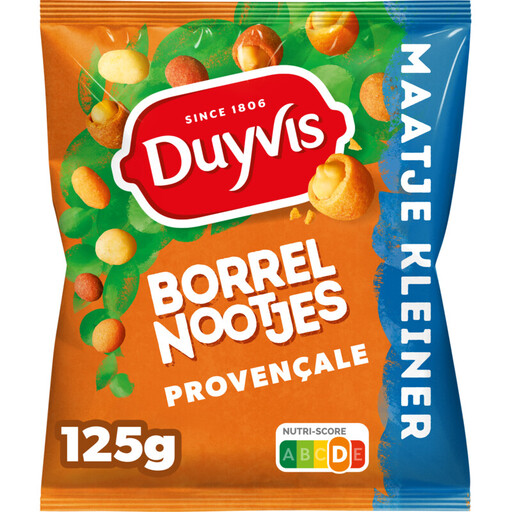
Duyvis Bran Nuts Provencale 125 g
The product information gives a portion size of 30 g; the pack contains 125 g.
The nutritional information lists 33 g of fat and 1.2 g of salt per 100 g.
Contains wheat; according to the product information, it may also contain milk, nuts, soya and mustard.
View at Joybuy
 No image available
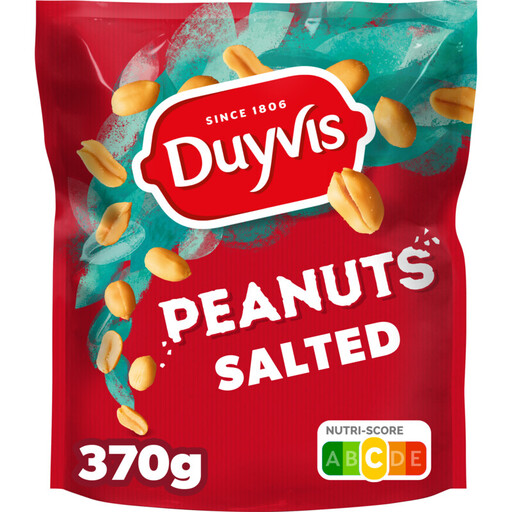
Duyvis salted peanuts 370 g
An explicitly salted variety; choose how much you want to take with you.
The nutritional information lists 52 g of fat and 0.73 g of salt per 100 g.
The product information notes that it may contain other nuts.
View at Joybuy
Frequently asked questions
Do reduced-fat and low-fat mean the same thing?
No. According to the European Commission, the low-fat label can be used for solid foods containing no more than 3 g of fat per 100 g. The Duyvis Herbs&Onion variety listed by Albert Heijn had a comparative claim of 30% less fat, but contained 21 g of fat per 100 g; its product page says the variety has been discontinued.
Does a bag of peanuts automatically count as one lunch-time portion?
No. The checked 500 g AH bag lists 20 portions of 25 g, while Jumbo gives a portion size of 30 g for its checked unsalted variety. Decide in advance how much you want to take with you, and use the same weight in grams when comparing products.
How should I store peanuts after opening the bag?
Close the pack securely and follow the storage instructions for the exact variety. For the checked unsalted peanuts, Albert Heijn advises storing them in a cool, dark, dry place and closing the pack securely after use.
Are reduced-fat peanuts suitable for someone with a peanut or wheat allergy?
A fat claim doesn’t change the allergen information. The checked Duyvis Herbs&Onion variety contained peanuts, wheat and cereals containing gluten, and may have contained other nuts. The Netherlands Food and Consumer Product Safety Authority explains that mandatory allergen information is shown on the label; always check the pack for the exact variety.
Are whole peanuts automatically suitable as a snack for young children?
No. The checked product labels warn that young children may choke on peanuts. A reduced-fat claim doesn’t change this risk.


