
Vandaag of morgen in huis

Kwaliteit gegarandeerd

Welkomstaanbiedingen ontgrendelen: GRATIS bezorging | Tot 80% korting | Gratis 30 dagen JoyPlus-proefperiode
Download de app
A recycling bin can keep general waste, packaging and food scraps neatly separate. However, not every recycling bin is practical for everyday use. A small inner bin fills up quickly, an awkward lid can hit the wall, and a compartment without its own pedal makes sorting less hygienic.
As a Joybuy Product Recommendation Officer, I assess product information against verifiable features. Below, you’ll find out which specifications really matter, which pitfalls to avoid and which type of recycling bin is right for your household.
A 60-litre bin sounds spacious, but its capacity could be split between three 20-litre inner bins. That’s a practical arrangement for a small household, but if you have a family and don’t take the rubbish out very often, one large general-waste compartment could be more useful.
So check the capacity of each compartment. A 2-compartment bin with 15 litres per compartment works differently from a bin with 10 and 18 litres. The right choice depends on the types of waste you produce and the space available.
A soft-close bin closes more slowly and quietly than a standard bin. This helps prevent loud bangs, but the mechanism needs room to work. If the bin is pushed right up against a wall or the lid is blocked, it may be less practical to use.
Check the bin’s height, width and depth, as well as the space needed for the lid to open. Some models have a 90° open position, which is handy while cooking or cleaning.
A steel bin has a sturdy look and is generally easy to wipe clean. However, fingerprints, moisture and harsh cleaning products can affect the surface. Clean steel with a soft, damp cloth and avoid abrasive cleaners or wire wool.
Rust isn’t a concern with a plastic bin, but check whether the inner bins can be removed. This has a big impact on how easy the bin is to clean.
First, decide which types of waste you actually want to separate:
A kitchen pedal bin is handy when you’re cooking with wet or dirty hands. Separate pedals are important, so you only open the compartment you need.
Measure the space where you plan to put the bin. Don’t just check its width; also consider:
A model measuring 41,8 x 35,9 x 44,5 cm takes up relatively little floor space. A larger model measuring 61 x 31,5 x 55,5 cm offers more capacity, but you’ll need to think carefully about where to put it.
Check whether the product description gives details about:
According to the product descriptions for the JOYFURNOS models, the outer bins are made of steel, the inner bins of PP plastic and the lids of ABS plastic. The 60-litre model is described as having rust- and fingerprint-resistant stainless steel. These are product specifications, not a guarantee that the surface will remain free from marks or wear in all conditions.
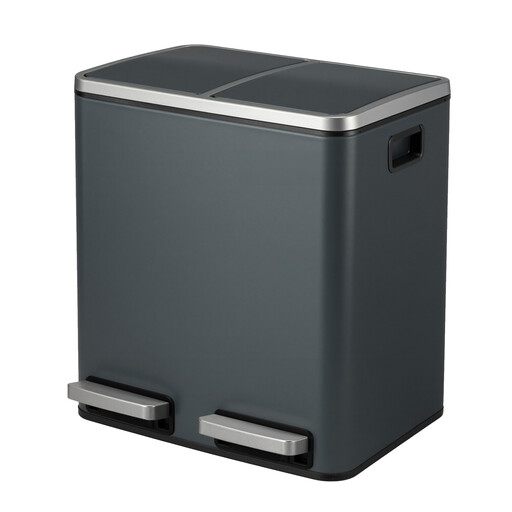
Why it suits this household: The two compartments and separate pedals make it easy to start sorting kitchen waste, without needing to buy a large bin straight away.
The product description lists two removable inner bins and independent lids. That means you don’t have to move the whole bin to empty just one type of waste.
2 x 15 litres, steel outer bin, soft-close lids, pedal operation and bin bags included, according to the product information.
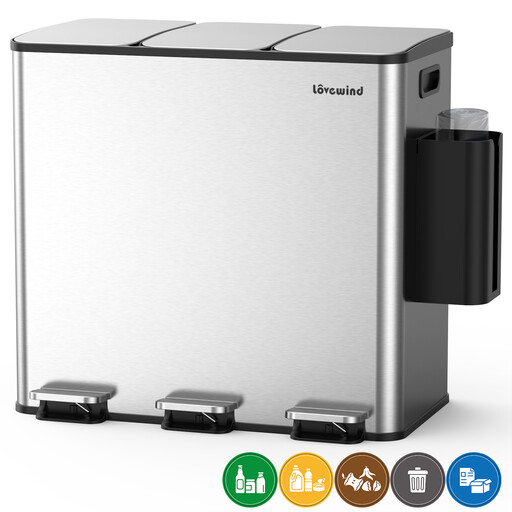
Why it suits this household: If you want to sort three types of waste in one bin, this model gives you three separate 20-litre compartments, making it a good fit for a busier household.
The layout makes the total capacity clear: 60 litres, split into 3 x 20 litres. According to the product description, magnetic labels can help you identify each compartment.
3 x 20 litres, 0.5 mm stainless steel according to the product description, soft-close lids with a 90° open position and three removable inner bins.
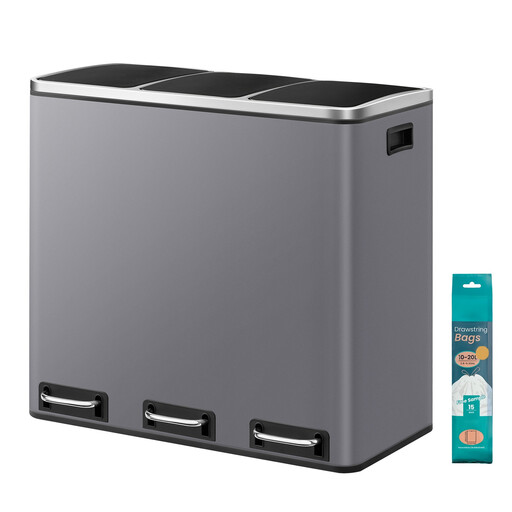
Why it suits this household: The three compartments are ideal for households that want to keep general waste, recycling and food scraps separate in one recycling bin.
The three compartments mean you don’t need to put several separate bins side by side. According to the product description, the inner bins are removable and have handles.
3 x 18 litres, independent pedals, soft-close lids and a steel outer bin. The dimensions are 61 x 31,5 x 55,5 cm.
We’ve put together a complete, up-to-date list of products that meet these strict selection criteria and the applicable European safety regulations.
Place the bin on a flat, stable surface and keep the pedal mechanism free from moisture and dirt. Don’t force a soft-close lid shut by hand. Clean the inner bins with warm water and a mild detergent, and wipe the outside with a soft cloth.
If you put food scraps in the bin, think about how often you’ll need to empty it. A smaller compartment can fill up more quickly and cause smells if waste is left in it for too long. A lid with an odour filter may help control smells, according to one product description, but it’s no substitute for regular emptying and cleaning.
It can be. With 2 x 15 litres, for example, you can separate general waste and recycling. If you also want to keep food scraps separate, a 3-compartment bin is probably a better choice.
Think about how much waste you produce and how often you empty the bin. A 28 to 30-litre bin could suit a small household. A 60-litre bin offers more overall space, but usually takes up more room and often splits its capacity between three compartments.
Use the right-sized bin bags, close the lid properly and empty the food-scrap compartment regularly. Clean the inner bins if any moisture or waste is left behind. A soft-close lid can make everyday use quieter, but good hygiene is still key to controlling smells.
