
Vandaag of morgen in huis

Kwaliteit gegarandeerd

Welkomstaanbiedingen ontgrendelen: GRATIS bezorging | Tot 80% korting | Gratis 30 dagen JoyPlus-proefperiode
Download de app
A good recycling bin is indispensable in the modern kitchen. It simplifies recycling and keeps your kitchen tidy and hygienic. But the search can be frustrating. Many models look great at first glance, but prove to be impractical, break down quickly, or become a source of constant annoyance in daily use.
As a Joybuy Product Recommendation Officer, I see the challenges consumers face every day. To help you avoid a bad purchase, I've outlined the three most common pitfalls.
By paying attention to a few key points, you can choose a model that will last for years and genuinely make recycling easier.
Before you make a choice, it's wise to check three essential specifications. These will determine if a bin is truly practical for your household.
The core of a good recycling bin is its layout. Most municipalities require you to separate organic waste, PMC (plastics, metals, cartons), and general waste.
Capacity per Household (Guideline):
The material determines not only the look but also the durability and ease of maintenance.
For hygiene and ease of use, a pedal bin in the kitchen is an excellent choice. You can open the bin without touching it with your hands. Pay attention to the quality of the pedal; a wide, sturdy pedal will last longer.
A soft-close mechanism is a feature you will quickly come to appreciate. It ensures the lid closes silently and slowly. No more loud slams, which contributes to a peaceful atmosphere in your home.
Based on these criteria, we have selected several models that suit different user profiles.
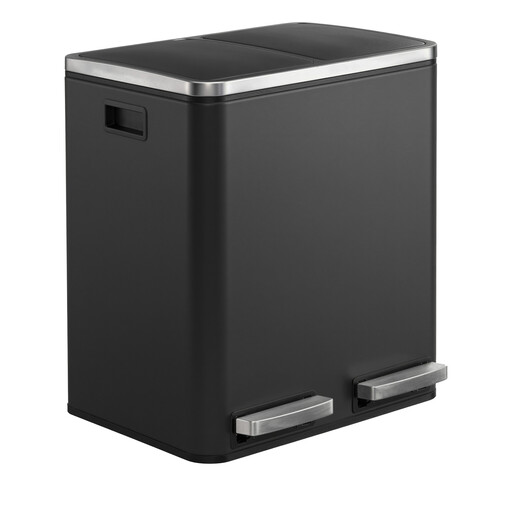
Why This Fits Their Persona: Perfect for 1- or 2-person households with a modern kitchen where space is at a premium. This dual-compartment bin combines a sleek design with practical separation for general waste and PMC.
The two separate pedals are robust, and the soft-close lids prevent slamming (avoids pitfall 1). The 2x15L layout is a deliberate choice for smaller households, so you don't have an unnecessarily large bin taking up space (avoids pitfall 2).
Compact and space-saving design. Hygienic operation with two separate pedals and silent soft-close lids.
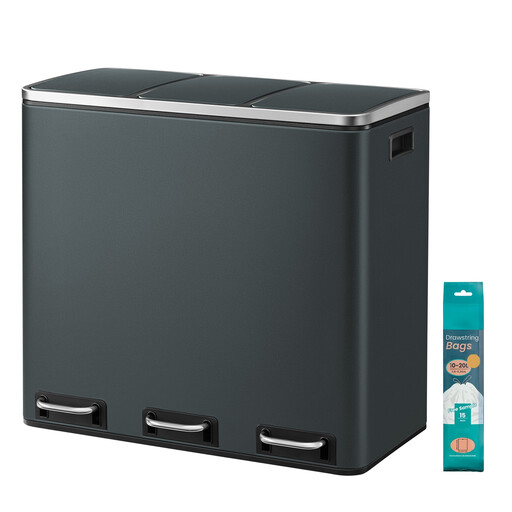
Why This Fits Their Persona: An ideal recycling separator for families who want to sort organic waste, PMC, and general waste directly in the kitchen. The three spacious compartments offer sufficient capacity for a busy household.
With 3 compartments of 18 litres each, the capacity is well-suited for a family, preventing the bins from filling up too quickly (avoids pitfall 2). The steel construction is rust-resistant, and the pedals are designed for frequent use (avoids pitfalls 1 and 3).
A complete solution with 3 compartments for full waste separation. The removable inner buckets make emptying and cleaning easy.
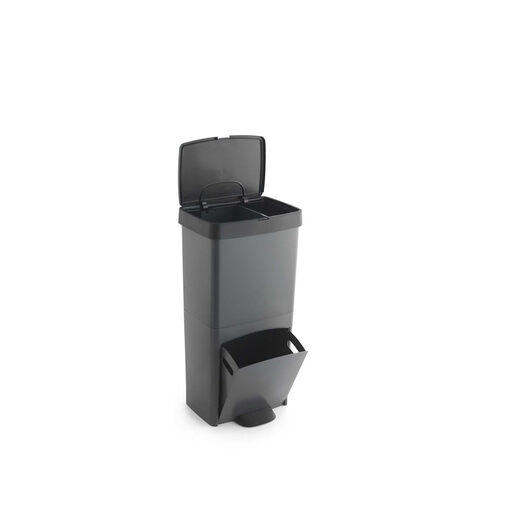
Why This Fits Their Persona: For those who value sustainability and smart use of space. This model is made from 100% recycled plastic and features a vertical design that offers large capacity on a small footprint.
The vertical design is a clever solution to the 'just-not-big-enough' mistake without taking up much floor space (avoids pitfall 2). The recycled plastic is robust, dent-proof, and resistant to rust or fingerprints (avoids pitfall 3).
Large capacity (70L) with a small footprint. Made from 100% recycled plastic and offers flexible operation with both a push-button and a pedal.
We have compiled a complete, up-to-date list of products that meet these strict selection criteria and current regulations.
A good rule of thumb is to base the total capacity on the number of people in your household. For 1-2 people, 25 to 40 litres is often sufficient. For a family of 3-4, it's better to look for 40 to 60 litres. Larger households will benefit from 60 litres or more. With a recycling bin, also consider the distribution: PMC waste often takes up the most volume.
A stainless steel bin with a soft-close lid combines a durable and stylish material with extra comfort. Stainless steel is strong, hygienic, and provides a modern look. The soft-close feature ensures the lid closes gently and silently, contributing to a pleasant and quiet kitchen environment.
Regular maintenance is key. Always use the correct size bin liners. Clean the removable inner buckets at least once a week with soapy water. Let the organic waste caddy air out occasionally and empty it frequently to prevent odours. Some models have space for an odour filter, which can also help.
