
Vandaag of morgen in huis

Kwaliteit gegarandeerd

Welkomstaanbiedingen ontgrendelen: GRATIS bezorging | Tot 80% korting | Gratis 30 dagen JoyPlus-proefperiode
Download de app
Waste separation is becoming the new standard. But finding a good recycling bin that is practical, hygienic, and stylish can be quite a challenge. Many models look great online but prove to be impractical in daily use. Before you make a choice, it's wise to be aware of a few common pitfalls.
Many people experience frustration with their purchase. Think of a pedal that breaks after just a few months, a lid that doesn't close properly and lets unpleasant odours escape, or an impractical size that means the bin is always in the way in a typical kitchen. These problems can often be traced back to flimsy construction and designs that are not suited for everyday use.
To avoid a bad purchase, it's helpful to look beyond just the appearance. Pay attention to the following three points that make the difference between a convenient kitchen recycling bin and a source of daily annoyance.
How many waste streams do you want to separate directly in the kitchen? Most households find a dual-compartment bin sufficient for general waste and recyclables (like plastics, metals, and cartons). If you also need space for organic waste, then a bin with 3 compartments is a logical choice.
Critically assess the volume per compartment. A 5-litre container for organic waste is often enough, as you'll empty it more frequently. For recyclables, which take up a lot of volume, a compartment of 20 litres or more is essential. Match the total capacity to the size of your household:
A pedal bin for recycling is popular because you can open it with your hands full. Check if the pedal mechanism feels sturdy. A soft-close lid is a pleasant extra: it prevents a loud slam and closes the bin silently.
For easy emptying and cleaning, removable inner buckets are indispensable. These separate buckets, often made of plastic, can be easily lifted out of the bin and cleaned. This is much more hygienic than when the bin bag hangs directly in the outer shell.
A recycling bin is often made of stainless steel or plastic. Stainless steel looks sleek and modern but can be susceptible to fingerprints and dents. Preferably choose stainless steel with a special coating. Plastic is lighter, often more affordable, and easy to keep clean. Some models, like those from Curver, use a metallic finish on plastic, combining the advantages of both materials.
Always measure the available space in your kitchen before purchasing a multi-compartment bin. Pay attention not only to the width and depth but also to the height, especially when the lid is open.
Based on these criteria, we have selected a number of products that suit different needs and kitchens.
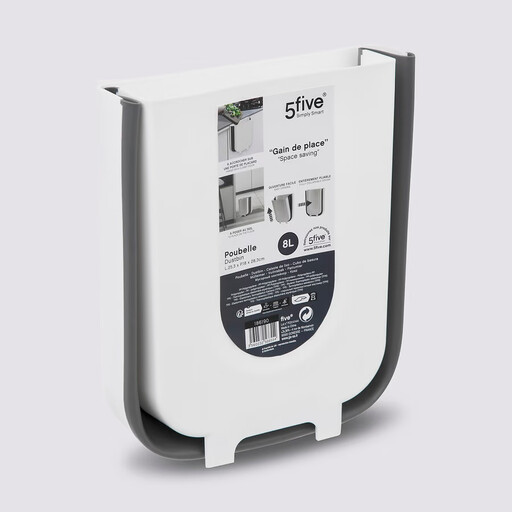
Why This Fits Their Persona: Ideal for those with limited floor space. You hang this bin on a kitchen cabinet, perfect for organic waste while cooking. After use, you can fold it up so it's out of the way.
This model completely solves the problem of an 'impractical size'. It takes up no precious floor space and is only visible when you need it.
Collapsible design: saves space. Easy installation: hang it directly on a cabinet door or drawer.
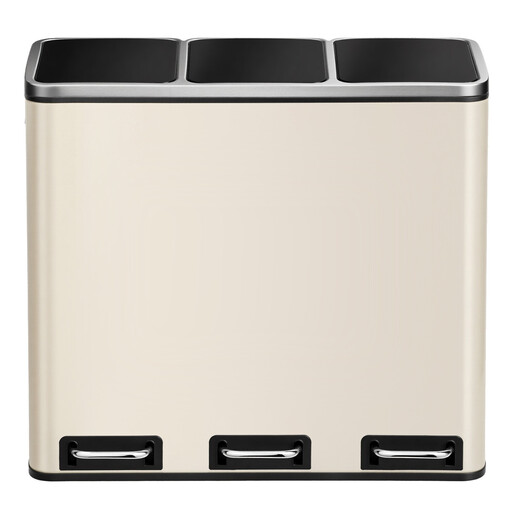
Why This Fits Their Persona: With three spacious 18-litre compartments, this triple-compartment bin is ideal for families. You can immediately separate general waste, recyclables, and organic waste or paper. The total capacity of 54 litres means you don't have to empty the bins every day.
The separate pedals and soft-close lids for each compartment reduce wear and tear. The removable inner buckets make emptying hygienic and prevent a torn bag from creating a mess.
Large capacity: 3 x 18 litres. Hygienic operation: separate pedals and lids per compartment.
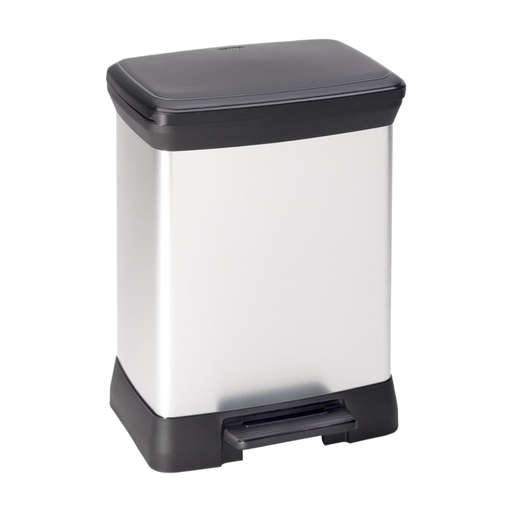
Why This Fits Their Persona: This dual-compartment bin combines a stylish metallic look with the benefits of plastic. It's lightweight, won't rust, and is resistant to dents and fingerprints. A practical and durable choice for everyday use.
The soft-close lid seals tightly to prevent odours from escaping. Because it's made of plastic, you won't have to worry about rust or dents that are common with cheaper metal bins.
Made from 70% recycled plastic.Soft-close lid and a comfortable, wide pedal.
We have compiled a complete, up-to-date list of products that fully meet these strict selection criteria and local regulations.
A well-sealing lid is the first step. Clean the inner buckets, especially the one for organic waste, regularly with soapy water. Let moist organic waste, like coffee grounds, drain for a bit before you throw it away. Special compostable bags that absorb moisture can also help.
This depends on the size of your household and how often you take out the rubbish. As a guideline, you can assume 10-15 litres per person for the total capacity. For a family of four, a bin with a total capacity of 40 to 60 litres is usually a good choice.
Not always. Some brands have inner buckets with a non-standard shape and offer their own, perfectly fitting bin bags. Check the dimensions of the inner buckets. Often, you can get by with a standard bin bag of the correct litre size, even if it doesn't fit seamlessly.
