
Vandaag of morgen in huis

Kwaliteit gegarandeerd

Welkomstaanbiedingen ontgrendelen: GRATIS bezorging | Tot 80% korting | Gratis 30 dagen JoyPlus-proefperiode
Download de app
Recycling is standard practice in modern homes, but the wrong bin can make it a frustrating chore. You might know the feeling: a kitchen bin that's impractical, gets dirty quickly, or is simply too small. Before you buy a new one, it's crucial to understand the common pitfalls. Many models look great at first glance but prove to be unusable in daily life.
We’ve outlined the most common problems to help you avoid buyer's remorse.
To find a model that suits your household, it's wise to look at a few key specifications. These are the factors that make the difference between daily annoyance and effortless convenience.
The total volume in litres doesn't tell the whole story. The distribution across the compartments is more important. A dual-compartment bin is a popular choice for most households, as it allows you to separate the two largest waste streams (typically general waste and recycling) right at the source.
The lifespan of your bin depends heavily on its material and the quality of its moving parts.
A great bin is only complete with the right bin liners. A liner that's too small will slip down, while one that's too large is inefficient and can obstruct the lid. Check the dimensions of the inner buckets and choose a liner with a slightly larger volume.
For organic waste, biodegradable bin liners are an excellent choice. For general waste and recycling, certified high-quality liners often provide reliable quality and strength. Especially with larger volumes, like 60-litre bin liners, a strong bag prevents tears and leaks.
Based on these practical criteria, we have selected several models that suit different types of households.
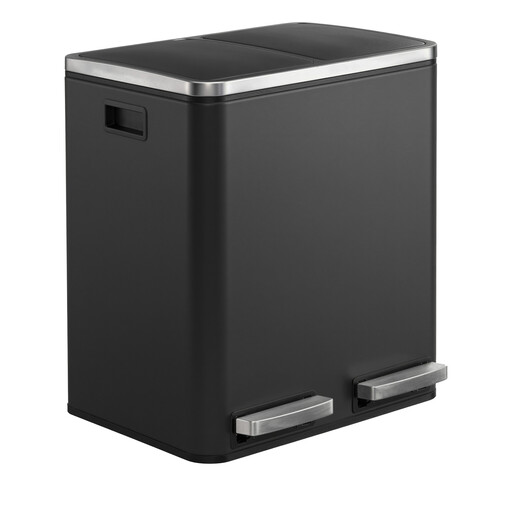
Why This Fits Their Persona: Ideal for smaller kitchens, apartments, or 1- to 2-person households. Its compact footprint takes up minimal floor space, while the two compartments make recycling simple.
The two separate pedals distribute the load, reducing the risk of wear on a single mechanism. The removable inner buckets are lightweight and easy to handle.
Space-saving design with a total capacity of 30L. The soft-close lids ensure quiet operation.
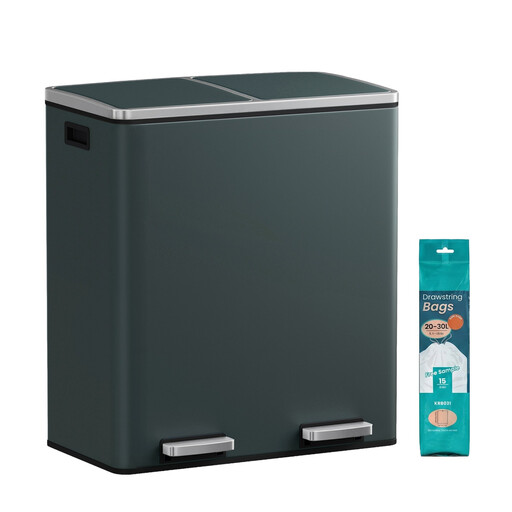
Why This Fits Their Persona: With a total capacity of 60 litres, this bin offers ample space for a family's waste. The two generous compartments are ideal for large amounts of recycling and general waste.
This model avoids the 'misleading capacity' trap by offering two full-sized 30-litre buckets. The stainless steel housing is sturdy and built for intensive daily use.
Large, practical capacity (2 x 30L) and a robust, hygienic pedal mechanism. The soft-close feature prevents loud slamming.
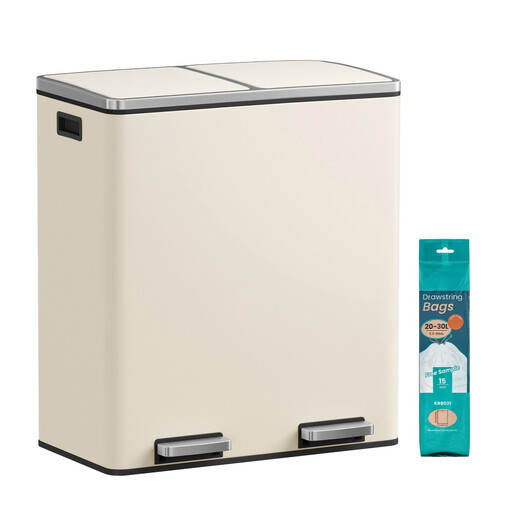
Why This Fits Their Persona: For those who see a bin not just as a utility, but as part of their interior design. The cream colour and minimalist design blend seamlessly into a modern kitchen.
This model proves that design doesn't have to come at the expense of quality. It combines a beautiful finish with a solid pedal and a silently closing lid.
Stylish and modern design that complements the kitchen. The soft-close mechanism provides a quiet and premium user experience.
We have compiled a complete, up-to-date list of products that meet these strict selection criteria and practical requirements.
The rule of thumb is simple: choose a bin liner with a volume slightly larger than the inner bucket's capacity. For a 30-litre bucket, a 30 to 35-litre liner is ideal. This ensures the bag fits snugly over the rim and doesn't slip down. Brands with a KOMO certification (or equivalent quality mark) often provide extra assurance of strength and fit.
A clean bin starts with preventing leaks. Always use a well-fitting, sturdy bin liner. Clean the inner buckets regularly with soapy water. A layer of baking soda or a few sheets of newspaper at the bottom of the bucket can help absorb moisture and odours.
Absolutely. A soft-close mechanism not only prevents the loud slam of a closing lid but also reduces wear and tear on the hinge. It contributes to a quieter kitchen atmosphere and significantly extends your bin's lifespan. It's a small investment in daily comfort and long-term durability.
