
A storyteller in one fixed position
You want to record one family member clearly and can position the microphone close to them, even in a reverberant rehearsal room.


When recording family stories in a reverberant rehearsal room, the distance between the speaker and microphone is a key place to start. A microphone close to the speaker’s voice will help more than relying on a distant recording position or noise processing. Choose a fixed speech microphone for one storyteller, a portable recorder for a simple group set-up, or a wireless set if two speakers will be moving around. Always make a test recording from the actual seats.
You want to record one family member clearly and can position the microphone close to them, even in a reverberant rehearsal room.
You want to capture several voices in one conversation and check that even the quietest speaker can be heard from their seat.
You’re recording two family members who won’t stay in one place and want to keep the microphones close to their voices.
Choose this option: if one storyteller will speak from a fixed position and you’re using a computer or a suitable recording set-up.
Bear in mind: one microphone for the storyteller won’t automatically capture distant voices clearly. For XLR, you’ll need a suitable interface or recorder.
Choose this option: if you want to record without a computer and participants can sit close to the recorder.
Bear in mind: a quiet voice at a distance can still be difficult to capture in a reverberant room; 32-bit-float recording won’t fix poor positioning.
Choose this option: if two people are moving around and a compatible smartphone will be used to record.
Bear in mind: check that the receiver is compatible with your phone’s connector and how the recording app captures the audio. A set with two transmitters won’t automatically give a third speaker their own microphone.
| What to consider | What to check before buying | Who is this most relevant to? |
|---|---|---|
| Clarity in a reverberant room | Can you position the microphone close to the storyteller and listen back to the recording from their seat? | If I want to capture one storyteller clearly, I prefer to position the microphone nearby and test the recording in the room itself. Around 33% of consumers give making the storyteller clear the highest priority. |
| Several voices at once | Check the microphone’s pickup pattern and test whether even the quietest participant can be heard from their own seat. | If family members are talking round the table at the same time, I want to know that quieter voices will come through too. Around 27% of consumers prioritise capturing several participants. |
| Recording without a computer | Check the power requirements, storage and playback options for the exact model. | If I want to record without a computer and check the session on the spot, I choose a set-up that lets me do that. Around 20% of consumers give recording independently the highest priority. |
| Two speakers on the move | Check whether both speakers can wear a microphone and whether the receiver is compatible with the recording device. | If two people are walking around, I want the microphones to move with them. Around 20% of consumers put freedom of movement for two speakers first. |
According to Shure, a microphone can’t improve the acoustics of a room. Poor positioning can mean reflections make direct speech less clear.
A conversation that can’t be repeated may not produce a usable recording.
Make a test recording in the rehearsal room and move the microphone closer to the voices you want to capture.
A directional speech microphone and a recorder with selectable pickup patterns are designed for different seating arrangements. One microphone close to a speaker won’t automatically capture distant voices just as clearly.
For a group, you may need a different position or a set-up with additional microphones or inputs.
First, map out where everyone will sit and test whether all participants can be heard from their own seats.
Wireless sets may come with different receiver connectors. A standalone recorder also needs its power and storage to be prepared.
Before choosing, compare the exact connector and what’s included in the box with your phone or other recording equipment.
The H2essential may suit conversations where you need to change the pickup direction; the H1essential is a standalone recorder for a well-positioned recording.
The PodMic USB offers USB or XLR connectivity for one storyteller in a fixed position; the Wireless Micro is designed for two speakers on the move, used with a compatible smartphone.
The DR-05XP is a standalone recorder with built-in stereo microphones for recording without a computer.
The AT2040USB is a directional USB speech microphone for a storyteller speaking from close range in a fixed position.
The MV7+ is a USB-C and XLR option for recording speech close to the microphone.
This selection includes wireless clip-on sets for two speakers, a portable recorder for recording without a computer, and a fixed USB microphone for one storyteller.
 No image available
The two transmitters are suited to a conversation with two speakers on the move; the product description says it can be used with smartphones, cameras and PCs.
The title lists two transmitters, one receiver and a charging case. The product description mentions clip-on or magnetic attachment and internal recording.
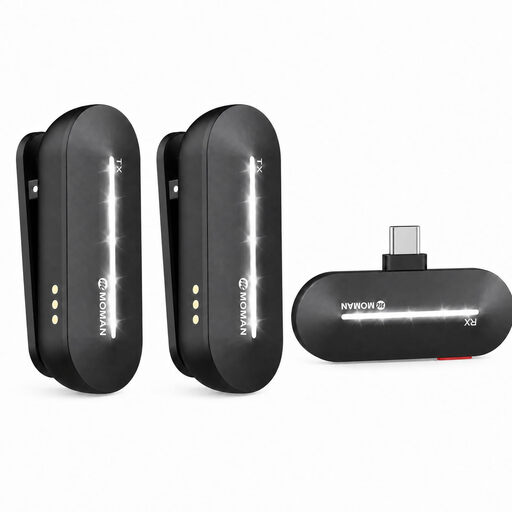 No image available
This set may suit two speakers using a USB-C recording device; check that the receiver is compatible with your device.
The product name lists USB-C, two transmitters and one receiver. The product description mentions two omnidirectional microphones.
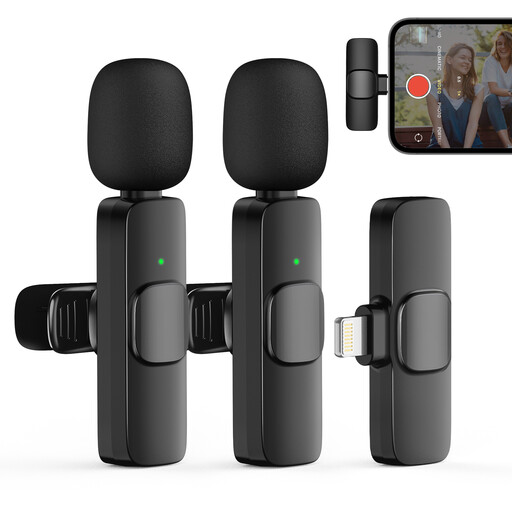 No image available
This set may suit two family members on the move if you want to record with an iPhone or iPad; the product description says it connects via the receiver.
The title lists two transmitters and one receiver. This version is designed for iPhone and iOS devices.
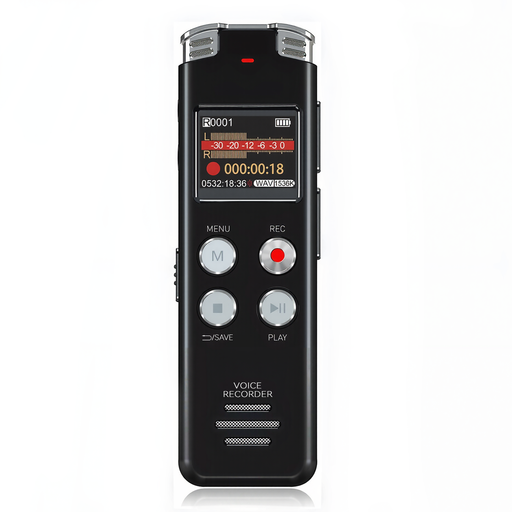 No image available
A portable recorder may suit you if you want to record a story without a computer and listen back or transfer the recording later.
The product name lists 128 GB. The product description mentions WAV and MP3 recording, playback, file transfer via USB-C and one-button recording.
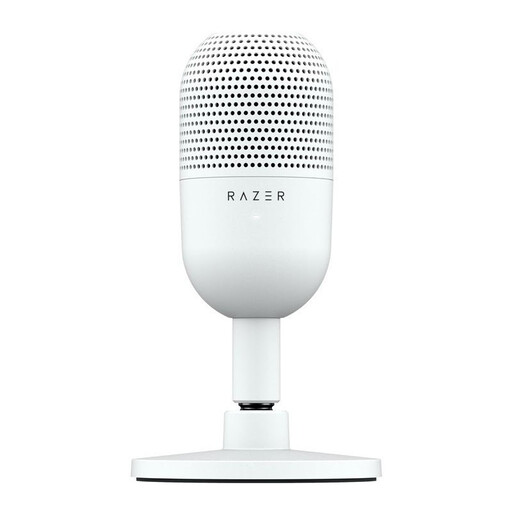 No image available
This USB microphone may suit one storyteller recording from a fixed position with a PC or Mac.
The product description mentions USB, a supercardioid pickup pattern and compatibility with PC and Mac.
Ask each participant to say a few sentences from their own seat, then listen back to the recording, paying particular attention to the quietest speaker. Move the microphone closer or change the set-up if reflections are obscuring words; a microphone can’t fix the room’s acoustics.
No. That recording mode won’t solve the distance from the speaker or room reverberation. Zoom and Tascam list 32-bit-float recording for their recorders; according to Shure’s technical guidance, positioning and reflections remain separate considerations.
Check the power requirements, storage and connections for the exact device, then make a recording you can listen back to. Zoom lists a built-in speaker for the H1essential; check the product information for your chosen version to find out about storage media and other accessories.
According to ACM ConsuWijzer, the statutory guarantee depends on what you could reasonably expect from the product; a manufacturer’s guarantee doesn’t replace it. For an online purchase, you’ll generally have up to 14 days from delivery to change your mind, subject to statutory exceptions.
Don’t treat public sharing as the same as keeping a recording for personal or household use. The Dutch Data Protection Authority considers identifiable audio recordings to be personal data and describes an exception for personal or household use. For publication beyond a private circle, you should assess the applicable legal basis for processing personal data. Discuss with participants why you’re recording and how you plan to share it.