What should you look for when choosing?
Voice recorder with internal memory
Choose this option if: you want to record and play back lots of short takes without first inserting a separate memory card. Sony lists A-B repeat and markers; OM SYSTEM lists features including date search and built-in USB transfer.
Bear in mind: features vary by version, and internal memory alone won’t make a recording in a reverberant room easier to understand.
Recorder for individual files
Choose this option if: you want to keep your takes and compare them later on a computer. Philips lists 8 GB of internal memory and MP3/PCM for the VoiceTracer DVT2015.
Bear in mind: transcription or cloud services aren’t essential for listening back to recordings. Check the features and terms for the exact version.
Handheld field recorder
Choose this option if: you also want to capture a wide range of sound levels and are happy to work with recording settings and files. Zoom lists a 32-bit float mode for the H1essential, as does Tascam for the DR-05XP.
Bear in mind: a more advanced recording mode is no substitute for good microphone placement. You’ll need to insert a microSD card to record and play back with the Zoom H1essential.
Use the table to identify your main concern when buying a recorder for practice. The percentages refer to consumers considering a separate recorder for this specific practice task; each row represents a different main priority.
| Buying concern |
What should you check? |
Who is this important to? |
| Finding short takes again |
Check how to find a recording and whether the version lets you repeat or mark sections. |
If I want to compare several versions of a sentence, I need to be able to jump quickly to the right section. Around 36% of consumers say finding and repeating short takes is their top priority. |
| Clear speech |
Make a test recording from the intended microphone position and listen to check that the words remain clear. |
If I practise in a reverberant room, I want to assess whether my speech sounds clear from that position. Around 29% of consumers rank speech clarity above their other buying concerns. |
| Recording and saving |
Check the storage, whether a card is required and how files are transferred. |
If I want to record without a phone and save my takes on a computer later, I focus on storage and file transfer. Around 21% of consumers say this is their main buying concern. |
| Varying voice volume |
Decide whether you need to handle large differences in volume and check which recording features the version offers. |
If I alternate between quiet explanations and emphatic passages, I want to know whether a more advanced recording feature suits the way I work. Around 14% of consumers say capturing changes in voice volume is their top priority. |
Brands to consider
These models offer different ways to play back, store or record takes; check the features of the exact version.
Sony
The ICD-UX570 series is worth considering if targeted playback is your priority.
- Sony Netherlands lists A-B repeat, track markers, adjustable playback speed and 4 GB of internal memory for the series.
- These listed features are not an independent assessment of recording quality.
OM SYSTEM
The WS-883 combines voice recording features with date search and file transfer.
- OM SYSTEM lists 8 GB of internal memory, built-in USB and a simple mode.
- The low-cut function is designed to reduce low-frequency background noise; it does not remove reverberation.
Philips
The VoiceTracer DVT2015 is an option for individual voice files, with internal memory and computer transfer.
- Philips lists 8 GB of internal memory and MP3/PCM for the DVT2015.
- Any transcription service is a separate feature and isn’t needed to play back recordings.
Zoom
The H1essential is a handheld recorder with more advanced recording and playback features.
- Zoom lists 32-bit float recording; the manual also describes features including A-B repeat and adjustable playback speed.
- According to the manual, this model cannot record or play back without an inserted microSD card.
Tascam
The DR-05XP is a handheld option if you want to record a wide range of sound levels.
- Tascam lists built-in stereo microphones and a 32-bit float mode.
- The manufacturer’s specifications don’t show that this model is a better fit for short spoken takes than other options.
Joybuy products
These products are designed for recording and playing back spoken takes; check which features suit your practice for each version.
 No image available
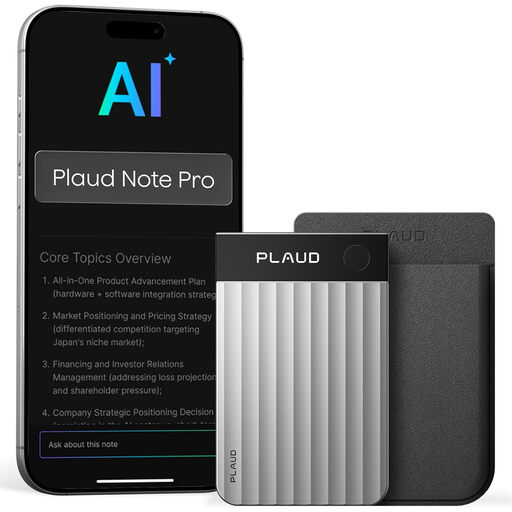
Plaud Note Pro AI Voice Recorder, Silver
Suitable if you want to record spoken takes and explore the transcription features described in the product details.
The product details list 32 GB of storage and transcription.
View at Joybuy
 No image available
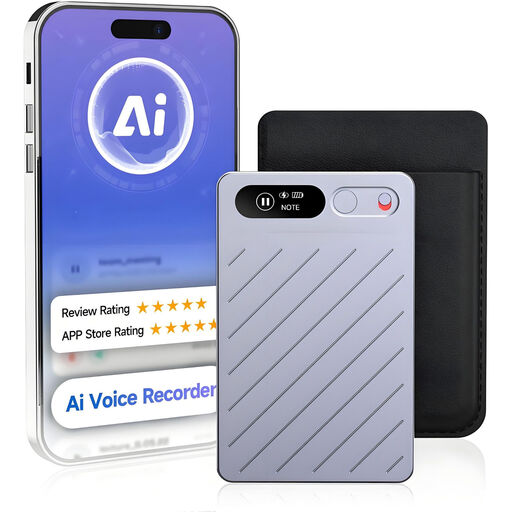
AI Dictation Device Mini Voice Recorder, 64 GB
Suitable if you’re looking for a compact recorder for spoken takes and want to use the listed text features.
The product title lists 64 GB and transcription and summarisation in 118 languages.
View at Joybuy
 No image available
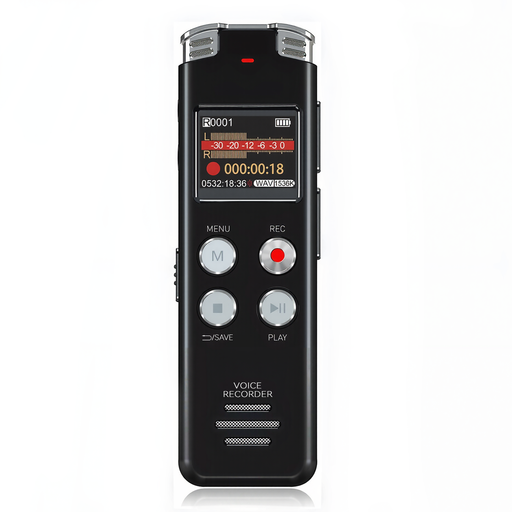
Rexsun L357 Digital Voice Recorder, 128 GB
Suitable if you want to play back short sections and find or transfer recordings later.
The product details list A-B repeat, timestamp organisation and USB-C file transfer.
View at Joybuy
 No image available
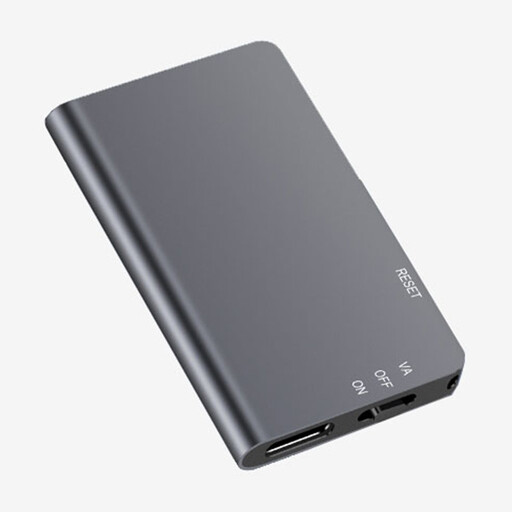
Rexsun L810 Digital Voice Recorder, 64 GB
Suitable if you want to record spoken takes with simple controls and play them back straight away.
The product information lists one-button recording, WAV recording and playback through the supplied headphones.
View at Joybuy
 No image available
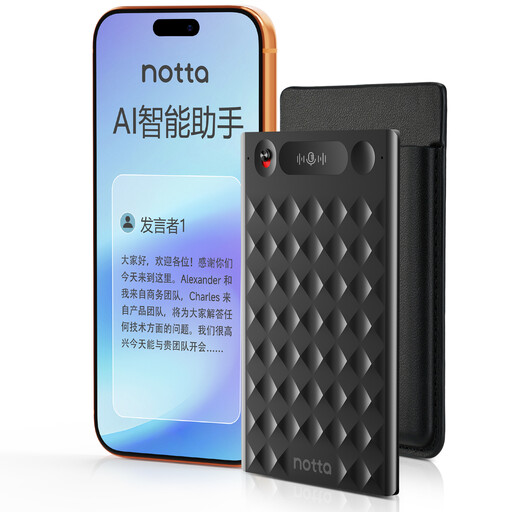
Notta AI Voice Recorder, 32 GB
Suitable if you want to record spoken takes at the touch of a button and explore the listed text features.
The product information lists 32 GB of storage, transcription and a stated battery life of 30 hours.
View at Joybuy
Frequently asked questions
Which feature can help when you want to assess the same sentence repeatedly?
Check whether the exact version has A-B repeat, markers or adjustable playback speed. Sony lists A-B repeat and markers for the ICD-UX570 series; the Zoom manual lists A-B repeat and adjustable speed for the H1essential.
Do you need to insert a memory card before your first practice session?
It depends on the model. The Zoom manual says the H1essential cannot record or play back without an inserted microSD card. The specifications for the Sony, OM SYSTEM and Philips models mentioned here list internal memory.
How can you assess your pronunciation in a reverberant practice room?
Make a test recording from the spot where you plan to speak and listen to check whether your words sound clear there. According to Shure, a microphone cannot separate direct speech from unwanted reverberation after the recording has been made.
What are your rights if an online recorder doesn’t meet your expectations or develops a fault?
Online consumer purchases generally come with a statutory cancellation period, although exceptions may apply. ACM ConsuWijzer states that the 14-day period ends 14 days after delivery. Your statutory guarantee is separate from any manufacturer’s warranty. If a product doesn’t perform as you could reasonably expect under normal use, the seller is responsible for providing an appropriate solution.
Can you record museum visitors or colleagues while practising?
Don’t assume this is permitted without checking first. The Dutch Data Protection Authority states that identifiable audio recordings may contain personal data; the exception for purely personal or household use does not automatically apply to recording on behalf of a museum or to publication. Ask the museum about its policy and consider the purpose and relevant privacy rules in advance.


