Start by choosing a setup that keeps the microphone close to your voice: a wearable lapel microphone suits presenters who move around, while a portable recorder can sit close to a fixed speaking position. A microphone won’t eliminate reverberation on its own, and 32-bit float recording won’t fix room echo. Also check how the recorder records, what storage media it uses and whether you want to work without a phone.
Which recorder setup is right for you?
Speaker in a reverberant room
You’re recording a short weather summary in a fixed spot and want to capture your voice more clearly. Shure explains that a microphone can’t effectively separate direct speech from the reverberation it picks up at the same time. So consider whether you can place the recorder close to you or need a lapel microphone.
Presenter on the move
You walk or turn while presenting and want the microphone to stay close to your voice. Tascam describes the DR-10L Pro as a standalone recorder supplied with a lapel microphone, making it a relevant setup for this situation.
Quick voice recorder user
You want to record, listen back and save files with minimal preparation. Sony specifies 4 GB of built-in memory for the ICD-UX570. Compare this with models that use a memory card, but don’t confuse convenient storage with reducing reverberation.
Which buying concerns should guide your choice?
When reverberation is audible, the distance between the speaker and the microphone is an important first consideration. Shure explains that a microphone can’t separate reflected speech from direct speech afterwards, so assess the microphone placement before looking at extra recording features.
Standalone recorder with a lapel microphone
Choose this if: you move while presenting or can’t keep the microphone close to a fixed speaking position.
Bear in mind: you’ll need to attach the microphone to your clothing and transfer the recording files afterwards.
Portable recorder with built-in microphones
Choose this if: you speak from a fixed spot and can place the recorder close to your voice. Models such as the Zoom H1essential and Tascam DR-05XP also have an external microphone input.
Bear in mind: built-in microphones won’t fix reverberation if the recorder is further away; the Zoom H1essential uses a microSD card.
Compact voice recorder
Choose this if: simple recording and built-in storage matter to you. Sony specifies 4 GB of memory for the ICD-UX570.
Bear in mind: this recorder also needs to be close to the speaker; built-in memory doesn’t mean that room reverberation will disappear.
Clip-on microphone with a phone
Choose this if: you already use a compatible phone and recording app; the RØDE Wireless Micro sends audio to an app that accepts USB audio.
Bear in mind: this setup relies on a phone, receiver and compatible app, and doesn’t save files independently like a recorder.
| Consideration |
What to check before buying |
Who is this important for? |
| Clarity in a reverberant room |
Check whether the microphone can stay close to your voice, and make a test recording in the intended location. |
If I’m speaking in a reverberant room, I want to keep the microphone close to my voice so it captures direct speech clearly. Around 42% of consumers prioritise clarity despite room reverberation. |
| Recording independently |
Check whether the device saves files itself or sends audio to a phone and recording app. |
If I don’t want to rely on a phone at the recording location, I’m looking for a recorder that saves files itself. Around 25% of consumers give top priority to recording independently. |
| Microphone position while speaking |
Decide whether you’ll stay in one place or move around, and how the microphone will stay close to your voice. |
If I move around the room while presenting, I want the microphone to move with me. Around 17% of consumers prioritise freedom of movement. |
| Storage and preparation |
Check the box contents and the information for the exact version to find out about storage media and power options. |
If I want to get started without extra preparation, I want to know whether storage is already built in and what else I’ll need. Around 16% of consumers give getting started easily and knowing what they need top priority. |
What mistakes should you avoid when choosing a recorder for a reverberant room?
-
Assuming a sensitive microphone will solve room reverberation
A microphone can’t separate direct speech from the reverberation it has picked up at the same time. As a result, the sound of the room can still affect your voice in the recording.
First, consider whether you can keep the microphone close to your voice, then listen back to a test recording.
Depending on the distance, you may need an external microphone or a different recording setup.
-
Buying a phone-dependent clip-on microphone when you want to record independently
The RØDE Wireless Micro setup described sends audio to a receiver and an app that accepts USB audio. This is a different workflow from using a recorder that saves files itself.
Before buying, check which device will store the audio file and whether you’ll need a compatible phone and app.
This setup requires a compatible phone, receiver and recording app.
-
Leaving storage and power checks until recording day
The Zoom H1essential uses microSD storage, while Sony specifies built-in memory and USB charging for the ICD-UX570. The process therefore varies by model.
Check the information for the exact version and make a short test recording before you start.
A model with card storage may need a compatible microSD card; check what’s included with that version.
Which brands are relevant to this recording?
These brands are useful points of reference for the product ranges and setups mentioned. Their inclusion doesn’t mean that every model works in the same way or is suitable for every reverberant room.
Tascam
The DR-10L Pro is a standalone recorder supplied with a lapel microphone; the DR-05XP is a portable recorder with built-in microphones and an external microphone input.
- According to Tascam, both of the models mentioned support 32-bit float recording.
- The DR-05XP needs careful positioning in a reverberant room; 32-bit float won’t eliminate room reverberation.
Zoom
The H1essential is a portable recorder with built-in X/Y microphones and a 3.5mm input for a lapel microphone, for example.
- Zoom specifies 32-bit float recording, an external microphone input and USB microphone functionality.
- The built-in microphones won’t eliminate room reverberation on their own; check the microSD card before use too.
Sony
The ICD-UX570 series is a compact voice recorder for anyone who values built-in storage and straightforward recording.
- Sony Netherlands specifies 4 GB of built-in memory, USB charging and recording in linear PCM and MP3.
- These specifications don’t show that a recording made from further away will sound clear in a reverberant room.
RØDE
The Wireless Micro is a clip-on microphone system for recording via a compatible phone and app, as an alternative to a standalone recorder.
- According to the user guide, the receiver sends audio to an app that accepts USB audio.
- This setup relies on a phone and app; it isn’t a recorder that saves audio files itself.
Joybuy voice recorders for spoken recordings
This Joybuy selection includes voice recorders for spoken recordings. When reverberation is audible, microphone placement remains important: Shure explains that a microphone can’t separate reflected speech from direct speech afterwards. So check how the microphone is positioned for each version and which recording workflow you need.
 No product image available
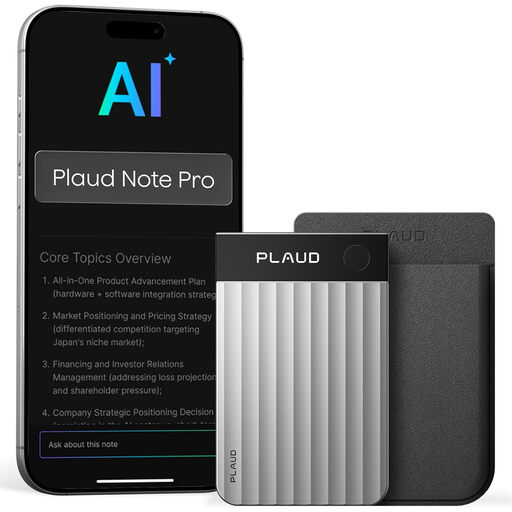
Plaud Note Pro AI voice recorder, Silver
The product title describes this as a voice recorder for spoken recordings. Check separately how you can keep the microphone close to your voice in your setup.
View at Joybuy
 No product image available
Digital voice recorder, 64 GB, with transcription function
The title lists 64 GB of storage and a transcription function. For recording in a reverberant room, also check how the microphone is positioned and whether the workflow suits you.
View at Joybuy
 No product image available
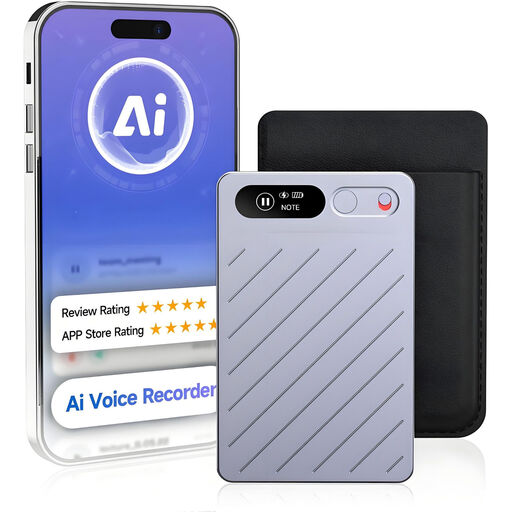
AI dictation device, 64 GB, transcription and summaries in 118 languages
The product title mentions voice recording, 64 GB, and transcription and summary features. Check separately whether the microphone placement and recording workflow suit your room and how you plan to use it.
View at Joybuy
 No product image available
Rexsun L357 portable digital voice recorder, 128 GB
The title lists 128 GB and an LCD screen. Before buying, check how the microphone will be used at your speaking position; the product title doesn’t provide information about your room’s acoustics.
View at Joybuy
 No product image available
Rexsun L810 digital voice recorder, 64 GB
The product title lists 64 GB and one-touch recording. Also check how the microphone is positioned and whether the recording workflow suits your needs.
View at Joybuy
Frequently asked questions
Does 32-bit float recording help with reverberation?
No, 32-bit float recording won’t eliminate room reverberation. Tascam and Zoom specify this recording feature for the models mentioned; Shure explains that a microphone can’t effectively separate direct speech from reverberation it has already picked up. So start with microphone placement.
How should I set up the recording position?
For a fixed presentation, place the microphone close to the speaker and listen back to a test recording. If you move around, consider a wearable microphone. There’s no universal distance: the balance between direct speech and room reverberation varies from one space to another.
What should I prepare before recording?
Check the power supply and storage before every recording. The Zoom H1essential uses a microSD card; check the compatibility information for the exact model. Then make a short test recording and listen back to the file.
Can I publish the recording if other people are recognisable in the image or audio?
According to the Dutch Data Protection Authority, consent is generally required to publish personal data online. The rules that apply to your recording depend, among other things, on who is recognisable and whether the use is exclusively personal or domestic.


