
Readers in a reverberant hall
Your main priority is keeping the words clear, and you can position the recorder close to the fixed reading spot. Shure explains that a microphone won’t automatically distinguish the desired speech from reverberation.


For a dramatic reading aloud in a community hall, a recorder with built-in stereo microphones is suitable if the readers stay at one recording point and you can position the microphone nearby. Choose separate microphone inputs if you want to record several voices individually or need to place microphones closer to the readers; extra tracks won’t automatically eliminate reverberation. Make a test recording before the performance, and check the power supply, storage and playback through headphones.
Your main priority is keeping the words clear, and you can position the recorder close to the fixed reading spot. Shure explains that a microphone won’t automatically distinguish the desired speech from reverberation.
You want to record voices separately or use external microphones alongside the sound of the hall. Zoom and Tascam describe models with built-in stereo microphones and two XLR/TRS inputs.
You’ll be operating the recorder yourself and want to check the power supply, storage and playback in advance. OM SYSTEM lists built-in memory and smartphone control for the LS-P5; Zoom warns about reflections when a recorder is placed directly on a table.
First decide where the microphone can be placed. Then consider how many voices you want to record separately and what you need to check the full performance.
| Consideration | What to check before buying | Who is this most relevant to? |
|---|---|---|
| Clarity in a reverberant space | Work out the distance to the readers and listen to a test recording made from the intended recorder position. | If the hall is reverberant, I want the words to remain clear and can place the recorder at the fixed reading spot; around 33% of consumers make clarity their top priority. |
| Recording voices separately | Count how many external microphones you need to use at the same time and compare this with the number of available inputs. | If several readers each need their own microphone, I want to be able to handle their voices separately; around 27% of consumers prioritise recording voices separately. |
| Quiet and loud passages | Test both a quiet and a loud passage, then listen back through headphones. | For a performance with both very quiet and powerful passages, I want to be able to assess both during playback; around 20% of consumers prioritise changes in vocal volume. |
| Recording the whole performance | Before you begin, check the power supply and available storage, then record a short clip and play it back. | If I’m making the recording myself, I want to check in advance that the recorder can capture the whole reading; around 20% of consumers make uninterrupted recording their top priority. |
A microphone also picks up reflected speech; a recording format won’t automatically separate that reverberation from the voice.
Test the microphone’s distance and position before choosing a recording format.
According to their manufacturers, the Zoom H4essential and Tascam DR-40XP combine four tracks with two XLR/TRS inputs. The number of tracks is therefore not the same as the number of external microphone inputs.
Count how many microphones you need at the same time and check the number of inputs before choosing a model.
A setup with external microphones may also require extra microphones, cables and preparation.
Being able to adjust recorded levels later won’t automatically make a voice recorded from too far away clear.
Ask someone to read both a quiet and a loud passage during a test, then listen back to the recording.
The H1essential is a compact stereo recorder; the H4essential also offers external inputs for a more extensive microphone setup.
The DR-40XP combines adjustable stereo microphones with four tracks and external inputs.
The LS-P5 is a compact recorder for a central recording point, with built-in memory and smartphone control.
This Joybuy selection features portable voice recorders. For each model, check that its connections and microphone setup suit the distance to the readers in your hall.
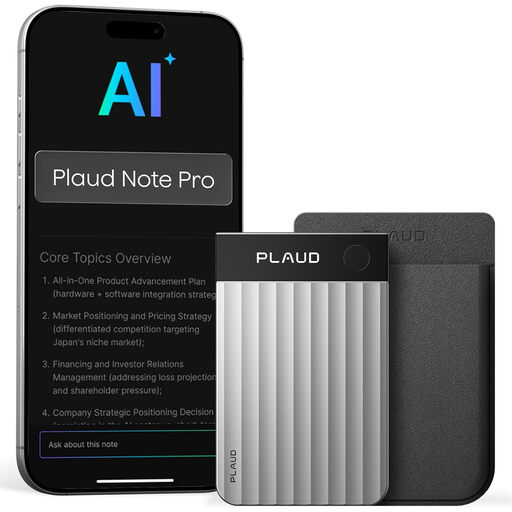 No image available
This recorder is designed to capture and summarise speech; for a reading in a hall, check that its microphone setup is suitable for the distance to the readers.
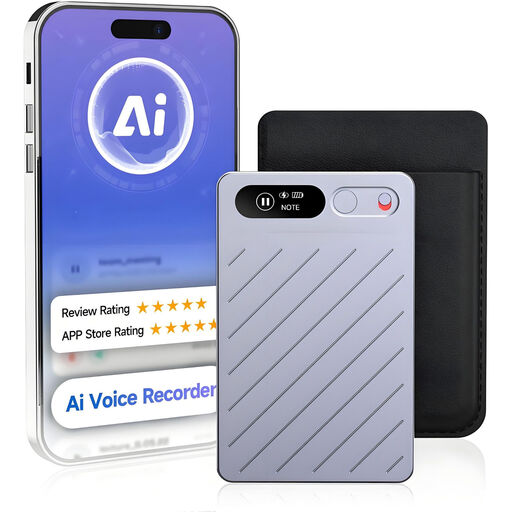 No image available
The product name lists 64 GB of storage and transcription in 118 languages. For a recording in a hall, check that the microphone setup is suitable for the distance to the readers.
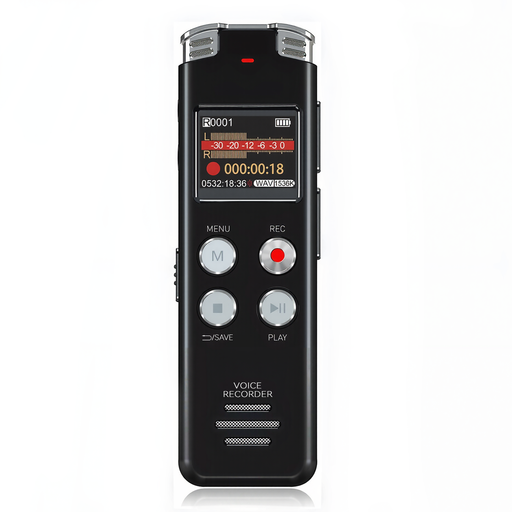 No image available
The product name lists 128 GB of storage and an LCD screen. The described AVR mode only records when sound is detected, so it may skip pauses in a reading.
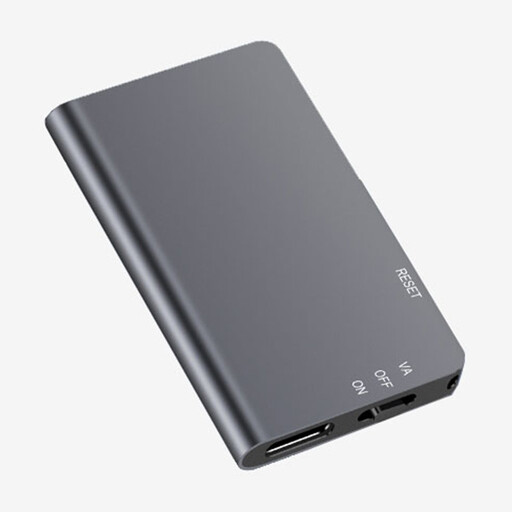 No image available
The product name lists 64 GB of storage and one-touch recording. Before using it in a reverberant hall, check whether you can position the microphone close enough to the readers.
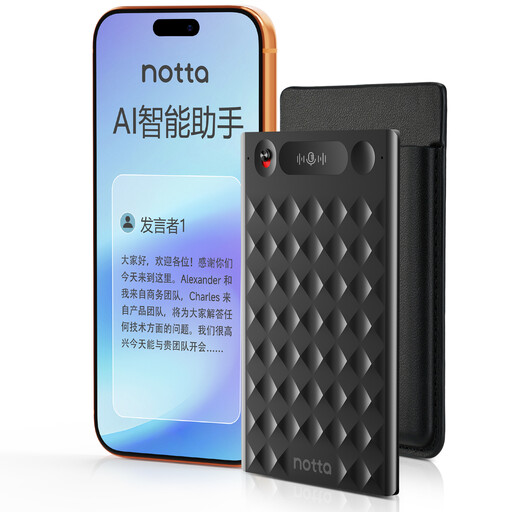 No image available
The product name lists 32 GB of storage, battery life of up to 30 hours and one-touch recording. According to the product information, cloud syncing and file management are handled through the Notta app.
Ask the readers to read a quiet and a loud passage from their actual positions, listen back to the recording and move the microphone closer if necessary. For the H4essential, Zoom recommends using a stand if placing the recorder directly on a table causes distracting reflections.
It depends on the model and recording settings. According to OM SYSTEM, the LS-P5 has 16 GB of built-in memory and supports microSD. Before the performance begins, check the available recording time and storage on your chosen model.
Report a fault to the retailer. According to the Dutch government, in the Netherlands you are entitled to a product that works properly, and there is no fixed statutory warranty period for all products. A manufacturer’s warranty does not replace your statutory rights.
A recording in which someone can be identified may contain personal data. If the GDPR applies to the processing, the organisation responsible must determine which lawful basis is appropriate. If you publish a recording featuring copyright-protected text, you must also consider the rights to that text; the Dutch government distinguishes between making a copy for personal use and distributing or making it available to the public.
Not automatically; the rules that apply depend, among other things, on who is recording, the purpose and how the recording will be used. The Dutch Data Protection Authority lists consent as one possible lawful basis for processing under the GDPR, but the organisation responsible must assess which basis applies in the specific circumstances.