What should you look for when choosing?
Start with the position and a test recording, then decide between simple controls, playback features and the option to connect an external microphone.
The percentages give a broad indication of the main reason consumers choose a recorder for this practice scenario; each row covers one key priority.
| What to consider |
What to look for when buying |
Who is this important to? |
| Clear speech |
Make a test recording with the fan on and compare different positions. OM SYSTEM describes the WS-883’s low-cut filter, which targets low-frequency noise below 300 Hz; results depend on the sound and the recorder’s position. |
When I practise next to a running fan, I want to be able to assess my words clearly and test the positioning first. Around 36% of consumers prioritise clear speech. |
| Quick recording |
Check how to start a recording and whether it’s easy to see if there’s enough storage space. |
I want to start a full practice session without a lot of preparation, so I can focus on my presentation. Around 29% of consumers prioritise quick recording. |
| Targeted playback |
Check how easy it is to repeat a section and adjust playback speed. Sony lists A-B repeat and speed control for the ICD-PX370. |
When I’m practising pronunciation and pace, I want to be able to listen to a tricky section again. Around 21% of consumers choose targeted playback as their main priority. |
| Saving files |
Check how to transfer recordings to your computer and which recording format suits the way you work. Philips lists USB transfer and MP3 and PCM recording for the DVT2015. |
If I want to compare different versions, I want to save and find practice files easily. Around 14% of consumers prioritise file transfer. |
Joybuy products
This selection includes digital voice recorders for practice recordings and playback; some also list transcription or summarisation features. Check how clear speech sounds with a test recording in fan noise, and don’t take transcription as proof of a clear recording.
 No image available
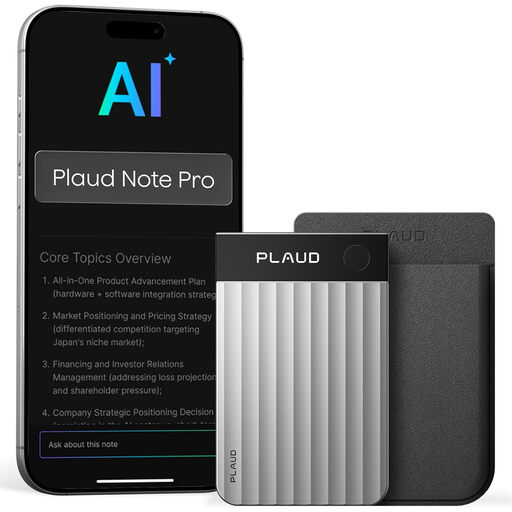
Plaud Note Pro AI voice recorder (Silver)
Suitable if you want to capture practice sessions at the touch of a button and review the content afterwards using transcription or summaries.
Listed features: one-touch recording, transcription and summaries.
Joybuy
 No image available
Rexsun L357 128GB digital voice recorder
Suitable if you want to listen to a tricky section again while practising.
Listed features: one-touch recording, A-B repeat, fast-forward and rewind, and timestamp-based file management.
Joybuy
 No image available
Rexsun L810 64GB digital voice recorder
Suitable if you want to record a practice session quickly and listen back straight away.
Listed features: one-button recording and included headphones.
Joybuy
 No image available
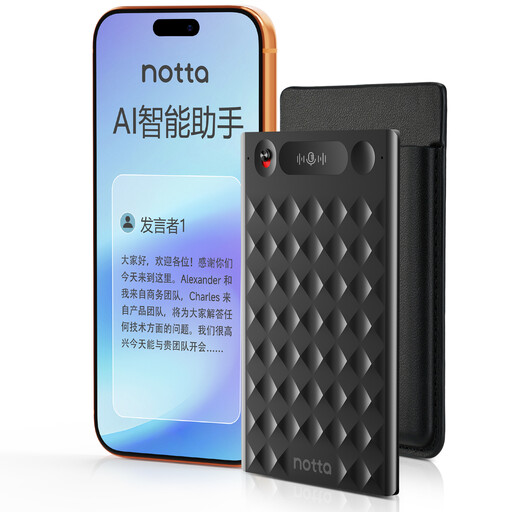
notta 32GB AI voice recorder with case
Suitable if you want to record a practice session at the touch of a button and review it afterwards using transcription.
Listed features: real-time transcription and one-touch recording.
Joybuy
Frequently asked questions
Will a low-cut filter or 32-bit float remove fan noise?
No, not automatically. OM SYSTEM describes the WS-883 filter as targeting low-frequency noise below 300 Hz, but other parts of the fan noise may still be audible. 32-bit float relates to recording levels and does not, by itself, remove fan noise. So make a test recording in the room where you’ll be practising.
Where should I place the recorder for a practice recording?
Start close to where you’ll be speaking, rather than next to the fan, then listen back to check whether you can assess your words clearly. Shure explains why a microphone placed further away may pick up more room sound; make a test recording to see which position works in your space.
Should I buy extra cover for a recorder?
No, you don’t need extra cover to have statutory protection. According to the Dutch government, statutory warranty applies in the Netherlands and there is no fixed statutory warranty period; if there’s a problem, contact the seller. Compare any additional warranty offer against the rights it actually provides.
Can I record classmates and share the recording?
That depends on the circumstances and what you do with the recording. A private practice session featuring only your own voice is different from recording or sharing identifiable voices of classmates. If you’re recording other people, check your school’s rules and consider the applicable privacy regulations before sharing files.


