Start with a microphone setup you can keep in a practical position throughout the take: built-in microphones suit a fixed speaking position, a lavalier microphone is handy if you move around, and XLR inputs are for a separate microphone. Then compare the power supply, storage and how long files are split up. None of these recorder choices will, on its own, fix room echo.
Who is this buying guide for?
Creator recording long voice sessions
You want to finish a full take without being caught out by the power supply or file handling. Check the power requirements and what happens when a file reaches its maximum size. For example, Zoom says the H1essential automatically creates a new file when files exceed 2 GB, then continues without a pause.
Voice actor with a wide dynamic range
You switch between quiet and loud lines and want to be able to adjust the recorded level afterwards. Compare the recording format, but also listen to check how well the microphone and room capture your loudest lines. Zoom lists 32-bit float recording for the H1essential and F2.
User of an external microphone
You already have a microphone, or want the flexibility to position one separately. Check the connection, power requirements and inputs on the exact recorder model. The Zoom H4essential has two XLR/TRS inputs; according to Zoom’s manual, these can supply +48 V phantom power to microphones that need it.
What should you look for when choosing?
Built-in microphones
A good fit if: you speak from a fixed position and want to record without a separate microphone. The Zoom H1essential has built-in X/Y microphones and a headphone output.
Keep in mind: your distance from the recorder and the room acoustics will still affect the sound. Zoom says the H1essential continues recording to a new file without pausing when a file exceeds 2 GB, so you may have several files to work with when editing.
External XLR microphone
A good fit if: you have a compatible XLR microphone, or want to position it separately from the recorder. The Zoom H4essential has two XLR/TRS inputs.
Keep in mind: you’ll need a compatible microphone and cable, and should check the power requirements of the whole setup. Zoom lists switchable +48 V phantom power for microphones that require it.
Lavalier microphone
A good fit if: you move around while performing, or want to keep the microphone at a relatively consistent distance from your mouth. The Zoom F2 comes with a lavalier microphone.
Keep in mind: the F2 records in mono. Make a test recording to see whether the supplied microphone and mono recording suit the audio file you want.
| Buying concern |
What to check |
Who is it for? |
| Finishing a long take |
Check the power supply under your intended recording conditions, the supported memory card and automatic file splitting. For the H1essential, Zoom quotes around 10 hours on alkaline batteries at stereo 48 kHz/32-bit float with no headphones; battery life may vary depending on the settings. |
When I’m recording a long performance, I want to know in advance how to manage power and storage, and what happens to large files. Around 31% of consumers put finishing the take first. |
| Recording quiet and loud lines |
Check the recording format on the exact model and make a test recording that includes both your quietest and loudest lines. The Zoom F2 offers mono WAV at 44.1 or 48 kHz and 32-bit float; the H1essential also supports 32-bit float recording. |
When my voice varies a lot in volume, I want to listen back to both extremes before recording a long take. Around 25% of consumers prioritise vocal dynamics most. |
| Room and microphone positioning |
Choose your setup based on where you’ll be standing or moving, and listen back to a test take in the recording space. Shure explains that a microphone cannot fix room acoustics. |
If I want to reduce echo in my recording, I first want to know where the microphone can be positioned or worn while I’m speaking. Around 25% of consumers prioritise microphone positioning. |
| Connecting an external microphone |
Compare your microphone’s connector with the recorder’s input, and check separately whether phantom power is needed. The H4essential has two XLR/TRS inputs and +48 V phantom power; the H1essential has a 3.5mm microphone input. |
With an existing or planned external microphone, I want to know whether its plug and power requirements are compatible with the recorder. Around 19% of consumers choose compatibility with their own microphone workflow as their top priority. |
Common buying mistakes
-
Assuming 32-bit float will fix room echo
An adjustable digital recording level won’t change the reflections and other sounds picked up by the microphone. Shure stresses that a microphone cannot improve room acoustics.
Record a test line from the position where you plan to speak and listen back to it before choosing a different recorder.
-
Assuming a mini-jack input is the same as XLR with phantom power
A 3.5mm microphone input and XLR/TRS inputs are different connection options. The Zoom H4essential has XLR/TRS inputs with +48 V phantom power; the H1essential has a 3.5mm microphone input.
Before buying, check both the connection and the power requirements of your own microphone.
-
Treating the stated battery life as a guaranteed session length
Zoom’s quoted figure of around 10 hours for the H1essential is based on test conditions, including stereo 48 kHz/32-bit float and no headphones. Different settings or a different setup may affect battery life.
Choose a power supply to suit your own recording conditions, and test the complete setup before an important take.
Brands to compare
Zoom
Zoom offers several recording setups here: the H1essential with built-in microphones, the H4essential with XLR/TRS inputs, and the F2 with a supplied lavalier microphone.
- Zoom lists 32-bit float recording for these models, but the connections and recording setups vary by model.
- The F2 records in mono and is not a replacement for a recorder with XLR inputs. Check that the connections and recording format on each model suit your workflow.
Roland
The Roland R-07 is an option with built-in microphones, adjustable recording level and automatic file splitting.
- Roland says the R-07 creates a new file when it reaches the set file size limit, then continues recording without a pause.
- Roland notes that the condition of the memory card may cause an interruption in some cases. The MIC/AUX input and built-in microphones cannot be used at the same time; also check that your microphone is compatible and whether it needs plug-in power.
Tascam
The DR-05XP and DR-40XP illustrate two different setups: built-in microphones with a mini-jack input, or XLR/TRS inputs.
- Tascam Europe lists a stereo mini-jack input for the DR-05XP, and XLR/TRS inputs with phantom power for the DR-40XP.
- Tascam Europe lists both models as discontinued on its European download pages. Check support for a specific offer before considering them as new-buy options.
Products on Joybuy
This selection includes digital voice recorders, dictation devices and a wireless microphone system. For each product, check whether the recording features described are suitable for long takes of a game character.
 No image available
64 GB digital voice recorder with transcription function
Could be worth considering if you’re looking for transcription as well as voice recording; check that the feature suits your workflow for recording character voices.
The product name lists 64 GB and a transcription function.
View at Joybuy
 No image available
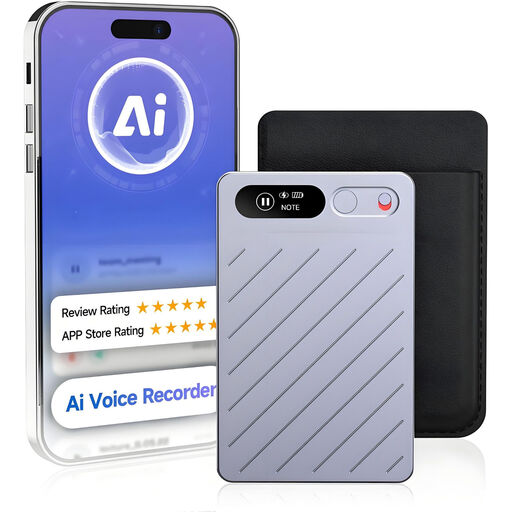
64 GB AI dictation device with transcription and summarisation
An option to explore if you’d also like spoken words to be processed; check in advance that the features described suit your needs for recording and editing long voice takes.
The product name lists 64 GB, transcription and summarisation.
View at Joybuy
 No image available
Rexsun L357 digital voice recorder, 128 GB
Could be suitable if you’re considering a portable recorder with one-button operation; check whether the recording mode preserves silences when they’re part of your take.
The product name lists 128 GB. The described voice-activated mode pauses during silences.
View at Joybuy
 No image available
Rexsun L810 digital voice recorder, 64 GB
An option to compare if you’re looking for a digital voice recorder with straightforward recording controls; bear in mind that the described AVR mode only records when sound is detected.
The product name lists 64 GB. AVR mode only records when sound is detected, so it won’t necessarily preserve every silence.
View at Joybuy
 No image available
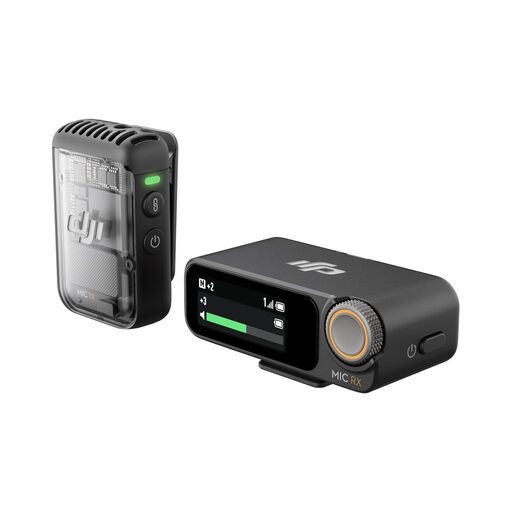
DJI Mic 2, 1 TX + 1 RX
Could be worth considering if you’re looking for a portable microphone setup with internal recording; check that the transmitter and receiver suit the way you record.
The product name lists 32-bit float internal recording and a range of 250 m (820 ft.).
View at Joybuy
Frequently asked questions
Does a long take need to be saved as one audio file?
No, a take can consist of several files. Zoom says the H1essential creates a new file without pausing when a file exceeds 2 GB; Roland describes automatic file splitting for the R-07, with the caveat that the condition of the memory card may cause an interruption. Check that your editing software can handle files like these.
How do I prepare the recorder and room for a long voice session?
Check that you have a compatible memory card and power supply, then make a test recording in the actual room with both a quiet and a loud line. Listen back and assess the microphone position; Shure explains that a microphone cannot fix poor room acoustics.
Should I buy an extended warranty for a recorder?
Not automatically; first compare what an extended warranty offers. According to the Dutch government, the Netherlands has no fixed statutory warranty period, and the seller remains responsible for a solution if a product is faulty. Any manufacturer’s or seller’s warranty is separate from this.
Can I record and share recognisable voices of other people?
It depends on who you’re recording and what you do with the recording. The Dutch Data Protection Authority states that a recognisable audio recording can be personal data, and that a lawful basis under the GDPR is needed to collect and use personal data; consent is one possible lawful basis. Don’t take this to mean you have general permission to record or publish.


