
Practising pronunciation in a reverberant room
You mainly record your own voice and want to listen back clearly to consonants and vowels. Shure recommends positioning the microphone close to the speaker when the room acoustics are poor.


If you mainly record your own voice in a reverberant room, start by choosing a setup that keeps the microphone close to your mouth. Shure explains that a microphone cannot automatically separate direct speech from room reflections. A simple voice recorder suits regular practice and listening back; a handheld recorder offers more connection options, while a recorder with a lapel microphone is useful if you move around. Check each model’s playback features, storage and which microphone is included.
You mainly record your own voice and want to listen back clearly to consonants and vowels. Shure recommends positioning the microphone close to the speaker when the room acoustics are poor.
You want to repeat clips on the device or listen to them at a modified speed. OM SYSTEM lists a shadowing function for the WS-883; Sony lists A-B repeat and speed control for the ICD-UX570.
You want to keep the distance between your voice and the microphone manageable. Tascam says the DR-10L Pro comes with a TM-10L lapel microphone.
First, work out how you can keep the microphone close to your voice. Then look at which recording, playback and file features suit your practice routine.
| What to consider | What should you check? | Who will find this important? |
|---|---|---|
| Clear speech despite room reverberation | Check whether you can position the built-in microphone close to you, or which type of external microphone is compatible with the exact device. | If I want to listen back to vowels and consonants in a reverberant room, I need to be able to position the microphone close to my mouth. Around 36% of consumers therefore make clear recordings of their own voice their top priority. |
| Repeating clips | Check whether the model has A-B repeat, speed control or a dedicated shadowing function. | When I repeat phrases to compare my pronunciation, I want to be able to listen back to clips on the device. Around 29% of consumers make repeated playback their top priority. |
| Easy recording | Check the controls, power supply and available storage before recording your first practice session. | If I want to get started with a practice session quickly, I don’t want to work through several settings first. Around 21% of consumers make easy recording their top priority. |
| Storing and transferring recordings | Check the internal storage, card type and how to transfer files to another device. | When I want to compare recordings later, I need to be able to find and transfer them easily. Around 14% of consumers make file management their top priority. |
Shure explains that a microphone cannot automatically separate direct speech from reflected speech. So the recording feature doesn’t change how important it is to keep the microphone at a suitable distance.
Make a short test recording where you practise and listen back to check how clearly your voice comes through.
According to Zoom’s manual, reflections from the table can reduce clarity when you use the H1essential’s built-in microphones.
Try a setup that lifts the recorder off the tabletop, then compare the recording before buying an accessory.
A suitable stand or other positioning solution may require an extra accessory and an additional setup step.
An input for an external microphone doesn’t automatically mean that a microphone is included in the box. Tascam lists an included lapel microphone with the DR-10L Pro; for other models, check the box contents for the specific version.
Check which connection you need and which microphone is actually included.
If you need an external microphone, you may have to buy it separately and check that the connections are compatible.
The DR-10L Pro is a portable recorder with a lapel microphone; the DR-05XP is a handheld alternative with built-in microphones and an input for an external microphone.
The H1essential combines built-in X/Y microphones with the option to connect a compatible lapel microphone.
The WS-883 is a compact voice recorder with language-learning and playback features.
The ICD-UX570 is a compact voice recorder for anyone who values on-device repeat and speed control.
The VoiceTracer DVT4110 is another option to compare for recording formats, internal storage and an input for an external microphone.
The products below are voice recorders for capturing your own practice sessions; their listed features range from instant playback to transcription.
 Image unavailable
For anyone who wants to record a practice sentence and listen back straight away: the product information lists one-button operation and playback through the supplied headphones.
The description lists WAV recording at 48 kHz.
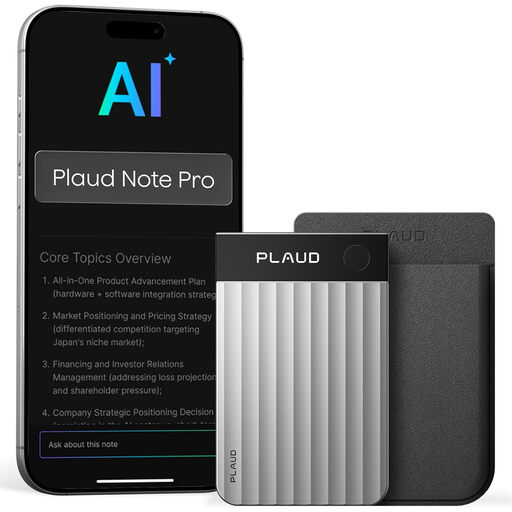 Image unavailable
For anyone who wants to find spoken words as well as listen to the recording: the product information lists transcription and summaries.
The product information lists 32 GB of built-in storage.
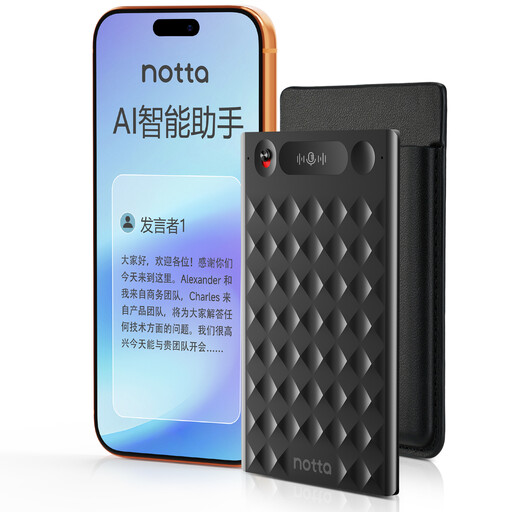 Image unavailable
For anyone who also wants to transcribe a recording using an app: the product information lists transcription and one-button recording.
The product information lists 32 GB of storage and a stated recording time of 30 hours. It also refers to the Notta app for transcription, cloud syncing and file management, so check that this approach suits you.
Make a short test recording with the microphone closer to your voice, then listen back to see whether the speech sounds clearer. Shure recommends placing the microphone close to the speaker in a room with poor acoustics. Zoom warns that table reflections can reduce the clarity of the H1essential’s built-in microphones.
Not necessarily. 32-bit float is a recording option on models including the Zoom H1essential and Tascam DR-05XP, but it won’t solve room reverberation. First decide where to place the microphone, then check whether the recording file suits the way you want to listen back to it or submit it.
For eligible online consumer purchases, the Dutch government lists a 14-day cooling-off period. If a product is faulty, the seller is responsible for the statutory guarantee; there is no fixed statutory time limit for this in the Netherlands.