
Creator comparing short takes
Records the same intro repeatedly in two languages and wants to replay specific sentences quickly. Features such as A-B repeat, track marks and adjustable playback speed may be useful.


For short solo rehearsals, a recorder with handy features for replaying sections is often a practical choice. For example, Sony lists track marks and A-B repeat for the ICD-UX570. In a room with echo, microphone placement still matters. If you may want to record several voices separately later, look for the number of microphone inputs and whether the recorder can save separate channels.
Records the same intro repeatedly in two languages and wants to replay specific sentences quickly. Features such as A-B repeat, track marks and adjustable playback speed may be useful.
Wants clear voice recordings, so needs to consider the distance between their mouth and the microphone, as well as the room itself—not just the recording settings.
Is practising an intro now, but may want to use several microphones and separate voice channels later.
For short, bilingual intro takes, your choice mainly comes down to playback, clarity, easy recording on your own and the option to expand your setup later.
| What to consider | What to look for when buying | Who is this important for? |
|---|---|---|
| Targeted playback | Check whether each model has track marks, A-B repeat and adjustable playback speed. Sony lists track marks and A-B repeat for the ICD-UX570. | If I record lots of versions, I want to find and replay sentences quickly. Around 36% of consumers say targeted playback is their main concern when buying. |
| Clear speech | Try a consistent position close to the speaker and check whether the built-in microphones can be positioned well there, or whether you need a suitable external microphone. | In a room with echo, I want to be able to assess subtle differences in pronunciation. Around 29% of consumers give clarity the highest priority. |
| Quick recording on your own | Check how to start and replay a recording, and which storage media and power source the model requires. | If I want to record short takes without a computer, I want a recorder that’s easy to use and lets me save my recordings. Around 21% of consumers say recording on their own is their main concern when buying. |
| Expanding your setup later | Check how many microphones you want to connect and whether separate channels are saved. Zoom lists four XLR inputs and separate channel files for the PodTrak P4next. | If I want to record voices separately later, I look for connections and channels that support multiple speakers. Around 14% of consumers see expanding their setup as their main concern when buying. |
A recording format won’t change the room’s acoustics. The microphone’s distance and position still affect how much of the voice and room reflections are captured.
First, try a consistent microphone position and listen back to a test recording before choosing a recording format.
Extra inputs won’t automatically make it quicker to replay solo takes. First decide whether you’re recording on your own for now or genuinely want to capture several separate voices.
A setup for multiple voices may require suitable external microphones and headphones. Check what you already have and what will work with your setup.
The storage media and power source required vary by model. The Zoom H1essential manual explains how to insert and test a microSD card; Tascam lists AA batteries for the DR-05XP.
Before buying, check which storage media and power source the exact model requires, and what’s included in the package you choose.
The ICD-UX570 is a voice recorder for anyone who wants to mark and replay short sections.
The H1essential is a handheld recorder for solo practice, while the PodTrak P4next is designed for setups with several external microphones.
The DR-05XP is a handheld recorder with built-in microphones and an external input.
The options below are voice recorders for capturing spoken takes. For each model, check that the features listed and the controls suit the way you record and listen back.
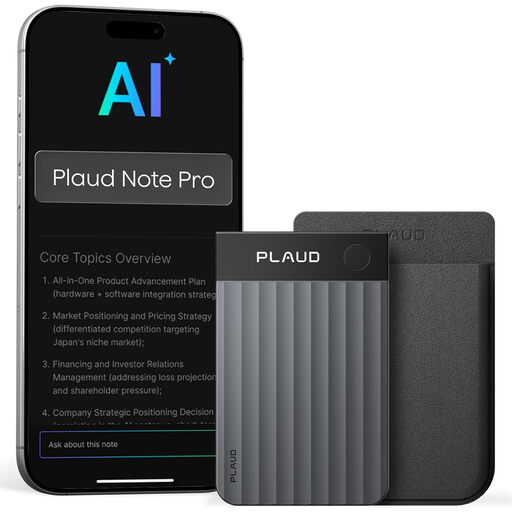 No image available
The product name identifies this as an AI voice recorder for spoken takes.
The product name lists features for notes and summaries.
 No image available
The product name identifies this as a digital voice recorder for spoken takes.
The product name lists 64 GB and a transcription function.
 No image available
The product name identifies this as a mini voice recorder for spoken takes.
The product name lists 64 GB and features for transcription and summaries in 118 languages.
 No image available
The product name identifies this as an AI voice recorder for spoken takes.
The product name lists 32 GB, a case, 30-hour battery life, and features for real-time transcription, translation in 58 languages and summaries.
Not as a general requirement. Zoom and Tascam list this mode for specific models, but playback features and microphone placement also matter when assessing pronunciation. 32-bit float won’t fix room acoustics.
First, make a test recording from a consistent microphone position and listen back to it. Use track marks or A-B repeat if your model has these features, and check in advance which storage media and power source it requires.
ACM ConsuWijzer states that online purchases often come with a 14-day cooling-off period after delivery, although exceptions apply depending on the purchase. You’re also entitled to a legal guarantee if a product breaks sooner than you could reasonably expect under normal use. This is not the same as a fixed two-year guarantee period.
An identifiable audio recording can be personal data. The Dutch Data Protection Authority states that publishing personal data online usually requires consent, with limited exceptions, including use solely for personal or household purposes. Check these conditions before publishing. This does not mean that consent is always required for every private rehearsal.