What should you look for when choosing?
Start with the speed and record material, then consider which components you already own and where you want to listen. The model features in the table are based on product specifications from Audio-Technica, Lenco and Pro-Ject.
| What to consider |
What should you check? |
Who is this important for? |
| Clear speech from different listening positions |
Check which speakers and amplification you need, and assess the set-up from the places where you’ll be listening. |
If you want to follow spoken content from different seats, look beyond the record player itself. Around 36% of consumers put clear speech in the living room first. |
| Correct speed and stylus |
Check the speed of your records. For old 78 rpm shellac records, also check which cartridge or stylus is suitable. |
If your collection includes old records, you’ll want both the correct speed and a compatible cartridge or stylus. Around 29% of consumers prioritise playing the records they own correctly. |
| Ease of use while listening |
Compare automatic start with manual operation, and check auto-stop and tonearm return separately. |
If you want to avoid unnecessary steps during long stories, it’s important to know what the player does automatically. Around 21% of consumers prioritise simple operation. |
| A complete set-up you can connect |
Make a note of the equipment you already own and check whether you need a suitable phono input, preamp and speakers. |
If you still need to buy equipment, find out in advance what you’ll need to listen to your records. Around 14% of consumers start by considering the cost and components of the complete set-up. |
Record players at Joybuy
These record players are designed for 33⅓ and 45 rpm records, with automatic operation or built-in speakers.
 No image available
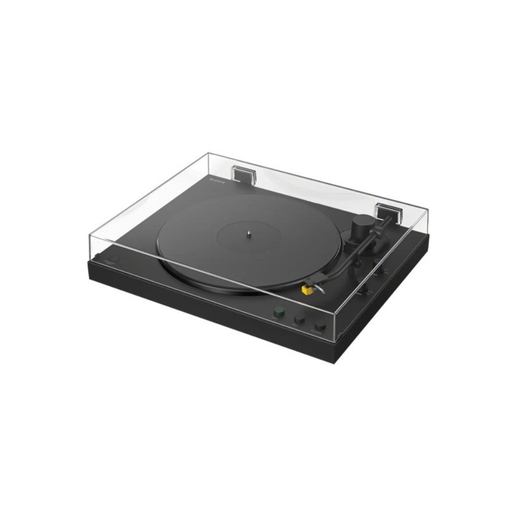
Sony PS-LX5BT Bluetooth record player
A good fit if you play 33⅓ and 45 rpm records and want automatic operation.
The product description lists Bluetooth, an MM cartridge and a built-in phono preamp with a PHONO/LINE switch. It says the record player can be connected to active speakers or a hi-fi system.
View at Joybuy
 No image available
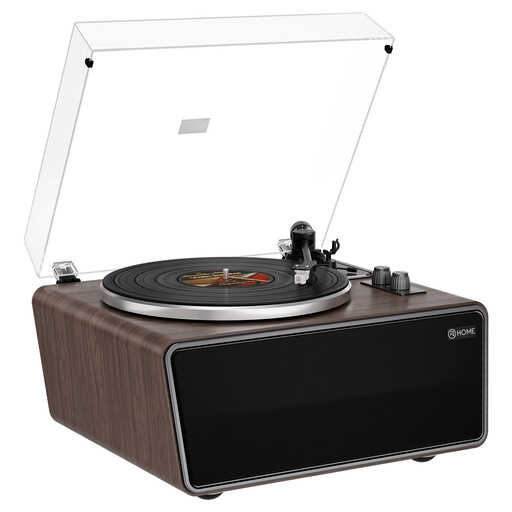
XJ-HOME XJ-H01 record player with four built-in speakers
A good fit if you’re looking for a record player with built-in speakers for 33⅓ and 45 rpm records.
The product description lists an AT-3600L cartridge, Bluetooth, USB recording and RCA Phono/Line outputs.
View at Joybuy
 No image available
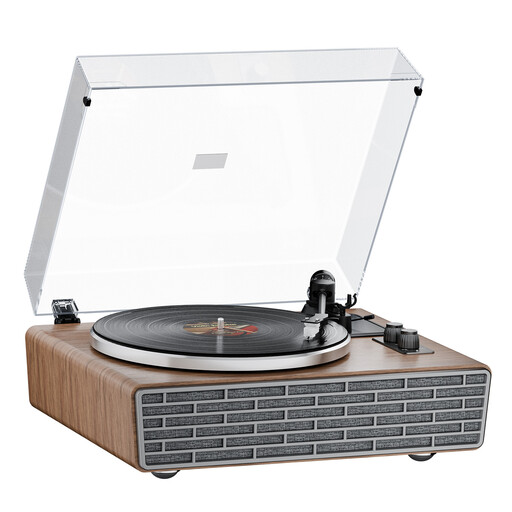
XJ-HOME XJ-H02 Retro Walnut Bluetooth record player
A good fit if you want to play 33⅓ and 45 rpm records through speakers built into the record player.
The product description lists four built-in speakers, RCA Phono/Line outputs, Bluetooth and USB recording to a computer. The product name mentions a transparent dust cover, belt drive and an AT cartridge.
View at Joybuy
 No image available
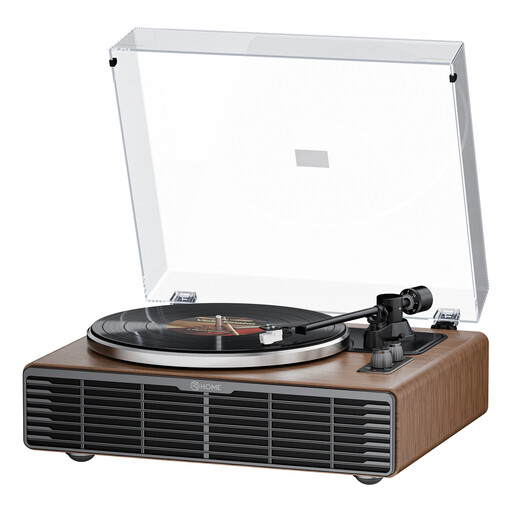
XJ-HOME XJ-H03 Walnut Bluetooth record player
A good fit if you play 33⅓ and 45 rpm records and want connections for external audio equipment.
The product name lists four speakers, Bluetooth, an AT3600L cartridge and a dust cover. The product description mentions RCA connections.
View at Joybuy
Frequently asked questions
Can I play an old spoken-word record on any record player?
No. First, check the speed and record material. As well as a player that supports 78 rpm, an old 78 rpm shellac record needs a suitable cartridge or stylus. Audio-Technica lists this cartridge as an optional extra for the AT-LP120XUSB.
Can I connect the record player directly to my speakers?
It depends on the outputs, preamp and inputs on your speakers or amplifier. Audio-Technica lists a switchable phono preamp for the AT-LP70XBT and AT-LP120XUSB. Check that the rest of your audio set-up is compatible.
What should I look for when choosing a stylus and cartridge?
Check which stylus is compatible with the exact cartridge and follow the manufacturer’s instructions for fitting and use. A replacement stylus must be compatible with the cartridge; 78 rpm records may need a stylus designed for them.
Who is responsible if a record player develops a fault too soon?
According to ACM ConsuWijzer, the retailer is responsible if a product used normally doesn’t meet the expectations you were entitled to have. Your statutory rights exist alongside any retailer’s or manufacturer’s warranty; there isn’t one fixed statutory warranty period that automatically applies to every record player.
Can I digitise a spoken-word record and share the recording?
According to the Dutch Government, making a copy for your own use is allowed, but distributing or publishing it isn’t. A USB connection doesn’t in itself give you permission to share a copyright-protected recording.
Do I have a cooling-off period when I buy a record player online?
According to the Dutch Government, purchases made remotely from a business often come with a 14-day cooling-off period. This doesn’t necessarily apply to purchases from a private seller, so check the terms that apply to your purchase.


