If you want to listen to spoken-word records without turning up the volume in the room, first decide how you’ll connect your headphones: directly to a player with a headphone output, wirelessly via a compatible Bluetooth connection, or through your audio system. Then check which speeds your records require. For old 78 rpm records, you’ll need the right speed and a suitable stylus. A built-in phono preamp can make it easier to connect to a line or aux input, but it doesn’t automatically replace a headphone amplifier.
Who is this for?
Listeners who don’t want to disturb others
You want to listen to spoken-word records through headphones and know in advance where to connect them and how to adjust the volume. Audio-Technica and Sony describe models with a headphone output and Bluetooth output respectively.
Spoken-word LP listeners
You mainly play records at 33⅓ or 45 rpm and want a player that suits your collection and listening set-up. Audio-Technica and Denon describe models that support these speeds.
Owners of old spoken-word records
You may have 78 rpm records, so check not only the speed but also the record material and the type of stylus required. Audio-Technica emphasises that 78 rpm shellac records need a suitable stylus.
What should you look for?
| What to consider |
What should you check? |
Who is this important for? |
| Private listening |
Check for a dedicated headphone output with volume control, or Bluetooth output and compatibility with your headphones. |
If I want to listen quietly without disturbing anyone else in the room, I first check the complete headphone set-up. Around 36% of consumers in this decision put private listening first. |
| Following spoken content |
Check where you adjust the volume and whether your headphones can connect directly or through your audio system. |
If I want to follow spoken-word records clearly, I want to be able to control the volume of my own listening set-up. Around 29% of consumers give their listening set-up the highest priority. |
| Suitable speed and stylus |
Match the speed to the record. For 78 rpm records, also check the material and stylus. |
If I have old records, I want to know whether both the speed and the stylus are suitable. Around 21% of consumers start by checking compatibility. |
| Controls and connections |
Check whether the model starts or returns automatically, and whether the phono/line setting matches the input on your audio system. |
If I want to keep things simple and connect my player to existing equipment, I look at the controls and the correct input. Around 14% of consumers put this first. |
Common pitfalls
-
Mistaking a phono or line output for a headphone socket
A phono or line output is designed to connect to audio equipment; it isn’t automatically suitable for connecting headphones directly. Audio-Technica does specify a headphone output with volume control for the AT-LP60XHP.
Before buying, map out the complete connection from record player to headphones or speakers, and check where you’ll adjust the volume.
You may need a suitable amplifier or headphone amplifier for a different connection set-up.
-
Assuming 78 rpm means it’s suitable for shellac records
The correct speed alone isn’t enough for every 78 rpm record. Audio-Technica says that you also need a suitable stylus, and distinguishes between shellac and 78 rpm vinyl.
First identify the material your record is made from, then check that the stylus and cartridge are suitable for it.
You may need a separate, suitable stylus or a different cartridge.
-
Choosing Bluetooth without checking headphone compatibility
Bluetooth output doesn’t automatically mean that every pair of headphones will connect to the player. Also check how you’ll control the volume.
Before buying, check that your headphones will pair with the player and decide where you’ll adjust the volume.
Brands to consider
Audio-Technica
The models described range from a player with a headphone output to one with wireless output and a manual model with a 78 rpm setting.
- Audio-Technica specifies a headphone output with volume control for the AT-LP60XHP; according to the manufacturer, the AT-LP60XBT offers wireless output.
- According to Audio-Technica, the AT-LP120XUSB has a 78 rpm setting, but the supplied AT-VM95E stylus isn’t automatically suitable for every 78 rpm record.
Sony
The PS-LX3BT is an option if you’re looking for automatic operation and Bluetooth output.
- Sony specifies automatic start and return, Bluetooth output, and support for 33⅓ and 45 rpm on the PS-LX3BT.
- 78 rpm isn’t listed among the supported speeds. Also check that your headphones will pair with the player.
Denon
The DP-300F is designed to connect to an existing audio system.
- Denon specifies a switchable built-in phono preamp and support for 33⅓ and 45 rpm.
- To listen through headphones, the connected audio system also needs a suitable headphone output.
Record players at Joybuy
These Joybuy picks focus on wireless listening and record players for collections of 33⅓ and 45 rpm records. For each model, check that the connections and volume controls suit your headphones or audio system.
 No image available
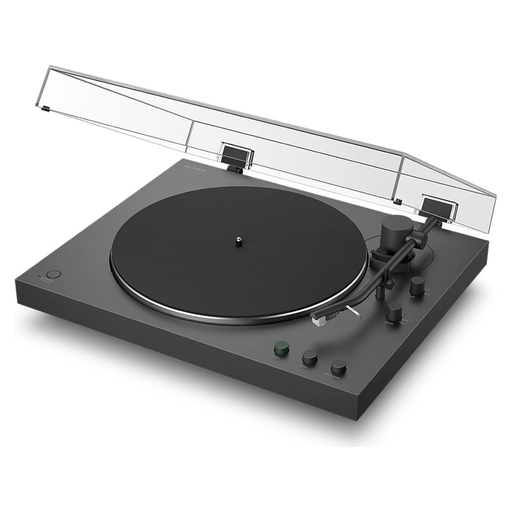
Sony PS-LX3BT Bluetooth record player
Suited to anyone who wants to listen wirelessly. Check that your headphones will pair and where you’ll adjust the volume.
Sony specifies automatic start and return, Bluetooth output, and playback at 33⅓ and 45 rpm.
View at Joybuy
 No image available
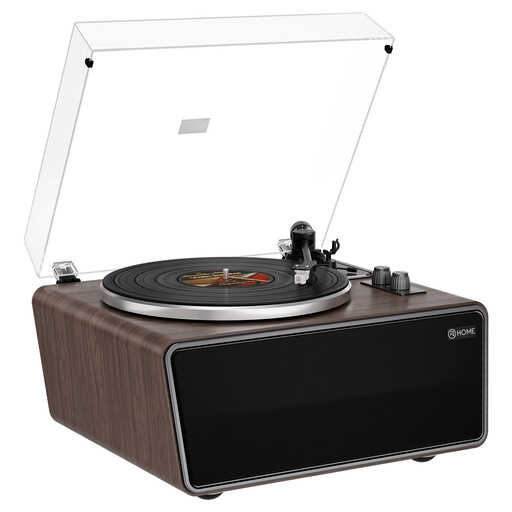
XJ-HOME XJ-H01 all-in-one record player
The product name mentions built-in speakers. For quiet, private listening, check that it has the headphone connection you need and find out where you’ll adjust the volume.
The product name lists four built-in speakers, a phono preamp and an AT-3600L (MM) cartridge.
Check that the stated 33⅓ and 45 rpm speeds match the records in your collection.
View at Joybuy
 No image available
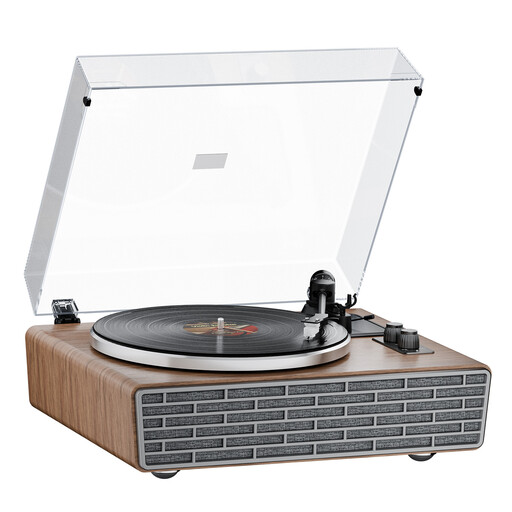
XJ-HOME XJ-H02 Retro Walnut Bluetooth record player
Suited to anyone considering listening via Bluetooth. Check in advance that your headphones will pair and find out how to adjust the volume.
The product name lists four built-in speakers, a belt drive, an AT cartridge and a transparent dust cover.
Check that the stated 33⅓ and 45 rpm speeds match the records in your collection.
View at Joybuy
 No image available
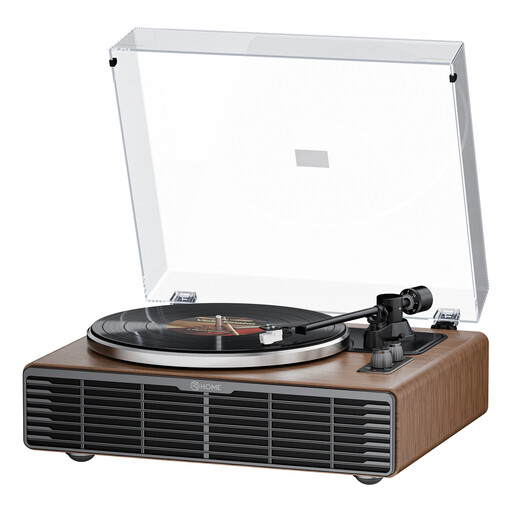
XJ-HOME XJ-H03 Walnut Bluetooth record player
Suited to anyone looking to listen via Bluetooth. Check that your headphones will pair and how you’ll adjust the volume.
The product name lists four speakers, a belt drive, an AT3600L cartridge, an RCA phono/line output and a transparent dust cover.
Check that the stated 33⅓ and 45 rpm speeds match the records in your collection.
View at Joybuy
Frequently asked questions
Can I connect headphones directly to any record player?
No. Check whether the record player has a dedicated headphone output with volume control. Audio-Technica specifies one for the AT-LP60XHP. A switchable phono preamp lets you connect to a suitable audio input, but it isn’t a headphone amplifier in itself.
How do I connect a player with a phono/line switch?
Set the switch to match your amplifier’s input: choose PHONO for a phono input and LINE for an aux input. This is the connection guidance in Audio-Technica’s Dutch-language manual for the AT-LP60X.
Can I play a 78 rpm record with a standard LP stylus?
Don’t assume so. Audio-Technica says that 78 rpm records need a suitable stylus as well as the right speed, and distinguishes between shellac and 78 rpm vinyl. So first find out what material your record is made from.
What can I do about dust on my records and stylus?
Check the record and stylus before playing, and use a purpose-made brush according to the instructions. Audio-Technica describes separate brushes for records and styli for the AT6028. This is the manufacturer’s product advice, not a legal requirement.
What are my rights when buying a record player online in the Netherlands?
For online purchases, you generally have a statutory cooling-off period of up to 14 days after delivery, subject to exceptions that you should check before buying. ACM ConsuWijzer also states that the Netherlands has no fixed statutory warranty period: what you can expect in terms of a product’s lifespan and how you use it normally both matter.


