
Listener with vintage 78 rpm records
You want to play spoken-word recordings on fragile SP or shellac records. So, check both the required speed and the stylus type.


First, check the speed and stylus your records require: a 78 rpm shellac record needs both a 78 rpm setting and a suitable SP stylus. For 33⅓ and 45 rpm records, your choice will depend mainly on the controls and how you connect the player to your speakers. Built-in speakers mean you don’t need a separate setup, but they offer a different listening experience from using separate equipment.
You want to play spoken-word recordings on fragile SP or shellac records. So, check both the required speed and the stylus type.
You mainly play 33⅓ or 45 rpm records and want controls and a speaker setup that require little extra equipment or effort.
You want to make digital recordings as well as listen to your records. Check that each model’s recording function suits the way you want to work.
Start with the speed and stylus that suit your records. Then check whether you can easily connect the player to your existing speakers, and what controls or recording features you need.
| What to consider | What should you check? | Who is this important for? |
|---|---|---|
| Speed and stylus | Check the required speed, the record material and whether the stylus is suitable for SP records. | If I want to play vintage 78 rpm SP records, I need to know that both the speed and stylus are right. Around 36% of consumers rank record compatibility as their top priority. |
| Connecting to speakers | Check whether the player has built-in speakers, or how its phono/line output connects to your amplifier and speakers. | If I want to listen in my hobby room without a complicated setup of separate equipment, I first check the available connections. Around 29% of consumers focus mainly on their listening setup. |
| Ease of use | Check for each model whether starting, stopping and returning the tonearm are automatic. | If I play records often and would rather not position the tonearm by hand every time, automatic operation matters to me. Around 21% of consumers put ease of use first. |
| Digital recording | Check that the recording function on the exact model works with your computer or preferred storage method. | If I also want to preserve spoken-word recordings digitally, I look for a recording setup that suits the way I work. Around 14% of consumers say digitisation is their main consideration. |
According to Audio-Technica, a standard LP stylus can damage both an SP record and the stylus. For example, the AT-LP120XUSB comes with an AT-VM95E, not an SP stylus.
Check the record material and stylus compatibility separately. Only play a shellac record once the player is fitted with a suitable SP stylus.
Shellac records may require a separate, suitable SP stylus.
The right connection depends on the player’s output and the inputs on your existing equipment. Without a suitable connection to speakers and an amplifier, you may not hear any sound.
Before you buy, map out the full connection from the player to the speakers and check whether you’ll need a phono preamp.
Depending on your setup, you may need active speakers, an amplifier or a phono preamp.
Built-in speakers can save you from buying separate equipment. However, the Consumentenbond notes that all-in-one models often deliver lower sound quality than standard record players.
Weigh the benefits of a compact setup against a standard player with separate speakers. Don’t assume that extra features make a player better suited to your records or listening preferences.
Audio-Technica says the AT-LP120XUSB supports 33⅓, 45 and 78 rpm and has a USB output. The AT-LP70XBT is designed for automatic playback of 33⅓ and 45 rpm records.
Sony describes the PS-LX3BT as an automatic player for 33⅓ and 45 rpm records, with Bluetooth and a switchable phono/line output.
Nedis lists three speeds, built-in speakers and a conversion function for the TURN300BK.
Denon describes the DP-29F as an automatic model for 33⅓ and 45 rpm records, with a built-in phono equaliser.
Pro-Ject lists pre-set tonearm parameters and a built-in phono preamp for the E1 Phono.
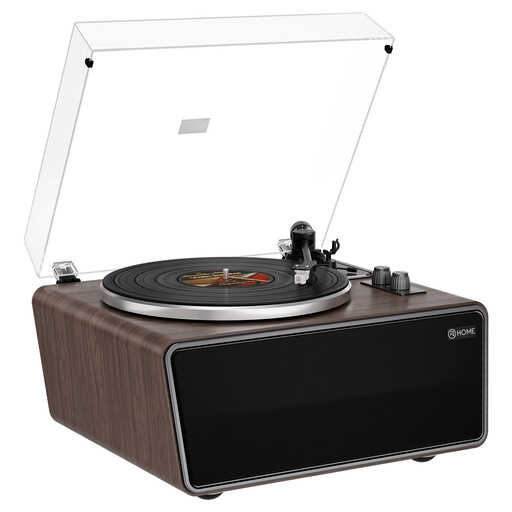
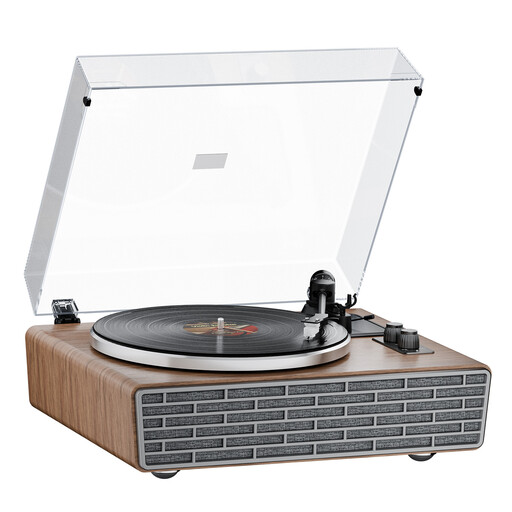
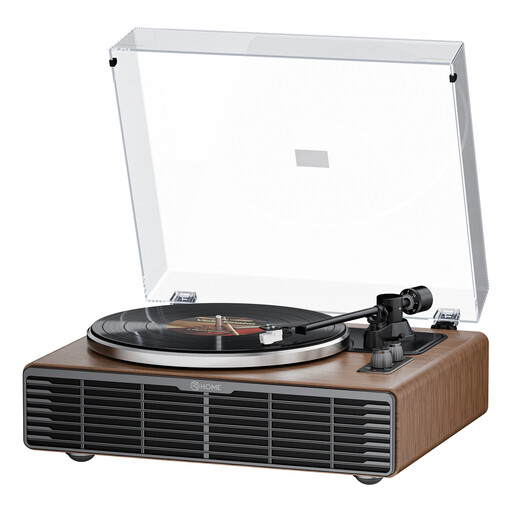
These Joybuy product picks have built-in speakers, making them suitable if you want to listen in your hobby room without separate speakers.
 No image available
Worth a look if you want to listen in your hobby room without separate speakers.
The product name lists four built-in speakers and a phono preamp.
Cartridge: AT-3600L (MM).
 No image available
An option if you want built-in speakers and are also looking for Bluetooth in the product name.
The product name lists four built-in speakers, a dust cover and belt drive.
The product name mentions an AT cartridge.
 No image available
An option if you want built-in speakers but would also like to explore connecting to external equipment.
The product name lists four speakers, belt drive and an AT3600L cartridge.
RCA phono/line output.
No. Audio-Technica warns that an LP stylus can damage both an SP record and the stylus. Check that the player has a 78 rpm setting and that the SP stylus is suitable, and follow the instructions for the combination you’re using.
Check whether the record player or amplifier has a phono preamp, and whether your speakers are active or need to be connected through an amplifier. A player with built-in speakers is a separate, all-in-one setup.
The Library of Congress advises holding grooved records by the edge and label, and avoiding contact with the playing surfaces. Store them upright in a clean, stable environment. For fragile or unfamiliar record materials, first find out which cleaning method is suitable.
No. The Rijksoverheid states that the Netherlands has no fixed statutory warranty period: you’re entitled to a product that works properly for as long as you can reasonably expect. The manufacturer’s warranty is in addition to this.
According to the Rijksoverheid, online purchases from a business are often covered by a 14-day cooling-off period. Check the terms of the specific purchase; its guidance explains that an online purchase from a private seller is not covered by the same distance-selling rules.