
Listeners who cook while they listen
If you play spoken-word records while cooking, automatic start and tonearm return can be useful. Sony UK and Denon UK describe these features on models that support 33⅓ and 45 rpm records.


For spoken-word records in a kitchen-diner, an automatic record player for 33⅓ and 45 rpm records is handy if you want to avoid handling the tonearm while cooking. If you have 78 rpm records, you’ll also need to check the record material and choose a suitable stylus. Then consider your speakers and connections, and place the player on a stable, dry surface away from splashes.
If you play spoken-word records while cooking, automatic start and tonearm return can be useful. Sony UK and Denon UK describe these features on models that support 33⅓ and 45 rpm records.
Check whether your collection includes 78 rpm records, and which stylus is suitable for the record material and cartridge. Audio-Technica stresses that having the right speed alone isn’t enough.
Decide whether you want to connect the player to existing speakers or would prefer built-in speakers. Lenco lists built-in speakers for the LS-50LEDBK.
For spoken-word records in a kitchen-diner, the main considerations are how the player operates, your record collection, your existing audio setup and where you can put the player.
A good fit if: you mainly play LPs or singles and would rather not operate the tonearm yourself every time.
Worth noting: according to Sony, models such as the Sony PS-LX3BT don’t have a 78 rpm setting or USB; also check how you can connect your speakers.
A good fit if: you own 78 rpm records or want to transfer recordings via USB.
Worth noting: according to the manufacturer, the Audio-Technica AT-LP120XUSB is manual; the stylus must be suitable for the record when playing 78 rpm records.
A good fit if: you don’t want to set up separate speakers.
Worth noting: built-in speakers save you from needing separate equipment, but check that the connections and playback meet your needs.
A good fit if: you already have suitable speakers and are looking for a separate turntable.
Worth noting: according to Pro-Ject, the T1 EVO is available in several versions, with different connection options depending on the version.
| What to consider | What should you check? | Who is this important for? |
|---|---|---|
| Operation | Check for automatic start and tonearm return, and whether the model supports the speeds your records require. | If I’d rather not operate the tonearm every time I’m cooking, I look for automatic operation. Around 36% of consumers prioritise this feature. |
| Connections and speakers | Compare the input on your audio system with the player’s outputs, and check whether it has built-in speakers. | If you’re short on space or don’t want separate speakers, consider the complete listening setup. Around 29% of consumers prioritise connections and the space the setup takes up. |
| 78 rpm records | Check the speed, the record material and whether a suitable stylus is compatible with the cartridge. | If my collection includes old 78 rpm records, I want to find out which speed and stylus they need first. Around 21% of consumers prioritise this compatibility. |
| Placement | Measure the space and choose a stable surface away from moisture and splashes; follow the model’s instruction manual. | If you need to find a spot in your kitchen-diner, you’ll want to place the player somewhere stable and dry. Around 14% of consumers prioritise placement. |
The right speed isn’t enough: the record material and stylus must also be compatible.
Check your record’s material and the compatibility of the stylus and cartridge with the exact model. Audio-Technica distinguishes between styli for shellac and 78 rpm vinyl.
Some records may need a separate compatible stylus or a different cartridge.
A phono preamp helps you connect to a suitable audio input, but it isn’t a speaker. Check in advance which components you already have and which you still need.
Compare the connections on your existing audio system with the player’s outputs.
Without suitable speakers, you may also need an amplifier with speakers or a set of active speakers.
A suitable, stable spot is important in a kitchen-diner, where moisture and splashes are possible. The Pro-Ject Primary E Phono manual warns against getting liquid near the device and using it in damp places.
Choose a stable, dry surface away from splashes in advance, and follow the manual for your chosen model.
The PS-LX3BT is an automatic option for 33⅓ and 45 rpm records.
The AT-LP120XUSB is a manual player for anyone looking for multiple speeds and USB.
The LS-50LEDBK is a model with built-in speakers.
According to Pro-Ject, the T1 EVO is available in Standard, Phono and BT versions.
According to Denon, the DP-300F is a fully automatic player for 33⅓ and 45 rpm records.
This Joybuy selection includes Bluetooth and all-in-one record players. Check each model to make sure its listed features and connections suit your records and existing audio setup.
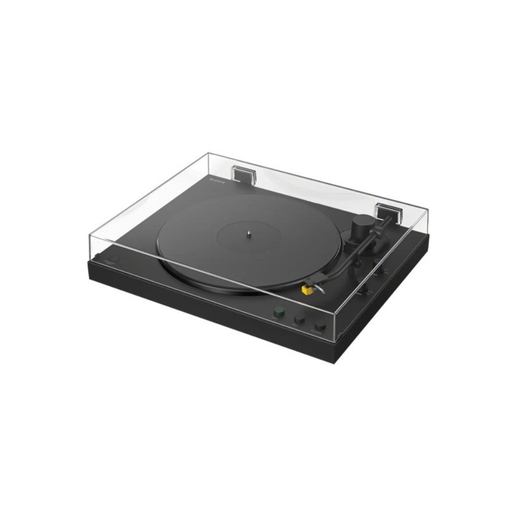 No image available
The product name lists Bluetooth; check that this connection is compatible with the equipment you want to listen through.
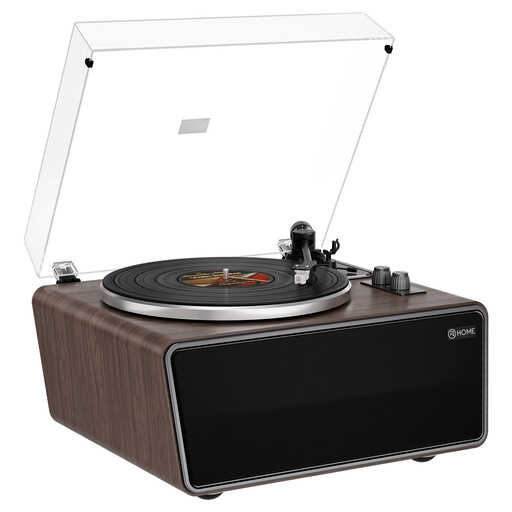 No image available
The built-in speakers are a good option if you don’t want to set up separate speakers.
The product name lists four built-in speakers, a phono preamp and an AT-3600L cartridge (MM).
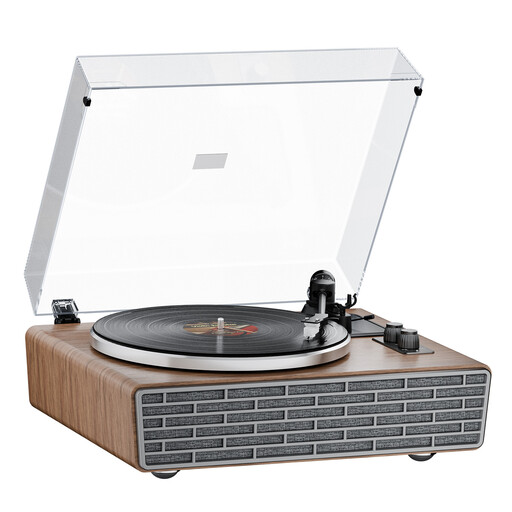 No image available
The product name lists Bluetooth and built-in speakers; check which connections you need at home.
Listed in the product name: four speakers, a transparent dust cover, belt drive and an AT cartridge.
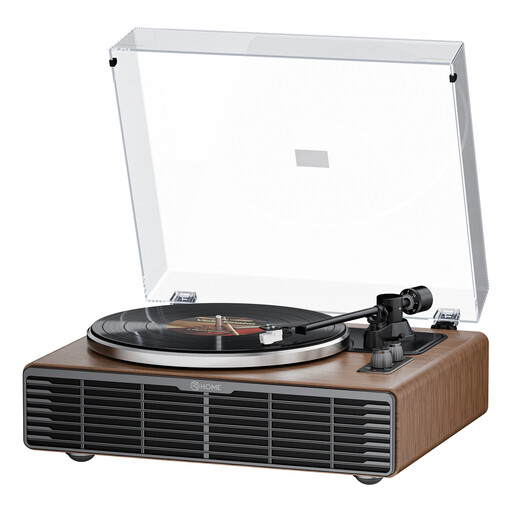 No image available
The product name lists Bluetooth and four speakers; check that the stated outputs will connect to your audio equipment.
Listed in the product name: belt drive, AT3600L cartridge, RCA Phono/Line output and a transparent dust cover.
No, you also need to check the record material and stylus. Audio-Technica distinguishes between styli for shellac and 78 rpm vinyl; your choice also depends on compatibility with the cartridge.
Yes, unless the player has built-in speakers. A phono preamp lets you connect to a suitable audio input, but it doesn’t replace speakers.
Choose a stable, dry spot away from liquids and splashes, and follow the manual for the exact model. The Pro-Ject Primary E Phono manual warns against getting liquid near the device and using it in damp places; this advice is specific to that model.
For a consumer purchase, contact the seller if the product is faulty. The Dutch government states that there is no fixed statutory guarantee period that applies to all products. Many online purchases from businesses come with a 14-day cooling-off period, although exceptions may apply.
The Netherlands Food and Consumer Product Safety Authority states that electrical products covered by the Commodities Act Decree on Electrical Equipment must carry a CE marking. The rules that apply to a specific record player or mains adapter depend on the product; a CE marking alone says nothing about sound quality.