
Quiet home listener
You want to listen to second-hand records at a modest volume, perhaps with headphones, and are looking for a suitable way to play them.


First, decide how you want to listen quietly: through your existing set-up, active speakers or compatible Bluetooth headphones. Then check that the record player works with your equipment, and whether you’d prefer automatic operation or to adjust the tonearm yourself. Clean second-hand records carefully, and don’t play any with visible damage.
You want to listen to second-hand records at a modest volume, perhaps with headphones, and are looking for a suitable way to play them.
You want to look after your used records and stylus, and are mindful of cleaning, wear and any adjustment options.
You want to connect your record player to equipment you already own and check whether it needs a phono preamp.
| What to consider | What should you check? | Who is this important for? |
|---|---|---|
| Quiet listening where you want to sit | Check the record player’s output, whether your headphones or speakers are compatible, and where you control the volume. | If I want to listen quietly where I’m sitting, I need to know whether my headphones or speakers will work with the output. This is the top consideration for around 36% of consumers with this listening preference. |
| Looking after your records and stylus | Check records for dirt and visible damage. Also make sure a suitable replacement stylus is available and find out how to care for it. | I want to play used records carefully and keep an eye on the condition of the stylus. Around 29% of consumers put this first. |
| Connecting to existing equipment | Check whether the record player has a switchable phono preamp and which inputs are available on your amplifier or active speakers. | If I want to keep using my current set-up, I need to know in advance whether the connections are compatible. This is the top priority for around 21% of consumers who focus mainly on connectivity. |
| Operation and adjustment | Compare automatic operation and tonearm return with the adjustment options you’d like to use yourself. | I want to be able to start playing without having to position the tonearm myself every time. Around 14% of consumers in these priority groups mainly want to keep manual steps to a minimum. |
A built-in speaker doesn’t automatically solve every connection issue. The Consumentenbond notes that suitcase record players often sound worse than conventional record players, so consider your whole listening set-up too.
Compare how you want to listen and operate the tonearm, not just how easy the player is to carry around.
With a conventional record player, you may also need to arrange suitable speakers, an amplifier or a phono preamp.
Bluetooth takes care of the wireless connection, but it tells you nothing about dirt, visible damage or stylus wear.
Check records before playing them and follow the stylus care instructions. Choose Bluetooth only if you want to use that connection with your playback device.
Audio-Technica warns that incorrect settings can cause distortion or other unwanted effects.
With an adjustable model, follow the instructions for the record player and cartridge before playing any records.
The AT-LP70XBT is an option if you want to combine automatic operation, Bluetooth and a wired connection.
The PS-LX3BT offers fully automatic operation and Bluetooth for a straightforward listening set-up.
The DP-300F is designed for automatic operation in a wired audio set-up.
The LBT-188PI combines manual operation and adjustment with Bluetooth transmission and USB.
The Planar 1 Plus is a manual record player with a built-in MM phono preamp.
This selection features fully automatic Sony record players with Bluetooth and a switchable phono preamp. Listen quietly through compatible Bluetooth equipment or a wired set-up.
 No image available
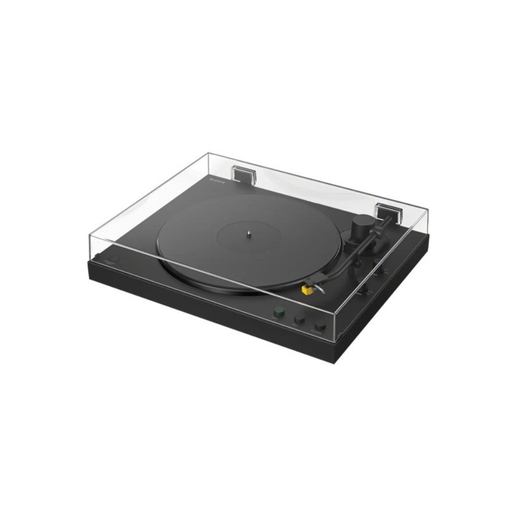
Ideal if you want automatic start-up and quiet listening through compatible Bluetooth equipment or a wired set-up.
Sony lists automatic operation, Bluetooth and a PHONO/LINE switch with a built-in phono preamp. The player supports 33⅓ and 45 rpm; it isn’t suitable for 78 rpm records.
 No image available
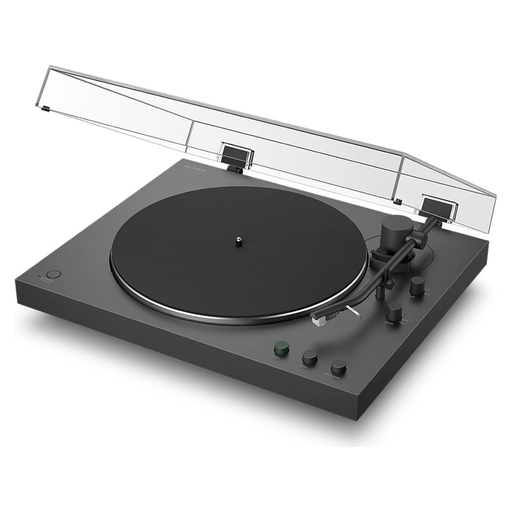
Ideal if you want automatic operation and to listen through a compatible Bluetooth device or a wired set-up.
Sony lists automatic operation, Bluetooth and a PHONO/LINE switch with a built-in phono equaliser. The player supports 33⅓ and 45 rpm; Sony states that the PS-LX3BT doesn’t play 78 rpm records.
Check the record for dirt and visible damage first. Ortofon recommends carefully removing dust with a suitable anti-static brush or cloth, and advises against playing visibly damaged records.
No, a suitable wired connection to your audio equipment will work too. If you want to listen wirelessly through headphones, check that the record player transmits Bluetooth and can connect to your headphones. Also check where you control the volume.
That depends on the connections available on your record player and amplifier. A phono preamp may be built into either device, so check whether one is included and which input your set-up offers. For listening through speakers, you’ll also need a suitable amplifier with speakers or active speakers.
Follow the instructions from the maker of your stylus. Ortofon recommends using a dry brush on its styli and advises against using solvents on the stylus or cantilever.
No. Sony states that the PS-LX3BT only supports records at 33 and 45 rpm. If you have 78 rpm records, look for a record player and stylus that support that playback speed.