
The cook who wants to put a record on quickly
You want to start a soundtrack without having to position the tonearm by hand every time. Also make sure you have a dry place to set it up, away from splashes.


For standard LPs and singles, an automatic record player with a connection that suits your speakers is a practical choice; a model with built-in speakers means you need less separate equipment. If you have 78 rpm shellac records, check both the speed and whether the stylus is suitable for the exact model. Place the record player somewhere dry and away from the immediate cooking area.
You want to start a soundtrack without having to position the tonearm by hand every time. Also make sure you have a dry place to set it up, away from splashes.
You want to connect the record player to your current audio set-up. Check whether it has a phono input or whether the record player has a suitable preamp and output.
Check whether ‘vintage’ also means 78 rpm shellac records. If so, both the playback speed and a suitable stylus matter.
Start with the format and speed of your records, then check which speakers and connections you already have. Finally, decide how much separate equipment you want in your kitchen-diner.
| What to consider | What to look for when buying | Who this matters to |
|---|---|---|
| Easy to get started | Check whether it has automatic operation and supports the speeds used by your LPs and singles. | If you want to put music on quickly while cooking without positioning the tonearm by hand, this suits consumers who prioritise ease of use: around 36%. |
| Connecting to your set-up | Make a note of the input on your amplifier or active speakers, then check which output or phono preamp you need. | If you want to use your existing speakers, first check which connections your set-up requires; around 29% of consumers prioritise compatibility with their existing audio equipment. |
| Fewer separate components | Check whether it has built-in speakers and whether there is an output for any external speakers you might want to use. | If you don’t want to set up separate speakers in your kitchen-diner, an all-in-one system could be appealing; around 21% of consumers prioritise having as little separate equipment as possible. |
| 78 rpm shellac | Check the speed and whether a suitable stylus and cartridge are compatible with the exact model. | If you really do have 78 rpm records, check both before choosing a record player; around 14% of consumers prioritise playing 78 rpm shellac. |
A soundtrack might also be on a standard LP. And a record player with a 78 rpm setting does not automatically come with a stylus suitable for shellac.
Check which records you want to play. For 78 rpm shellac, check the combination of record player, cartridge and stylus.
For 78 rpm shellac, you may need a separate suitable stylus or a different record player.
If the record player doesn’t have built-in speakers, the extra equipment you need will depend on your current audio set-up. You may also need a phono preamp to connect it.
Make a note of the inputs on your speakers or amplifier before choosing a model, and check whether you need a phono preamp.
Built-in speakers mean separate speakers are less of a necessity. The Dutch Consumers’ Association warns generally that all-in-one record players often don’t sound as good as standard record players.
Weigh the convenience of built-in speakers against your sound-quality preferences, and check whether you can connect external speakers later.
If you decide you want external speakers later, you may need extra equipment.
Moisture, splashes and excessive heat can make an unsuitable environment for a record player.
Before buying, choose a dry spot away from direct heat and splashes, and follow the instructions for your chosen model.
Audio-Technica offers models for fully automatic playback of standard LPs and singles, as well as manual models with three speeds.
According to Sony, the PS-LX3BT is designed for fully automatic playback with Bluetooth.
The LS-50WD is an all-in-one option if built-in speakers are important to you.
The DP-300F is an automatic, wired option for connecting to an existing audio set-up.
This Joybuy selection includes record players for 33⅓ and 45 rpm records, with models for connecting to external speakers as well as all-in-one models with built-in speakers. For 78 rpm shellac, check the speed and stylus suitability for the exact model separately.
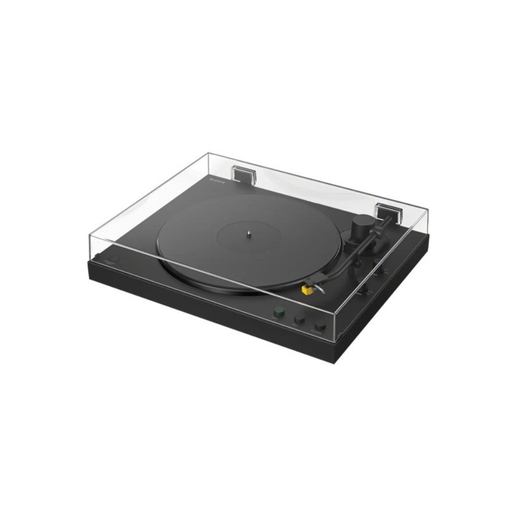 No image available
Worth considering if you want to use Bluetooth; also check that the connection suits your speakers or amplifier.
Product name: Bluetooth record player.
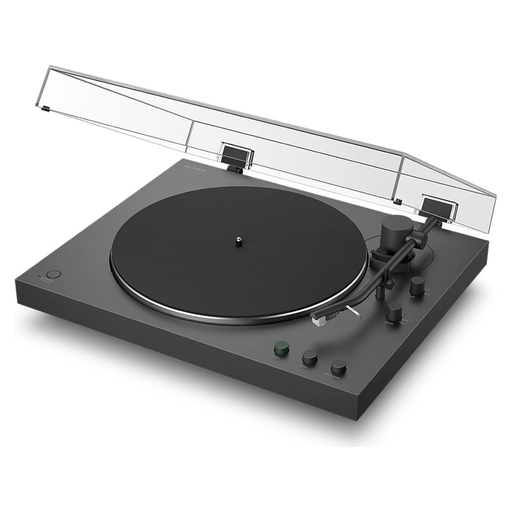 No image available
Worth considering if you’re looking for a Bluetooth model; check which connection your existing audio set-up needs.
Product name: Bluetooth record player.
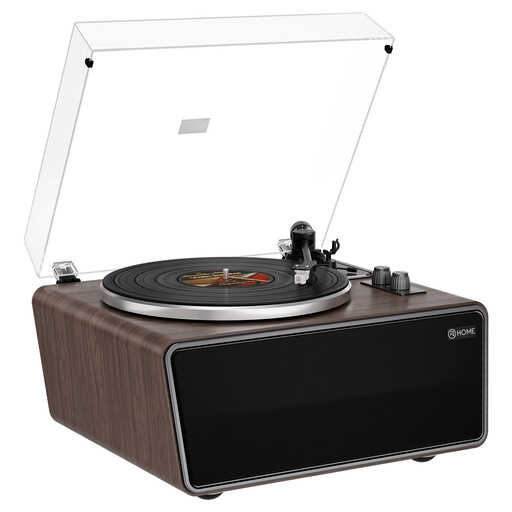 No image available
An option if you’d rather not set up separate speakers; check that the connections suit your existing system if you want to use it.
Product name: four built-in speakers, phono preamp and AT-3600L (MM) cartridge.
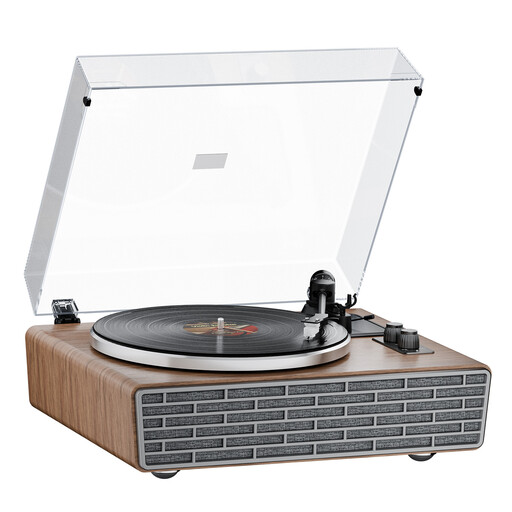 No image available
An option if you want built-in speakers; check that the connection options suit how you plan to use the record player.
Product name: Bluetooth, transparent dust cover, belt drive and AT cartridge.
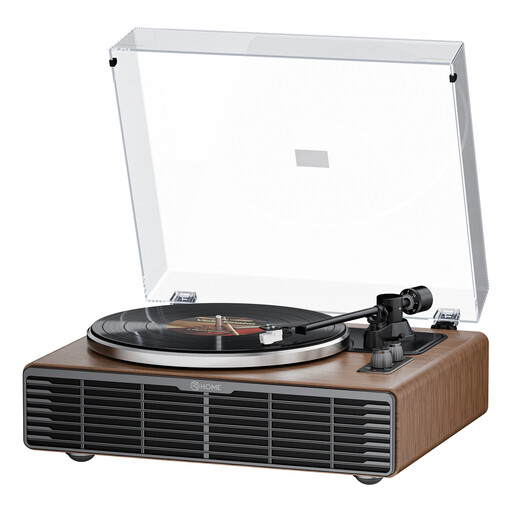 No image available
An option if you’re looking for built-in speakers; check that the listed connections suit the set-up you want.
Product name: Bluetooth, belt drive, AT3600L cartridge, RCA Phono/Line output and transparent dust cover.
First check the speed shown on the record. According to Audio-Technica, the AT-LP60XBT supports 33⅓ and 45 rpm, while the AT-LP120XBT-USB also supports 78 rpm. With shellac, you’ll also need to check that the stylus is suitable and compatible with the exact cartridge.
Choose a dry spot away from direct heat, splashes and cooking. The Dutch-language Audio-Technica AT-LP60XBT manual warns against moisture, splashes and excessive heat; follow the manual for any other model.
No. It may be built into the record player or amplifier, or you can add it as a separate device. The Dutch Consumers’ Association notes that phono pre-amplification is needed; Denon lists a switchable built-in preamp for the DP-300F. Check which input your own set-up has.
According to the Dutch government, the retailer must deal with a product problem under the statutory guarantee; there is no fixed statutory guarantee period in the Netherlands. Normal wear and tear or damage caused by you isn’t automatically covered by free repairs. For online purchases, you’ll also usually have 14 days to change your mind.
The Dutch government states that electronic devices sold in the EU must carry a CE marking. Check the product information and instructions for the specific model, and choose a dry spot at home; a CE marking doesn’t make a record player suitable for a damp or hot location.