
Listener with speakers
You want to play old soundtrack LPs while you work, and you already have active speakers or an audio system. Check which input is available and whether the record player or amplifier has a phono preamp.


The right record player depends on the format of your soundtrack records and the connections available in your audio setup. For 78 rpm records, also check the record material and whether a suitable stylus or cartridge is available. With suitcase record players, a simple all-in-one setup comes with sound quality and usability considerations highlighted by the Consumentenbond for this product category.
You want to play old soundtrack LPs while you work, and you already have active speakers or an audio system. Check which input is available and whether the record player or amplifier has a phono preamp.
You want to set up your workspace without another audio cable and have a suitable Bluetooth speaker or headphones. Check that the record player can transmit Bluetooth audio, rather than relying on Bluetooth simply appearing in the product name.
You may have older soundtrack releases on 78 rpm records. First establish whether they’re made of shellac or vinyl; the correct speed and a suitable stylus are separate requirements.
Start with the format and material of your records, then match the record player’s output to your speakers or headphones.
| Priority | What to look for | Who is this most important for? |
|---|---|---|
| Connections and everyday convenience | Check the input on your speakers and whether you need phono pre-amplification. Also look for a PHONO/LINE switch on the player. | If I mainly want to play LPs or singles while I work, I need connections that suit my speakers and controls that fit my routine. Around 40% of consumers prioritise connections and everyday convenience above all else. |
| Wireless listening | Check whether the record player can transmit Bluetooth audio to your intended playback device and whether that device can pair with it. | If I want to set up my desk without another audio cable, the wireless connection needs to work with my speaker or headphones. Around 30% of consumers make wireless listening at their desk their top priority. |
| 78 rpm records | Establish the record material and check that the player supports 78 rpm and can use a suitable stylus or cartridge. | If my collection includes 78 rpm records, I want to find out whether they’re shellac and which stylus they need. Around 20% of consumers prioritise playing these records correctly above all else. |
| Fewer separate components | Check whether the speakers are genuinely built in and whether there’s an output for external speakers. | If I want to keep the number of separate audio components in my workspace to a minimum, an all-in-one setup matters more to me. Around 10% of consumers make this their top priority. |
The Consumentenbond notes that suitcase record players as a group often sound worse than standard record players. If your records are valuable or delicate, the way the tonearm is operated is another point to consider.
Compare how the tonearm is operated, the cartridge and the connections with the way you plan to use the player. Don’t base your choice on looks or built-in speakers alone.
The right speed alone isn’t enough for shellac records. Audio-Technica warns that a standard LP stylus isn’t suitable for SP records and can damage the record or cartridge.
Check the record material and stylus or cartridge compatibility before playing a valuable 78 rpm record.
A record player needs a compatible audio chain. Phono pre-amplification may be built into the player or the connected equipment.
Map out the connections before buying, from the cartridge and any phono preamp to the amplifier and speakers. Check which inputs your equipment has.
The brand offers models for automatic playback of LPs and singles, as well as manual models with a 78 rpm setting.
The PS-LX310BT combines automatic operation with Bluetooth for a compatible speaker or headphones.
The E1 Phono is a wired option with a built-in phono preamp, designed for a setup with separate speakers.
The Classic Phono TT-10 is a suitcase record player with built-in speakers, for anyone who wants to keep separate equipment to a minimum.
The DP-29F is designed for anyone looking for automatic operation and an integrated phono preamp.
This selection features Sony Bluetooth record players. Check each model to see whether it can transmit Bluetooth audio to the speaker or headphones you want to use.
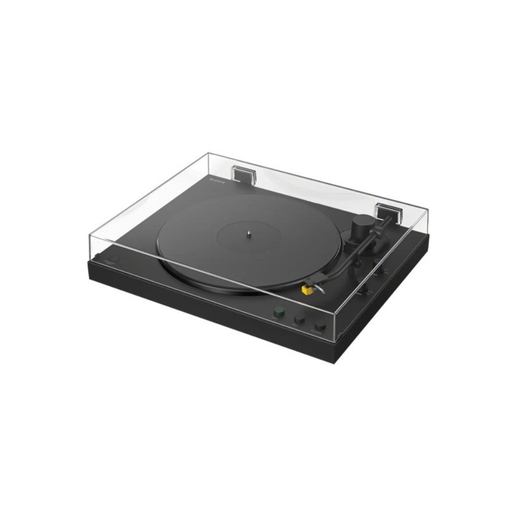 No image available
A potential option if you’re looking for a Bluetooth record player. Check the product specifications to see whether this version can transmit audio to your intended speaker or headphones.
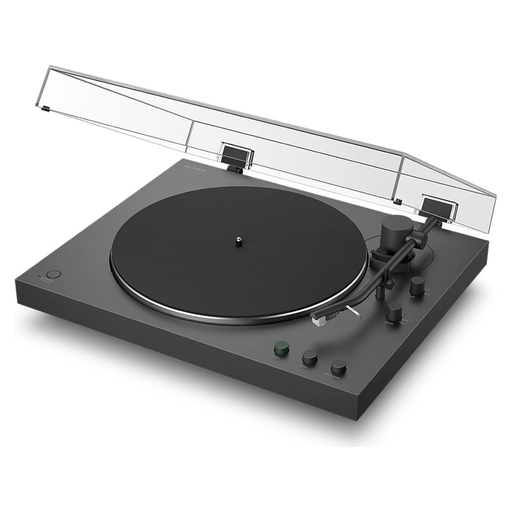 No image available
A potential option if you’re looking for a Bluetooth record player. Check the product specifications to see whether this version can transmit audio to your intended speaker or headphones.
Yes, if the speakers have a suitable line input and the record player’s signal has been pre-amplified. Use a player with a built-in phono preamp set to LINE, or connect a separate phono preamp. A phono input and a line input aren’t the same.
No. As well as the speed, the stylus or cartridge must be suitable for the record. Audio-Technica recommends a 3 mil SP stylus for shellac and warns against using a standard LP stylus on SP records.
Carefully remove dust from the record and stylus, and follow the cleaning and replacement instructions for the cartridge in question. Audio-Technica points out that dirt can affect playback and that styli wear out.
For online consumer purchases in the Netherlands, the statutory cooling-off period generally ends 14 days after delivery; exceptions may apply. Products must also meet the standard you could reasonably expect under normal use. ACM ConsuWijzer explains the statutory guarantee and identifies the seller as your point of contact.
It depends on whether other people can hear the music and on the circumstances in the workplace. BumaStemra distinguishes between listening privately and using music in a business. It also notes an exception for a workplace that isn’t accessible to guests or customers and has fewer than three full-time employees. Consider these circumstances before deciding whether you need a business licence.