First, check the speed and material of your records. A player with 33⅓ and 45 rpm settings is sufficient for standard LPs and singles, while 78 rpm records require both the right speed and a suitable stylus. Next, choose a connection that works with your amplifier or active speakers. Automatic operation involves fewer steps, while a manual player requires more attention to operation and set-up.
Who is a record player for classic soundtracks for?
Collector of classic soundtrack records
You’ll want to check that the speed and stylus are suitable for your records, especially if your collection includes 78 rpm records. Audio-Technica’s specifications for the AT-LP120XUSB and VM95 styli show why speed and stylus compatibility need to be checked separately.
Listener with existing speakers
You’re looking for a player that works with your amplifier or active speakers, and want to avoid connecting two phono preamps in a row unnecessarily. The Consumentenbond notes that not every amplifier has a phono preamp.
Casual listener in the hobby room
You want to put a record on regularly without having to operate the tonearm yourself each time, or you’re looking for a set-up with built-in speakers. Sony describes automatic operation for the PS-LX3BT, while Lenco lists built-in speakers for the LS-50WD.
What should you look for when choosing?
Start by checking the format and speed of your records. Then make sure the player connects to your sound system, and consider ease of use and maintenance.
| What to consider |
What should you check? |
Who is this important for? |
| Suitability for your records |
Check the stated speed and, for 78 rpm records, whether the stylus is suitable for the cartridge. |
If you have a variety of older records, you’ll want to know that both the speed and stylus are right for each format. Around 36% of consumers are mainly concerned with whether a player is suitable for their records. |
| Connection to your sound system |
Check the input on your amplifier, whether your speakers are active and which phono or line setting you need. |
If you already have an amplifier or speakers, you’ll want to know how the player connects to them and what else you might need. Around 29% of consumers focus mainly on connectivity. |
| Easy playback |
Check whether the exact model is automatic, semi-automatic or manual; assess its speed separately. |
If you often play soundtracks, having fewer manual steps can be useful. Around 21% of consumers prioritise easy, regular playback. |
| Looking after your records and stylus |
Check which cartridge is fitted, which replacement stylus is compatible and what maintenance instructions apply. |
If you want to look after your records and stylus properly, replacement-part compatibility matters. Around 14% of consumers focus mainly on maintenance and replaceability. |
Things to watch out for when buying
-
Assuming a 78 rpm setting means a player is suitable for all older records
Turntable speed and stylus suitability are separate considerations. The Audio-Technica AT-LP120XUSB comes with an AT-VM95E as standard; for 78 rpm records, Audio-Technica specifies a separate, compatible VM95 stylus.
Before playing a record, check its speed and material, as well as the cartridge and stylus fitted.
78 rpm records may require a separate, compatible stylus.
-
Assuming every record player produces sound on its own
A standard record player needs a suitable signal path and speakers. A model with built-in speakers is a different set-up from a player connected to separate speakers.
Before choosing, map out the signal path from the record player to your amplifier and speakers. Also check whether your amplifier has a phono input.
Depending on your existing equipment, you may need an amplifier, speakers or a phono preamp.
-
Assuming a retro look means the tonearm will handle records carefully
The Consumentenbond warns that suitcase-style record players often have mediocre sound and that their tonearm can make it harder to lower the stylus gently onto the record.
If preserving your records matters to you, compare the controls, tonearm and cartridge, and don’t judge an all-in-one model on its appearance alone.
Brands to consider
Audio-Technica
The AT-LP120XUSB is a manual turntable for anyone looking for multiple speeds, USB and adjustable settings.
- Audio-Technica lists three speeds, a switchable phono preamp and an AT-VM95E cartridge with interchangeable styli.
- For 78 rpm records, you’ll need to choose a suitable stylus that’s compatible with the cartridge; operation is manual.
Sony
The PS-LX3BT is designed for automatic playback of LPs and singles, with Bluetooth and a phono/line selector.
- Sony specifies 33⅓ and 45 rpm, with automatic start and return.
- According to Sony, this model doesn’t support 78 rpm and doesn’t have a removable headshell.
Lenco
The LS-50WD is an option for a hobby room that doesn’t yet have speakers.
- Lenco lists built-in speakers, an RCA connection and three speeds for the LS-50WD.
- A 78 rpm setting doesn’t confirm that the supplied stylus is suitable for every older record; check this separately.
Denon
The DP-300F is designed for anyone looking for automatic operation and a switchable phono preamp to use with an existing sound system.
- Denon specifies 33⅓ and 45 rpm, with automatic operation.
- Denon doesn’t specify 78 rpm; alongside automatic operation, this model also has a manual tonearm lift.
Pro-Ject
The range includes different types of turntables, including automatic models and all-in-one systems.
- Pro-Ject’s range information shows several product lines to suit different set-ups.
- Speed, preamp and included speakers vary by model, so check the specifications for the exact model.
Record players for your listening room
This Joybuy selection focuses on LPs and singles for your listening room, with an automatic model and record players with built-in speakers. For 78 rpm records, check separately that both the speed and stylus are suitable.
 No image available
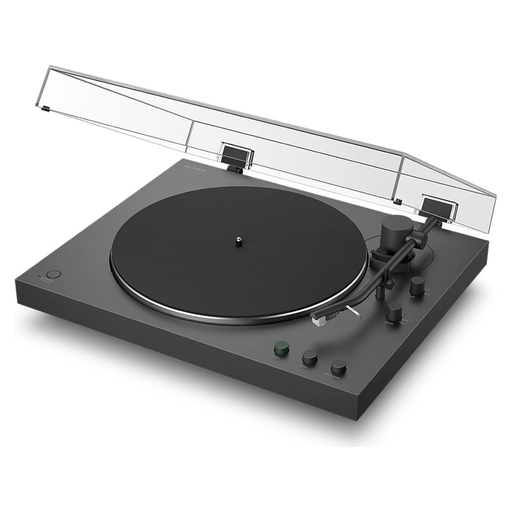
Sony PS-LX3BT Bluetooth record player
Automatic operation is designed for anyone who wants to play LPs and singles without having to position the tonearm manually each time.
Supports 33⅓ and 45 rpm. Bluetooth, a built-in phono equaliser and a PHONO/LINE switch are listed.
View at Joybuy
 No image available
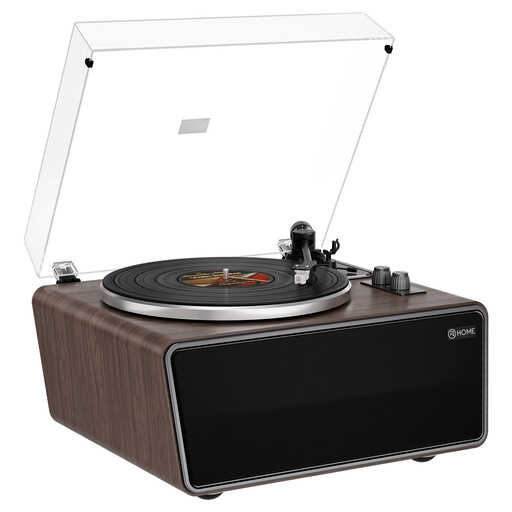
XJ-HOME XJ-H01 All-in-One record player
The built-in speakers are ideal for listening without separate speakers.
Four built-in speakers, playback at 33⅓ and 45 rpm, an AT-3600L (MM) cartridge and Phono/Line RCA outputs are listed.
View at Joybuy
 No image available
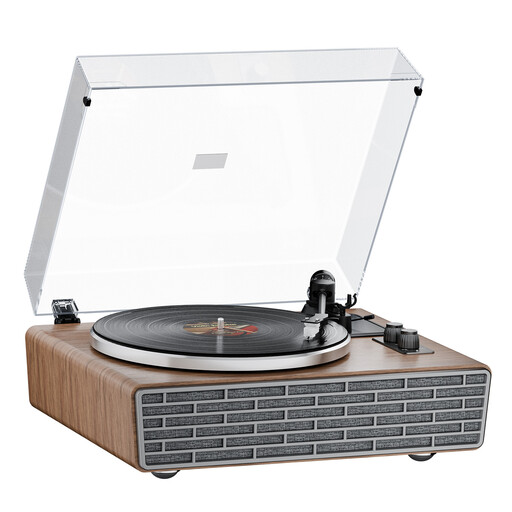
XJ-HOME XJ-H02 Retro Walnut Bluetooth record player
The built-in speakers let you listen without separate speakers.
Four built-in speakers, Bluetooth, belt drive and playback at 33⅓ and 45 rpm are listed. The product name mentions an AT cartridge.
View at Joybuy
 No image available
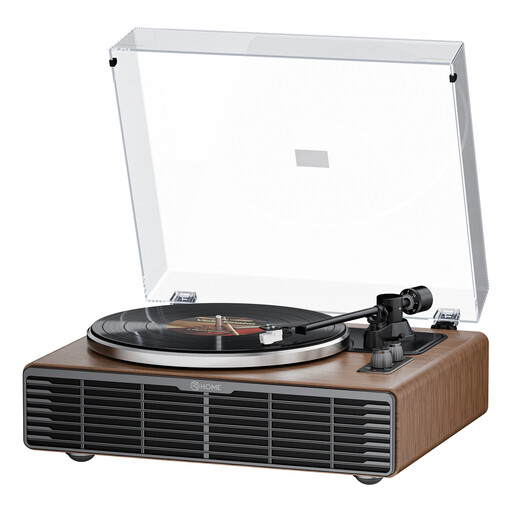
XJ-HOME XJ-H03 Walnut Bluetooth record player
The four built-in speakers are a good fit for a listening room without an existing speaker set-up.
Playback at 33⅓ and 45 rpm, an AT-3600L cartridge, USB recording and RCA Phono/Line outputs are listed.
View at Joybuy
Frequently asked questions
Do I always need a 78 rpm player for classic soundtracks?
No, it depends on the speed of your records. Sony specifies 33⅓ and 45 rpm for the PS-LX3BT; the Audio-Technica AT-LP120XUSB also supports 78 rpm. For 78 rpm records, check that the stylus is suitable for the cartridge fitted.
What if my amplifier doesn’t have a phono input?
Choose a player with a suitable built-in phono preamp and line output, or use a separate phono preamp. Check the manuals for both devices before connecting them.
How do I maintain my record player’s stylus?
Follow the cleaning instructions for your cartridge and stylus. Audio-Technica warns that accumulated dust can reduce playback quality and damage the stylus assembly. When replacing the stylus, choose one that is confirmed to be compatible.
Should I buy an extra warranty for a record player?
Not necessarily. According to the Rijksoverheid, a manufacturer’s warranty, retailer’s warranty or extended warranty is in addition to your statutory rights; if a product is faulty, the retailer is your point of contact. Check what extra rights an extended warranty actually offers.


