
Stationary recipe narrator
You narrate the steps from one spot and can place the recorder securely away from the worktop. You want clear speech without distracting echo or plosive sounds.


If you’re recording your recipe in one place, a handheld recorder that you can position securely and away from your direct breath is a sensible option. If you move around while cooking, a recorder with a clip-on microphone can keep it at a more consistent distance from your mouth. Zoom and Tascam describe these different setups for their models; Shure also recommends paying attention to microphone placement to reduce plosive sounds and room echo. Whichever you choose, make a test recording where you plan to speak.
You narrate the steps from one spot and can place the recorder securely away from the worktop. You want clear speech without distracting echo or plosive sounds.
You move around the kitchen as you record, so a microphone that moves with you can be useful. Keep an ear out for rustling clothes and cable noise.
You record the script separately from the cooking and want to be able to start recording, listen back and transfer the audio file easily.
Best suited to: recording from one spot, with the recorder positioned securely away from the worktop.
Bear in mind: the distance from the microphone changes if you move away. Placing the Zoom H1essential on a table can reduce clarity.
Best suited to: moving around while cooking and attaching the microphone to your clothing.
Bear in mind: check for clothing or cable noise, and make sure the attachment doesn’t restrict your movement.
| What to consider | What to look for when buying | Who should consider this? |
|---|---|---|
| Clear speech at close range | Check whether you can position the microphone securely away from your direct breath. Listen for p and t sounds in a test recording. | If I’m recording at close range, I want my words to stay clear without distracting echo or plosive sounds. Around 36% of consumers prioritise placement and speech clarity. |
| Moving around while cooking | Choose between a fixed setup and a clip-on microphone that moves with you. Test the attachment while moving as you normally would. | If I walk between the worktop and the hob, I don’t want to keep turning to speak towards a stationary recorder. Around 29% of consumers give freedom of movement top priority. |
| Checking your recording | Check whether you can listen back to the recording and how to transfer files to your editing device. | If I record a short voice-over separately, I want to be able to check and manage the recording easily. Around 21% of consumers consider ease of use and file transfer most important. |
| Storage and preparation | Check which memory card the exact model supports, what’s included and how the recorder is powered. | If I want to know in advance that everything is ready to record, I need to check storage, power and file transfer. Around 14% of consumers prioritise these practical preparations. |
A recording format doesn’t change microphone placement and, according to Shure, won’t prevent room echo or bursts of air causing plosive sounds.
First, make a test recording where you plan to speak and check your voice, the echo and the p and t sounds.
A failed recording could mean recording your narration again or spending extra time editing.
Zoom warns that reflections from a table can reduce the clarity of recordings made with the H1essential’s built-in microphones.
Plan where to put it in advance and, if needed, use a stable riser or tripod away from the worktop.
You may need a tripod or another stable raised surface for your intended setup.
The Zoom H1essential uses supported microSD card types for standalone recording, while Sony lists built-in memory for the ICD-UX570 series.
Check storage, power and file transfer for the exact model, and make a test recording beforehand.
Depending on the recorder you choose, you may need a compatible memory card or power supply. Check what’s included with the product.
The H1essential is a handheld recorder with built-in X/Y microphones, designed for a fixed setup.
The DR-05XP is a handheld recorder with built-in stereo microphones; the DR-10L Pro combines a portable recorder with a clip-on microphone.
The ICD-UX570 series is an option to consider for a short voice-over recorded separately.
Wireless PRO may be relevant if you use a video or wireless microphone workflow as well as recording speech separately.
This selection includes portable voice recorders and voice recorders for recording a recipe script separately. For each model, check how you can position the microphone and listen back to and transfer a recording.
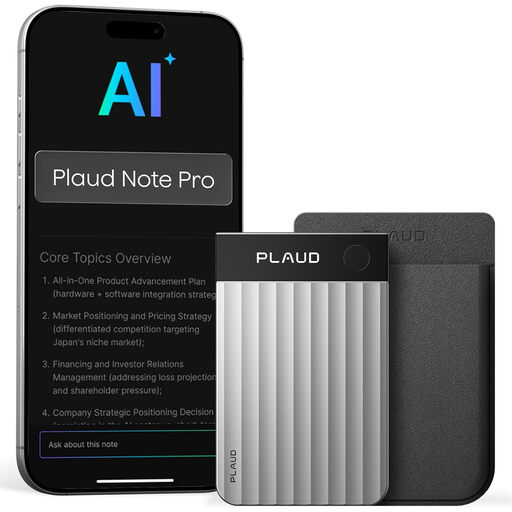 No image available
Worth considering if you want to record a spoken recipe script separately. Check how to position the microphone and transfer files beforehand.
The product information lists built-in storage and one-button operation.
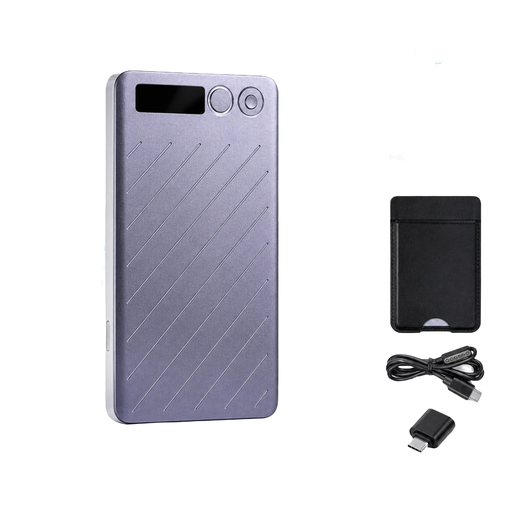 No image available
Worth considering for a recipe script recorded separately. Check that the microphone setup suits the place where you’ll be recording.
The product information lists 64 GB of storage and a stated battery life of 36 hours.
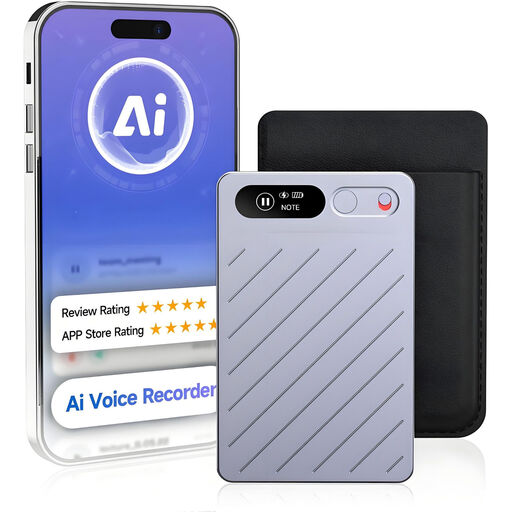 No image available
Worth considering for recording spoken text. Check how you can position the microphone and how files are processed.
The product name lists 64 GB and transcription and summarisation in 118 languages.
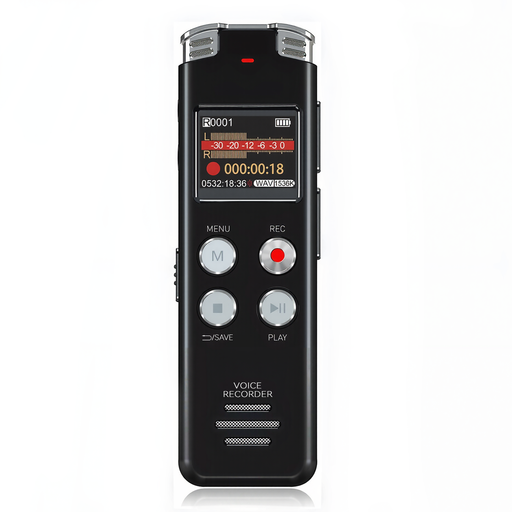 No image available
Worth considering if you want to record and listen back to a recipe script separately. Check the microphone placement beforehand.
The product information lists MP3 and WAV recording and file transfer via USB-C.
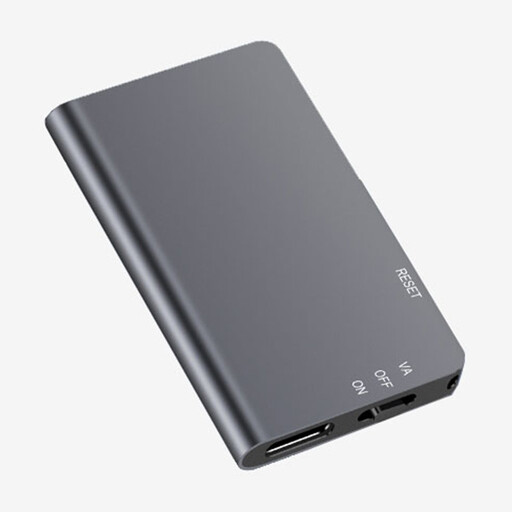 No image available
Worth considering for a short recording made separately. Check that you can listen back to it in the way you prefer.
The product information lists WAV recording and file transfer via USB-C. The product name lists one-touch operation.
Not if you’re using the built-in microphones on a Zoom H1essential. Zoom warns that reflections from a table can reduce clarity and suggests using a tripod as one possible setup. Listen to a test recording where you plan to speak.
No. 32-bit float doesn’t change the microphone’s position. Shure describes plosive sounds as bursts of air hitting the microphone and recommends positioning it off-centre or using a pop filter or windscreen. Room echo also makes the recording location important.
Check storage and power for your chosen model, then make a short test recording and listen back to it before transferring it. The Zoom H1essential manual lists supported microSD card types. Also check which accessories are included with the product.
Contact the seller. ACM ConsuWijzer explains that you’re entitled to a product that works properly for as long as you could reasonably expect it to. If a fault occurs during normal use, the seller must offer an appropriate solution. This doesn’t mean the statutory period is always exactly two years.
The Dutch Data Protection Authority says that, in principle, you need permission to publish information about other people online. An organisation needs a legal basis under the GDPR to process personal data; consent is one possible basis and must meet certain conditions. This isn’t a general statement about recording only your own voice.