
Layout designer without a regular socket
If you work on your recipe book in different places, compare battery test conditions, charging options and weight before choosing a screen size.


Start by considering how long you work away from a socket, then check that the laptop suits your layout software, screen preferences and peripherals. A compact model may be easier to take with you, while a larger screen or more built-in ports can make working with pages and photos more comfortable. Also check the power supply required and what’s included.
If you work on your recipe book in different places, compare battery test conditions, charging options and weight before choosing a screen size.
If you often assess photos alongside text and page layouts, screen space, colour settings and enough memory for your software are worth considering. A stated colour gamut is not a verified print colour match.
If you use an external monitor or USB storage, for example, check which ports remain available while the laptop is charging.
Start with your longest working session away from a socket, then decide how much screen space and how many ports you need. This helps you avoid basing your choice solely on a battery figure measured for a different activity or on screen size alone.
| What to consider | What to check | Who should prioritise this? |
|---|---|---|
| Working away from a socket | When looking at battery figures, check which test scenario was used. Check the charging port and whether a suitable adapter is included. | When I work in different places, I don’t want to keep interrupting my book layout to recharge. Around 31% of consumers give working on battery power top priority. |
| Layout software | Check the software version, operating system, processor architecture, memory and available storage. For InDesign 21.3 and later on Windows, Adobe specifies at least 8 GB RAM and recommends 16 GB. | I want the programme I choose and my files to be compatible with the laptop. Around 25% of consumers prioritise compatibility with their own layout software. |
| Viewing pages and photos | Compare the screen diagonal, resolution and specifications of the exact configuration. For print work, also check the required PDF and colour workflow. | When I’m laying out recipe pages with photos, I want to be able to assess the text and images clearly. Around 19% of consumers give viewing pages and photos top priority. |
| Connecting devices while charging | Count the ports you need, including the one for the charger, and check whether the connection you want supports video output. | I want to use a monitor or storage device without losing the option to charge my laptop. Around 13% of consumers prioritise ports for power and peripherals. |
| Suitable power supply | Check whether an adapter is included and what charging power the exact configuration requires. | I want to know in advance whether I’ll have a suitable power supply for the laptop. Around 12% of consumers give the complete laptop and charging setup top priority. |
Apple states battery life for activities such as wireless web browsing and video streaming; these figures aren’t based on laying out and exporting a recipe book.
Only compare battery figures when the test activity is the same, and plan how you’ll charge your laptop during longer sessions.
The presence of USB-C alone doesn’t tell you how much charging power the laptop needs. Ports and the supplied power adapter can also vary between configurations.
For the exact model, check the required wattage, support for an external monitor and what’s included in the box.
Specifications such as the screen and memory can vary between configurations of the ASUS Zenbook 14 OLED UX3405. The Dell XPS 13 9350 is also configurable.
Compare the full model number and the configuration you’ve chosen, not just the series name.
According to the Dutch government, there’s no fixed term for statutory warranty in the Netherlands. If a product is faulty, the seller is responsible for providing a solution.
Check any additional warranty alongside your statutory rights, and see what extra cover it provides.
The MacBook Air is an option to compare if you’re considering macOS, a lightweight design and a separate charging port.
The Zenbook 14 OLED UX3405 is a Windows option to compare if built-in ports matter to you.
The OmniBook 7 14-hg0615ndx is a Windows option to compare if you want a 14-inch screen and several types of built-in port.
The XPS 13 9350 is a configurable Windows option to weigh up against models with more screen space.
Compare a specific Yoga Slim model when considering a Windows laptop for graphic work.
These laptops are designed to offer more screen space for page layout at a desk. Check which ports and power supply suit your setup for each model.
 No image available
An option to consider if you want a 16-inch screen for page layout at a desk.
The product information lists a WUXGA screen with a 16:10 aspect ratio, a Snapdragon X processor and Windows 11 Home.
 No image available
An option to compare if you’re looking for a 16-inch screen and a higher memory configuration for your layout work.
The product information lists a 16:10 3K OLED touchscreen, Windows 11 Pro and a supplied 140 W USB-C adapter.
 No image available
An option to compare if you’re looking for a configuration with 128 GB RAM and 2 TB storage for your files.
The product information lists a 16-inch 3K OLED touchscreen with a 16:10 aspect ratio, Windows 11 Pro and a supplied 140 W USB-C adapter.
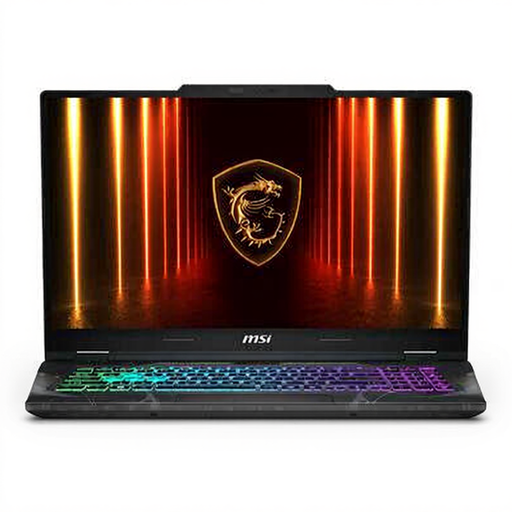 No image available
An option to consider if you want a larger built-in screen for page layout.
The product details list a resolution of 1920 × 1080 with a 16:9 aspect ratio, an Intel Core 7 240H processor and Windows 11 Home.
 No image available
An option to compare if you need HDMI, USB-A and USB-C alongside a 16-inch screen.
The product details list a 16:10 screen, Windows 11 Pro and USB-C with DisplayPort and Power Delivery. The configuration is listed without a power adapter.
For InDesign 21.3 and later on Windows, Adobe specifies at least 8 GB RAM and recommends 16 GB. Meeting the minimum requirement doesn’t guarantee how quickly your recipe book file will run; check the requirements for your software version and operating system.
Check the power requirements and charging specifications for both the laptop and the charger. The European Commission says the common USB-C charging rules have also applied to laptops since 28 April 2026; this doesn’t mean every existing charger provides enough power for every laptop.
Check that the laptop you’ve chosen supports video output through the port you plan to use, and which port will remain available while charging. The ASUS UX3405 specifications reviewed list HDMI and Thunderbolt 4 with display support; Apple lists Thunderbolt 4 and a separate MagSafe charging port for the MacBook Air M5.
This varies by configuration. ASUS lists no adapter included with the retail configuration reviewed, while Dell lists one for the XPS 13 9350 reviewed. Check what’s included with the offer you choose and the required charging power.
According to the Dutch government, you’re entitled to a product that works as it should, and there’s no fixed term for statutory warranty in the Netherlands. If a product is faulty, the seller is responsible for providing a solution; the manufacturer’s warranty doesn’t replace this right.
According to ACM ConsuWijzer, online consumer purchases generally come with a statutory cooling-off period of up to 14 days after delivery. Check the conditions for trying and returning the specific purchase.